Quick-release running parachutes add controllable resistance to sprinting, helping athletes train acceleration, stride power, and finishing speed without complicated equipment.
We compared 10 popular speed chutes by resistance design, belt adjustability, size, portability, and suitability for different athletes and training settings.
Best 10 Quick Release Running Parachutes Picks for 2026
Best Overall
FORZA Resistance Speed Parachute
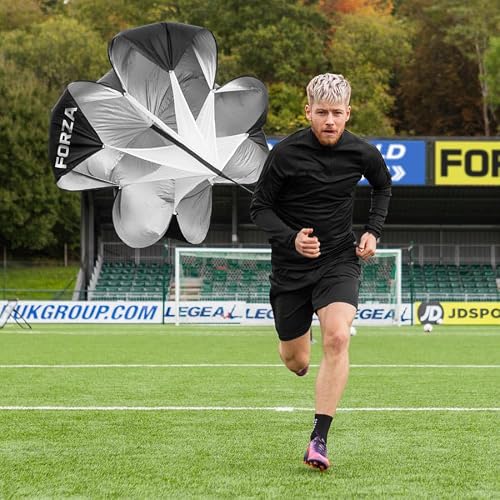
- Up to 50 pounds of sprint resistance
- Quick-release belt for speed transitions
- Adjustable belt and carry bag included
Best For: Athletes wanting high-resistance sprint and acceleration training
Best for Direction Changes
SKLZ Speed Chute Resistance Parachute

- 360-degree rotation belt for multidirectional drills
- Quick-release buckle for acceleration bursts
- 15-pound tension with adjustable fit
Best For: Athletes practicing speed and direction changes
Best Compact Option

- Supports speed and acceleration training
- Releases for overspeed work
- Includes a carrying bag
Best For: Runners wanting a simple, portable training chute
Best Adjustable Fit

- 12-to-33-pound estimated resistance range
- 20-to-42-inch adjustable belt
- Rotating D-ring and carry bag included
Best For: Youth, adults, and shared training groups
Adjustable Dual-Chute Power
KUYOU 56-Inch Resistance Parachute

- Two umbrellas with 25–50 lb stated resistance
- Adjustable belt with quick-release buckle
- 360-degree rotation for directional drills
Best For: Multi-sport athletes needing adjustable resistance
Kid-Friendly Portable Trainer

- 48-inch chute for kids’ training
- 360-degree rotating belt for directional sprints
- Folds into a carrying bag for portability
Best For: Children’s soccer, football, and sprint drills
Single-Chute Sprint Control

- One 56-inch resistance parachute
- Quick-release adjustable waist belt
- 10 stated resistance levels with 25–35 lb tension
Best For: Athletes wanting a simpler adjustable chute
Best Overall Value

- 15–30 lb resistance range
- Adjustable belt and portable bag
- Waterproof cover with stabilizing mesh
Best For: Multi-sport acceleration and conditioning drills
Best Quick-Fasten Fit

- 15–30 lb consistent drag
- Velcro belt fits 20–42-inch waists
- 160 g with carrying pouch
Best For: Fast transitions between solo sprint drills
Best for Maximum Resistance

- Two canopies deliver 25–50 lb resistance
- Quick-release safety buckle
- Waterproof and tear-resistant build
Best For: Experienced athletes training explosive acceleration
Best Overall – FORZA Resistance Speed Parachute
For athletes seeking quick release running parachutes with substantial resistance, the FORZA Speed Parachute offers up to 50 pounds of sprint resistance, an adjustable belt, and a detachable training system. Its compact carry bag also makes it practical for track, field, gym, or park sessions.
Best For: Footballers, rugby players, sprinters, teams, and fitness users wanting adjustable resistance and quick-release speed drills.
Pros:
- Provides up to 50 pounds of resistance for power, acceleration, and stamina work.
- Quick-release belt supports transitions from resisted sprints to full-speed running.
- Adjustable one-size-fits-all belt accommodates adults and teenagers.
- Durable polyester construction includes a carry bag for portable storage.
Cons:
- The supplied notes do not specify multiple resistance settings.
- Its larger resistance capacity may be more than beginners need.
The FORZA is a strong all-round choice when you want high resistance and a convenient quick-release setup in one training chute.
Best for Direction Changes – SKLZ Speed Chute Resistance Parachute
SKLZ Speed Chute Resistance Parachute for Speed and Acceleration Training Grey / Black, 54-Inch
Check Price On AmazonThe SKLZ Speed Chute is a practical option among quick release running parachutes, combining a quick-release buckle with a 360-degree rotation belt. Its free-motion ring supports multidirectional drills, while mesh panels help limit tangling and stabilize the chute.
Best For: Athletes training acceleration, top speed, and directional movement across multiple sports.
Pros:
- Quick-release buckle enables acceleration bursts during workouts.
- 360-degree rotation belt allows movement in any direction.
- Adjustable belt fits most athletes.
- Mesh panels help reduce string tangling and stabilize the chute.
Cons:
- Supports 15 pounds of tension, less than the FORZA model.
- Only one resistance level is listed.
- The product has no warranty according to the supplied details.
Choose the SKLZ when freedom of movement and controlled, moderate resistance matter more than maximum load.
Best Compact Option – LucaSng 48-Inch Speed Chute
The LucaSng 48-inch chute keeps quick release running parachutes simple and portable. It is designed for speed, stamina, strength, and acceleration training, and its chute-release feature supports a transition into overspeed work.
Best For: Runners and sports users who want a lightweight, straightforward resistance chute with easy transport.
Pros:
- Designed to support speed, stamina, strength, and acceleration training.
- Chute releases during overspeed training.
- Made from parachute cloth and netting.
- Includes a handy carrying bag.
Cons:
- The supplied details do not specify belt adjustability.
- No resistance rating is provided.
- At 48 inches, it has a smaller diameter than the 56-inch Bfsmile model.
The LucaSng is a sensible minimalist pick for buyers who prioritize a compact training aid and basic release functionality.
Best Adjustable Fit – Bfsmile 56-Inch Running Chute
The Bfsmile 56-inch model is one of the more versatile quick release running parachutes for shared use. Its adjustable 20-to-42-inch nylon belt, rotating metal D-ring, and upgraded buckle support multidirectional sprinting for youth and adults.
Best For: Families, youth athletes, and mixed-age training groups needing a broad adjustable fit.
Pros:
- Produces approximately 12 to 33 pounds of resistance based on running speed.
- 20-to-42-inch adjustable belt suits men, women, and children.
- 360-degree rotating D-ring supports sprinting in different directions.
- Lightweight design includes a free carry bag.
Cons:
- The stated resistance range is an estimate that varies with speed.
- The supplied notes do not explicitly describe a quick-release belt mechanism.
- Only one parachute is included.
With its wide belt range and 56-inch canopy, the Bfsmile is especially appealing when one chute needs to serve several athletes.
Adjustable Dual-Chute Power – KUYOU 56-Inch Resistance Parachute
For athletes comparing quick release running parachutes, this KUYOU model combines two resistance umbrellas with an adjustable heavy-duty waist belt. Its 56-inch design is intended for speed, acceleration, explosive-power, and stamina training.
Best For: Multi-sport athletes who want adjustable resistance and quick-release acceleration work.
Pros:
- Two 56-inch resistance umbrellas provide 25–50 pounds of stated resistance.
- Adjustable 2-inch nylon belt fits almost any athlete.
- Quick-release buckle supports acceleration bursts.
- 360-degree belt rotation and a free-motion ring allow directional drills.
Cons:
- The two-chute configuration may be more equipment than beginners need.
- Resistance can be substantial for younger or less-trained athletes.
Choose this version if you want a versatile setup for football, soccer, basketball, track, and other field-sport drills, especially when quick release and directional movement matter.
Kid-Friendly Portable Trainer – 48-Inch Football Speed Chute
This 48-inch trainer is a practical option for shoppers seeking quick release running parachutes for younger athletes. It is designed for sprint and soccer drills, folds into its carrying bag, and uses a rotating belt for movement in multiple directions.
Best For: Kids’ outdoor soccer, football, and sprint training.
Pros:
- 48-inch size is designed for kids and includes a stated 20-pound maximum weight recommendation.
- 360-degree belt rotation supports sprints in different directions.
- Waterproof, sun-blocking, quick-drying parachute cloth is suited to outdoor use.
- Built-in mesh panel helps stabilize the chute, and the carrying bag simplifies transport.
Cons:
- Its kid-focused size and weight recommendation limit suitability for larger athletes.
- The product notes do not specify a quick-release buckle.
This is a straightforward, portable choice for introducing resistance training to children, though adult athletes should consider a larger model with more clearly specified resistance features.
Single-Chute Sprint Control – KUYOU 56-Inch Speed Chute
For athletes who want quick release running parachutes in a simpler single-chute setup, this KUYOU model includes one 56-inch resistance parachute and an adjustable belt. It is built for acceleration, speed, explosive-power, and stamina workouts across several sports.
Best For: Athletes who prefer one adjustable chute with multiple stated resistance levels.
Pros:
- Single 56-inch parachute keeps the setup relatively straightforward.
- Adjustable belt is designed to fit almost any athlete.
- Quick-release buckle supports short acceleration bursts.
- Details list 10 resistance levels and 25–35 pounds of supported tension.
Cons:
- It provides less stated resistance than the dual-umbrella KUYOU version.
- The supplied details do not mention the 360-degree rotation feature listed for the other KUYOU model.
This model suits runners and field-sport athletes who want adjustable resistance without the added dual-chute configuration, while still retaining a quick-release belt for interval-style acceleration work.
Best Overall Value – Portable 56-Inch Speed Chute
If you want quick release running parachutes for versatile sprint and conditioning work, this 56-inch model offers a practical balance of resistance, portability, and adjustability. Its drag resistance is approximately 15–30 pounds, and the included bag makes it easy to take to the field.
Best For: Runners and multi-sport athletes training acceleration, stride frequency, and muscular endurance.
Pros:
- Provides approximately 15–30 pounds of resistance for speed and strength training.
- Adjustable belt is designed to fit almost any athlete.
- Waterproof, sun-blocking, quick-drying cover with a stabilizing mesh panel.
- Folds into the included portable training bag.
Cons:
- Resistance is less substantial than the dual-chute option in this roundup.
- The notes do not specify a buckle-style quick-release mechanism.
This is a sensible all-around choice for athletes who want one compact chute for sprint drills, direction changes, and conditioning across several sports.
Best Quick-Fasten Fit – Adjustable 56-Inch Drag Chute
For athletes prioritizing quick setup, this 56-inch running parachute pairs 15–30 pounds of drag with a heavy-duty Velcro belt. The belt fits stated waist sizes from 20 to 42 inches, while the compact 160-gram design is easy to carry between training locations.
Best For: Solo sprinters and football, soccer, or track athletes who want fast belt adjustments between drills.
Pros:
- Generates 15–30 pounds of consistent drag for acceleration and velocity work.
- Quick-fasten Velcro belt fits waist sizes from 20 to 42 inches.
- Integrated mesh panel helps reduce cord tangling during runs.
- Lightweight, foldable design includes a carrying pouch.
Cons:
- No warranty is listed in the supplied details.
- The listed material is plastic, despite the description referring to weather-resistant nylon.
Its clearly specified waist range and lightweight construction make this a convenient pick when rapid transitions and portability matter most.
Best for Maximum Resistance – Dual 56-Inch Training Chutes
Among quick release running parachutes, this dual-canopy system is the high-resistance option. It uses two 56-inch parachutes to provide adjustable 25–50-pound resistance, along with a quick-release safety buckle and a 360-degree training design.
Best For: Adult athletes seeking heavier resistance for explosive acceleration and multisport sprint training.
Pros:
- Two canopies provide an adjustable 25–50-pound resistance range.
- Quick-release safety buckle supports rapid gear removal.
- Waterproof, UV-resistant, tear-resistant construction with anti-tangle mesh.
- Designed for football, basketball, track and field, rugby, and other sports.
Cons:
- Heavier and bulkier than the single-chute options, at 0.38 kg package weight.
- Higher resistance may be more demanding for younger or less experienced athletes.
- The supplied details do not specify the exact waist-size range.
This is the strongest choice for experienced athletes who want a wider resistance range and a genuine quick-release buckle for high-intensity training.
How We Picked the Best Quick Release Running Parachutes
We focused on the features that matter during repeated sprint sessions: a secure but adjustable waist belt, dependable chute deployment, manageable resistance, durable attachment points, and portability. We also considered whether each parachute is better suited to youth athletes, recreational runners, field-sport players, or advanced speed training.
Because product specifications and included accessories can vary, check the current listing for exact dimensions, resistance limits, belt range, and package contents before ordering. A quick-release mechanism is especially useful when a workout includes resisted and unresisted sprints in the same session.
Quick Comparison
| Feature | What to Look For | Why It Matters |
|---|---|---|
| Chute size | Approximately 48 to 56 inches | Larger can provide more drag, while smaller models may feel easier to control. |
| Waist belt | Adjustable, padded, and secure | Helps keep resistance centered without excessive movement. |
| Release system | Quick-release buckle or attachment | Allows fast transitions between resisted and free sprints. |
| Portability | Carry bag or compact folding design | Makes the chute practical for fields, tracks, and travel. |
Key Buying Factors for Quick-Release Running Parachutes
Resistance and Chute Size
Most running parachutes in this roundup fall into the compact training range. A 48-inch chute can be a practical starting point for younger athletes or runners who want moderate resistance. A 56-inch design may create more drag, but actual resistance also depends on sprint speed, wind, fabric shape, and how fully the chute opens.
Fit and Quick Release
The belt should fit snugly over training clothing without slipping or restricting movement. Look for broad adjustment range and a buckle that can be operated quickly. The release should help you remove resistance safely between repetitions rather than forcing you to stop and untangle the chute.
Construction and Storage
Inspect the fabric, seams, tether, clips, and belt attachment points. A storage bag is useful, but compact folding matters more if you regularly carry equipment to practice. Avoid dragging the chute across rough surfaces, and follow the manufacturer’s care instructions.
Who Should Buy Which Quick Release Running Parachutes?
For beginners and youth athletes: Choose a smaller or moderate-resistance parachute with a highly adjustable belt and straightforward setup. For football, soccer, and other field sports: Prioritize durable attachment hardware, quick transitions, and a comfortable belt for repeated acceleration drills. For experienced sprinters: Consider a larger chute or model with a stated higher resistance range, while keeping technique and posture more important than maximum drag. For travel and team use: Select a lightweight option with a carry bag and simple adjustments.
Whichever model you choose, use quick-release running parachutes on an open, clear surface and begin with short, controlled repetitions. Resistance training should complement—not replace—unresisted sprinting, strength work, mobility, and proper recovery.