Finding the right calf stretcher can make post-run mobility work easier, more consistent, and more comfortable. The options in this roundup range from simple foot rockers and slant boards to adjustable strap systems designed for targeted stretching.
Use the guide below to compare construction, adjustability, stability, and portability so you can choose a tool that fits your running routine and the type of calf, Achilles, or foot tightness you experience.
Best 10 Calf Stretchers for Runners Picks for 2026
Dual-Foot Stability Pick
ProStretch Original Double Calf Stretcher

- Dual-foot rocker for one- or two-sided stretching
- Slip-resistant pads help keep it stable
- Fits shoes up to size 12; 250-lb recommended limit
Best For: Runners wanting a stable, simultaneous calf-stretching setup
Portable Foam Option
Pro-Tec Athletics EVA Bold Calf Stretcher

- Lightweight, travel-friendly EVA foam design
- Textured surface helps resist slipping
- Also supports balance and core exercises
Best For: Runners wanting a compact, multifunctional stretching tool
Single-Foot Classic
ProStretch Original Calf Stretcher

- Guided rocker supports a focused foot position
- Non-slip pads help limit movement
- Designed for calves, feet, and Achilles stretching
Best For: Runners who prefer independent, single-foot stretching
Deep-Stretch Upgrade
CalfPRO Slant Board Calf Stretcher

- Heel lock is designed for a deeper stretch
- Folds flat and holds more than 300 pounds
- Door-jam groove and TPR heel pad add stability
Best For: Runners wanting a guided, deep stretch for calves and Achilles
Best Adjustable Option

- Adjustable heel rest for variable intensity
- Removable toe lift targets toes and plantar fascia
- Non-slip platform; fits shoes up to size 14
Best For: Runners wanting a customizable calf and foot stretch
Best for Strength and Stability
PowerStep UltraFlexx Foot Rocker

- Supports stretching and strengthening
- Non-skid rocker bottom improves stability
- Targets calves, Achilles tendon, and shin splints
Best For: Runners wanting a stable rocker for mobility and lower-leg work
Best Portable Pick

- Portable for home, office, or gym use
- Adjustable fit for most foot sizes
- Supports gradual ankle and calf stretching
Best For: Runners seeking an easy-to-carry daily stretching tool
Best Padded Strap
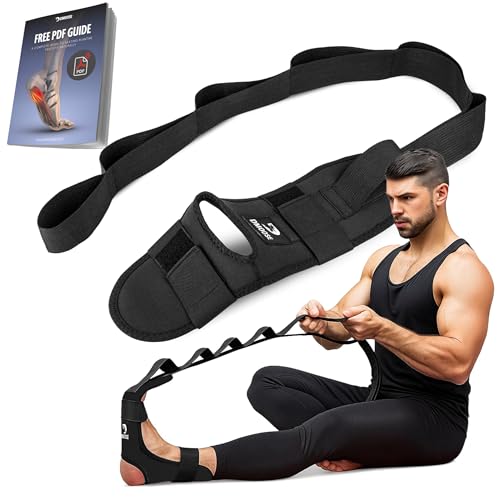
- 8 mm padded foot support
- Adjustable fit with seven loops
- Includes guided rehabilitation exercises
Best For: Runners seeking a comfortable, portable stretching strap
Best Foot Rocker
Curved Calf and Foot Stretcher

- Angled surface guides foot positioning
- Nonslip design supports stability
- Rated for up to 300 pounds
Best For: Home users wanting a stable platform-style stretch
Best Portable Strap
Foot and Calf Stretching Strap

- Six-loop webbing for varied grips
- Two orientations for different stretches
- Includes a convenient carrying pouch
Best For: Runners needing a compact stretching aid for travel
Dual-Foot Stability Pick – ProStretch Original Double Calf Stretcher
If you want calf stretchers for runners that can target both lower legs at once, the ProStretch Original Double uses a dual-foot rocker design for simultaneous or single-foot stretching. Its slip-resistant pads and included stretching guide make it a practical option for home routines.
Best For: Runners seeking a dual-foot rocker for tight calves, plantar fasciitis, or Achilles-related stretching.
Pros:
- Dual-foot design supports stretching one or both feet.
- Rocker shape positions the foot for a focused stretch.
- Slip-resistant rubber strips help limit sliding.
- Made in the U.S.A. with a one-year warranty.
Cons:
- Fits adult shoes only up to size 12.
- Recommended weight limit is 250 pounds.
- Use requires socks and rubber-soled athletic shoes.
Choose this model if efficient two-sided stretching matters most. Its fixed rocker format is less flexible than a band, but it offers a consistent setup for regular calf and foot work.
Portable Foam Option – Pro-Tec Athletics EVA Bold Calf Stretcher
For runners comparing calf stretchers for runners with portability in mind, the Pro-Tec EVA Bold combines a firm foam platform with a textured surface. It is designed for calf and Achilles stretching while also supporting balance and core exercises.
Best For: Runners who want a lightweight, travel-friendly stretcher that doubles as an exercise and balance tool.
Pros:
- Lightweight EVA foam construction weighs about 0.13 kg.
- Textured surface helps prevent slipping.
- Can support balance, strengthening, and core exercises.
- Closed-cell surface is designed to stay clean.
Cons:
- Firm foam may feel less cushioned than a softer stretcher.
- The notes do not specify a user weight limit.
- Its compact format may provide less foot enclosure than rocker-style designs.
This is a versatile pick for runners who want more than a single-purpose stretch. Its compact foam construction suits gym bags and travel, while the firm, textured surface supports controlled positioning.
Single-Foot Classic – ProStretch Original Calf Stretcher
The ProStretch Original is a straightforward choice among calf stretchers for runners who prefer a guided rocker rather than a wall or towel. Its design targets the calf, foot, and Achilles area, with non-slip pads intended to keep the stretcher in place.
Best For: Runners seeking a compact single-foot rocker for recurring calf tightness and foot-focused stretching.
Pros:
- Rocker design holds the foot in a consistent stretching position.
- Slip-resistant pads help reduce movement on surfaces.
- Designed for plantar fasciitis, Achilles tendonitis, and tight calves.
- Includes a QR-code stretching guide and one-year warranty.
Cons:
- Fits adult shoes up to size 12.
- Recommended weight limit is 250 pounds.
- Requires socks and rubber-soled athletic shoes.
The single-foot format works well when you want to adjust sides independently or focus on one problem area. It is a practical, no-assembly tool, though users looking to stretch both feet together may prefer the double version.
Deep-Stretch Upgrade – CalfPRO Slant Board Calf Stretcher
For runners who want calf stretchers for runners with a deeper, more controlled setup, the CalfPRO uses a patented heel lock to hold the heel as a pivot. Its heavy-duty ABS body, slip-resistant heel pad, and fold-flat design make it suitable for home, gym, or travel use.
Best For: Runners who want a physical-therapy-inspired deep calf and Achilles stretch with portability and a higher stated load capacity.
Pros:
- Heel-lock design is intended to create a deeper stretch.
- Heavy-duty ABS construction holds more than 300 pounds.
- Folds flat for transport and includes a door-jam groove for added stability.
- Supports pre-workout, post-workout, mobility, and rehabilitation routines.
Cons:
- At about 1.89 kg, it is heavier than the lightweight foam option.
- Its more structured design may be less convenient for quick storage than a simple band.
- The supplied notes do not identify an adjustable angle.
CalfPRO stands out for runners who prioritize leverage and heel stability over minimal weight. The fold-flat profile keeps it portable, while the heel lock offers a more guided approach to calf and Achilles mobility.
Best Adjustable Option – Customizable ProStretch Plus
For runners comparing calf stretchers for runners, the ProStretch Plus stands out for its adjustable heel rest, wide non-slip platform, and removable toe lift. It is designed to support stretching for tight calves, plantar fasciitis, Achilles tendonitis, and related lower-leg concerns.
Best For: Runners who want a customizable stretch with added foot and plantar fascia engagement.
Pros:
- Adjustable heel rest lets you increase or decrease stretch intensity.
- Removable toe lift can provide a deeper stretch through the toes and plantar fascia.
- Wide, slip-resistant platform is designed to stay stable on different surfaces.
- Includes a stretching guide and fits adult shoes up to size 14.
Cons:
- Requires socks and athletic shoes with rubber soles.
- Its larger adjustable design may be more than runners seeking a basic rocker need.
- Recommended weight limit is 300 pounds.
With its customization and removable toe lift, this is the most feature-rich choice in the group. It is particularly useful when you want to vary the stretch rather than rely on one fixed position.
Best for Strength and Stability – PowerStep UltraFlexx Foot Rocker
The PowerStep UltraFlexx is a straightforward option for runners seeking calf stretchers for runners that also support lower-leg strengthening. Its rocker design holds the foot in position for stretching the muscles, ligaments, and tendons of the foot and lower leg.
Best For: Runners who want a stable foot rocker for stretching and strengthening routines.
Pros:
- Designed to stretch and strengthen the foot and lower leg.
- Non-skid rocker bottom helps hold the foot in a stable position.
- Addresses tight calves, plantar fasciitis, Achilles tendonitis, and shin splints.
- Lightweight plastic construction is easy to handle.
Cons:
- Recommended for use with sturdy athletic shoes.
- Unlike the ProStretch Plus, the supplied notes do not mention adjustable settings.
This model keeps the design focused on stable positioning and a deep stretch. Choose it if you prefer a simple rocker that can fit into both flexibility and strengthening work.
Best Portable Pick – Blue Non-Slip Foot Stretcher
For runners who want calf stretchers for runners that are easy to keep nearby, this compact blue foot rocker is designed for use at home, in the office, at the gym, or during gaming sessions. Its adjustable features are intended to fit most foot sizes while supporting gradual ankle and calf stretching.
Best For: Runners who value portability and want to add gentle stretching to everyday routines.
Pros:
- Portable design supports use in several locations.
- Adjustable features are intended to fit most men’s and women’s foot sizes.
- Can support foot extension, ankle straightening, flexibility, balance, and posture work.
- Ergonomic rocker design is suited to gradual rehabilitation stretching.
Cons:
- The supplied notes identify walking as its sport type rather than running.
- It has fewer specifically listed features than the more adjustable ProStretch Plus.
- Use for rehabilitation or pain relief should be gradual.
This is a practical choice when convenience matters most. Its lightweight, compact format makes it easier to incorporate short stretching sessions into a busy day.
Best Padded Strap – DMoose Foot & Calf Stretcher
For runners comparing calf stretchers for runners, the DMoose strap is a flexible option for controlled foot, calf, hamstring, and Achilles stretching. Its padded foot support, adjustable fit, and multiple hand loops make it practical for rehabilitation or mobility work at home and on the go.
Best For: Runners who want a padded, adjustable strap for gradual stretching and rehabilitation exercises.
Pros:
- 8 mm neoprene padding helps cushion the foot during stretching.
- Adjustable hook-and-loop straps are designed to fit different foot sizes.
- Seven hand loops provide multiple grip positions for maintaining tension.
- Includes a QR-code exercise guide with step-by-step visuals.
Cons:
- As a strap-based stretcher, it requires the user to control the stretch and positioning.
- It does not provide the fixed platform-style support of a foot rocker.
The DMoose is a strong choice when comfort, portability, and adjustable positioning matter more than a rigid stretching surface. The padded cradle and loop options can help runners build a consistent routine without needing bulky equipment.
Best Foot Rocker – Curved Calf and Foot Stretcher
This foot rocker offers a stable alternative for runners shopping for calf stretchers for runners. Its angled, curved surface positions the foot for a deeper calf, ankle, and foot stretch, while the nonslip design helps keep the device steady during home exercises.
Best For: Runners who prefer a freestanding rocker with a guided foot position and broad weight capacity.
Pros:
- Curved, angled construction supports a deeper and more targeted stretch.
- Nonslip surface is designed to provide stability during use.
- Supports up to 300 pounds and accommodates shoe sizes up to US 12.5.
- Targets the calves, ankles, and feet for mobility work.
Cons:
- Its plastic platform is less portable than a compact stretching strap.
- The design may offer fewer positioning options than a multi-loop strap.
Choose this rocker if you want repeatable foot placement and a supported standing stretch. It is particularly practical for home routines where stability and a platform-style design are priorities.
Best Portable Strap – Foot and Calf Stretching Strap
For runners who need calf stretchers for runners that can travel, this looped strap combines a supportive foot cradle with a compact design. The durable nylon laminate, six-loop webbing, and included carrying pouch make it useful for pre- or post-run mobility at home, the gym, or while traveling.
Best For: Runners who want a lightweight, on-the-go strap for foot, calf, hamstring, and lower-body stretching.
Pros:
- Six-loop webbing offers multiple grip positions.
- Cradle design can be used in two orientations for different stretches.
- Supports stretching for the foot, calf, hamstring, thigh, and lower back.
- Includes an instruction manual and carrying pouch.
Cons:
- It provides less built-in cushioning than a strap specifically described with thick neoprene padding.
- Users must actively control tension and alignment during each stretch.
The red stretching strap is a sensible pick for runners who value portability and versatility. Its two-way positioning and storage pouch make it easy to keep in a gym bag or use during travel.
How We Picked the Best Calf Stretchers for Runners
We focused on the features that matter most after training: a stable base, a useful stretching angle, comfortable foot contact, and enough control to avoid forcing a tight calf or Achilles tendon. We also considered whether each design supports one or both feet, how easily the intensity can be adjusted, and whether it is practical for home, office, or travel use.
Because runners have different mobility needs, this list includes both rigid platforms and flexible straps. A rocker or slant board can provide repeatable positioning, while a strap is usually lighter and offers more gradual control.
Quick Comparison
| Design | Best For | Main Advantage | Potential Limitation |
|---|---|---|---|
| Rocker | Routine calf and foot stretching | Simple, repeatable motion | Less angle customization |
| Slant board | Deeper standing stretches | Stable, consistent incline | Needs more floor space |
| Adjustable stretcher | Gradual progression | More control over intensity | Can take longer to set up |
| Stretching strap | Portability and versatility | Lightweight and packable | Requires active positioning |
Key Buying Factors for Calf Stretchers for Runners
Stability and Traction
Look for a broad base, textured contact points, and non-slip feet or surfaces. Stability is especially important if you are stretching while fatigued or using a deeper angle. A platform that shifts can make it harder to control the movement.
Stretch Angle and Adjustability
Beginners often benefit from a moderate, fixed angle, while experienced runners may prefer adjustable settings or a strap that allows small changes in tension. More range is not automatically better; the useful setting is one you can hold comfortably without sharp pain or excessive strain.
Foot and Calf Comfort
Padding, arch support, rounded edges, and textured surfaces can affect how long you can use the device. If plantar fascia or heel sensitivity is a concern, prioritize cushioning and smooth transitions over aggressive ridges.
Size, Storage, and Portability
A rigid stretcher is convenient for a dedicated recovery area but may be awkward to carry. Choose a compact rocker or strap if you travel to races, work at an office, or want to keep the tool in a gym bag.
Build Quality and Maintenance
Check the materials, weight capacity where provided, strap stitching, and ease of cleaning. A sturdy tool is more likely to remain stable and retain its shape through frequent use.
Who Should Buy Which Calf Stretchers for Runners?
Choose a rocker if you want a quick, low-effort routine for calves, feet, and Achilles mobility. Choose a slant board if you prefer standing stretches and need a firm platform for repeated sessions. Choose an adjustable model if your flexibility is changing or you want to progress gradually. Choose a strap if portability, affordability, and multi-position stretching are your top priorities.
Whichever style you select, begin with gentle tension, keep movements controlled, and stop if you feel sharp pain, numbness, or worsening symptoms. Persistent pain or an acute injury should be evaluated by a qualified healthcare professional rather than managed with stretching equipment alone.