Training indoors is easier to structure when your setup delivers reliable resistance and meaningful power data. The best bike trainers with power meters can support interval workouts, virtual racing, and consistent performance tracking from home.
This roundup compares direct-drive smart trainers, pedal and crank-based power meters, and simpler wheel-on options so you can choose the right balance of accuracy, compatibility, features, and price.
Best 10 Bike Trainers with Power Meter Picks for 2026
Best Connected Trainer

- ±2% power accuracy and 1800W resistance
- Built-in Wi-Fi for pairing and updates
- Includes an 11-speed cassette
Best For: Structured training and connected indoor riding
Best Dual-Sided Pedal Meter

- Dual-sided power measurement
- ±1% accuracy with IAV calculation
- Bluetooth and ANT+ connectivity
Best For: Road riders seeking detailed power data
Best High-Power Value Trainer
ThinkRider X2Max Smart Trainer

- 2000W capacity with ±2% power error
- Simulates slopes up to 18%
- ANT+ and BLE compatible
Best For: High-resistance virtual training
Best Single-Sided Option

- Left-pedal power measurement
- ±1% accuracy and cadence sensing
- Bluetooth and ANT+ support
Best For: Road riders adding power data to an existing setup
Self-Powered Smart Trainer

- ±1% claimed accuracy without calibration
- 2,500W resistance and 25% gradient simulation
- ANT+, Bluetooth, PC, GPS, and Zwift support
Best For: High-power indoor training with flexible connectivity
Crank-Based Power Meter

- ±1% claimed accuracy with dual-sided measurement
- ANT+ and Bluetooth 5.0 connectivity
- Up to 300 hours of battery life with IPX7 rating
Best For: Compatible Easton crankset owners training indoors and outdoors
Wi-Fi Direct-Drive Trainer
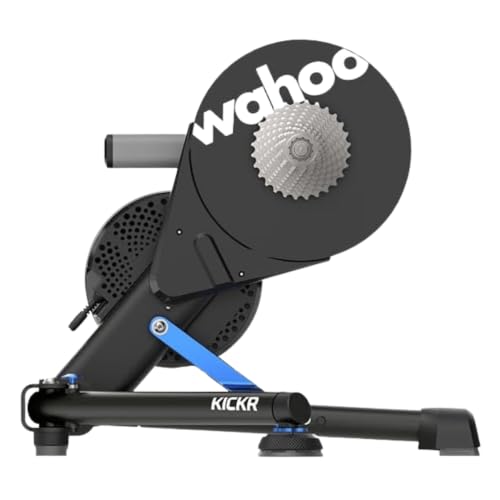
- 2,200W resistance with claimed ±1% accuracy
- Wi-Fi connectivity and automatic calibration
- AXIS feet and high-inertia flywheel for realistic feel
Best For: Structured training with stable connectivity and precise resistance
Best Budget Magnetic Trainer

- Six manually adjustable resistance levels
- Fits many 26–28-inch and 700C bikes
- Stable wheel-on design with riser block
Best For: Casual indoor training on a budget
Best Smart Trainer Setup

- Direct-drive trainer with smooth resistance
- Integrated Wi-Fi and automatic updates
- Includes Zwift Cog and Click shifter
Best For: Connected Zwift and structured training
Best Simple Fluid Trainer

- Fluid wheel-on resistance design
- Fits road, mountain, and hybrid bikes
- Smart-equipped option works with Zwift
Best For: Straightforward indoor cycling with broad bike compatibility
Best Connected Trainer – Wahoo KICKR CORE 2
The Wahoo KICKR CORE 2 is a strong choice for cyclists looking for bike trainers with power meter functionality, a smooth ride feel, and straightforward indoor setup. Its direct-drive design offers up to 1800 watts, ±2% power accuracy, built-in Wi-Fi, and support for 8- to 13-speed bikes.
Best For: Structured indoor training, Zwift users, and riders who value reliable connectivity and a stable, quiet trainer.
Pros:
- Provides ±2% power accuracy with up to 1800 watts of resistance.
- Built-in Wi-Fi supports faster pairing and automatic updates.
- Includes an 11-speed cassette and supports 8- to 13-speed setups.
- Offers a smooth, road-like ride feel and simulates gradients up to 16%.
Cons:
- Its 11-speed cassette may not suit every drivetrain without adjustments.
- The one-year manufacturer warranty is relatively limited.
The KICKR CORE 2 combines useful power accuracy with broad drivetrain compatibility and convenient connectivity. It is a practical all-around option for riders who want a polished smart-trainer experience.
Best Dual-Sided Pedal Meter – Favero Assioma Duo
Favero Assioma Duo Power Meter Pedal | Why We Like The Favero Assioma DUO Pedal
Check Price On AmazonThe Favero Assioma Duo is a pedal-based option for cyclists comparing bike trainers with power meter setups. It measures power on both sides, delivers ±1% accuracy, and connects through Bluetooth or ANT+ while also tracking cadence.
Best For: Road cyclists who want dual-sided power data without replacing their indoor trainer.
Pros:
- Measures power from both pedals for detailed output data.
- Rated for ±1% accuracy using Favero’s IAV power calculation system.
- Supports both Bluetooth and ANT+ connectivity.
- Includes an inbuilt cadence sensor and gyroscope.
Cons:
- It is designed for road bikes rather than a broad range of bike types.
- As a pedal power meter, it does not provide trainer-based resistance control.
The Assioma Duo is best viewed as a power-measurement upgrade rather than a smart trainer. Its dual-sided readings and wireless compatibility make it useful for consistent power tracking indoors or outdoors.
Best High-Power Value Trainer – ThinkRider X2Max Smart Trainer
The ThinkRider X2Max is a smart direct-drive trainer for riders shopping among bike trainers with power meter capability. It produces up to 2000 watts, reports ±2% power-meter error, simulates slopes up to 18%, and works with ANT+ and Bluetooth cycling software such as Zwift.
Best For: Indoor riders who want high resistance, virtual-gradient simulation, and broad wireless software compatibility.
Pros:
- Offers up to 2000 watts of power with ±2% power-meter error.
- Simulates gradients up to 18% through variable electromagnetic resistance.
- Supports ANT+ and BLE connections with mainstream cycling software.
- Its I-beam triangular structure is designed for balance and stability.
Cons:
- The cassette is not included.
- At about 58 dB while running at 30 km/h, it may not be the quietest option available.
- Its one-year warranty is limited.
The X2Max stands out for its high 2000-watt ceiling and strong simulated-gradient range. Buyers should budget for a separate cassette and confirm software and drivetrain compatibility before purchase.
Best Single-Sided Option – Favero Assioma Uno
Favero Assioma Uno Power Meter Pedal | Why We Like The Favero Assioma UNO Pedal
Check Price On AmazonThe Favero Assioma Uno is a single-sided pedal power meter for riders evaluating bike trainers with power meter alternatives. Its left pedal sensor supports Bluetooth and ANT+, provides ±1% accuracy, and adds cadence, IAV Power Phase, and IAV Rider Position metrics.
Best For: Road cyclists who want power-based training data from a left-pedal sensor.
Pros:
- Provides ±1% power accuracy from the left pedal.
- Works with Bluetooth and ANT+ devices and training platforms.
- Includes cadence sensing and a gyroscope.
- Offers IAV Power Phase and IAV Rider Position metrics.
Cons:
- It measures power on one side rather than both sides.
- It is intended for road bikes and uses a 9/16-inch thread.
- It does not control trainer resistance.
The Assioma Uno offers a compact way to add power data to an existing bike and trainer setup. Its single-sided design keeps the feature set focused, while the wireless connectivity supports common training equipment.
Self-Powered Smart Trainer – ThinkRider XXPRO
The ThinkRider XXPRO is a strong option for cyclists comparing bike trainers with power meter functionality. Its direct motor-drive design provides claimed ±1% data accuracy without calibration, while 2,500 watts of power and 25% simulated gradients support demanding indoor sessions.
Best For: Riders who want a high-power smart trainer with downhill simulation and broad app connectivity.
Pros:
- Direct motor drive with claimed ±1% accuracy and no calibration required.
- Self-generates power, so it can be used without connecting a power adapter.
- Supports Bluetooth, ANT+, bike GPS, PC, and Zwift connectivity.
- Simulates gradients up to 25% and can reproduce downhill sections.
Cons:
- Its feature set may be more than needed for riders seeking a basic trainer.
- Compatibility with your preferred devices and apps should be confirmed before purchase.
Choose the XXPRO if high resistance capacity, map-based slope simulation, and flexible wireless connections matter more than keeping the setup minimal.
Crank-Based Power Meter – CooSpo S10 Power Meter
The CooSpo S10 adds power measurement to a compatible bicycle, making it a useful choice for cyclists researching bike trainers with power meter setups. It measures total and left/right power plus cadence at a claimed ±1% accuracy, but it is specifically designed for Easton 110 BCD 4-bolt crankset systems.
Best For: Riders with a compatible Easton crankset who want one power meter for indoor training and outdoor riding.
Pros:
- Dual-sided measurement tracks total power, left/right balance, and cadence.
- Supports ANT+ and Bluetooth 5.0 for Garmin, Wahoo, Zwift, and similar devices.
- Rechargeable battery provides up to 300 hours of use and carries an IPX7 rating.
- Lightweight aluminum construction and app-based calibration support regular training.
Cons:
- Compatibility is limited to Easton 110 BCD 4-bolt crankset systems.
- Installation and calibration require checking fit and using the COOSPO Tools app.
The S10 is best viewed as a power-meter upgrade rather than a smart trainer itself. Confirm the crankset interface first, then use its dual-sided data with a compatible indoor trainer or cycling app.
Wi-Fi Direct-Drive Trainer – Wahoo KICKR V6
The Wahoo KICKR V6 is a direct-drive smart trainer for cyclists comparing bike trainers with power meter capabilities. It delivers resistance up to 2,200 watts with claimed ±1% power accuracy, automatic calibration, and Wi-Fi connectivity for stable data transfer to compatible computers, tablets, and phones.
Best For: Serious indoor riders who prioritize accurate power, Wi-Fi connectivity, and realistic ride feel.
Pros:
- Provides over 2,200 watts of resistance with claimed ±1% accuracy.
- Automatic calibration helps maintain consistent power readings.
- Wi-Fi connectivity supports fast data transfer and includes a Race Mode.
- High-inertia flywheel and AXIS feet add a more outdoor-like ride feel.
Cons:
- At 22 kg, it is a substantial trainer to move or store.
- It simulates gradients up to 20%, below the XXPRO’s listed 25% maximum.
- The supplied configuration is built around an 11-speed cassette.
The KICKR V6 is a well-equipped choice when precise resistance control and connection stability are priorities. Its automatic calibration and physical ride-feel features make it especially appealing for structured indoor training.
Best Budget Magnetic Trainer – Sportneer Indoor Bike Trainer
For riders seeking bike trainers with power meter functionality at a budget-friendly entry point, the Sportneer is a straightforward magnetic stand for indoor workouts. It fits many 26–28-inch and 700C road or mountain bikes, offers six manually controlled resistance levels, and includes useful setup accessories.
Best For: Casual indoor riders who want adjustable resistance and broad bike compatibility without a direct-drive setup.
Pros:
- Fits many 26–28-inch and 700C bikes with compatible rear axles.
- Six resistance levels adjust from a handlebar-mounted remote.
- Includes a front-wheel riser block and quick-release skewer.
- Wide base and adjustable anti-slip feet support stable riding.
Cons:
- It is a magnetic wheel-on trainer rather than a power-meter-equipped smart trainer.
- Noise can vary with tire material and tread.
- Thru-axle bikes require the appropriate non-standard version and adapter.
The Sportneer is best viewed as a simple, stable indoor trainer for effort-based workouts. Riders who specifically need measured power data will need to verify compatibility with a separate power meter.
Best Smart Trainer Setup – Wahoo KICKR CORE 2
The Wahoo KICKR CORE 2 is the strongest choice here for structured indoor training and connected apps. This direct-drive trainer includes a pre-installed Zwift Cog, Zwift Click shifter, integrated Wi-Fi, electronic resistance, and support for 8- to 13-speed bikes.
Best For: Riders who want a connected direct-drive trainer for Zwift, structured workouts, and a realistic road-like ride feel.
Pros:
- Direct-drive design delivers smooth, road-like resistance.
- Integrated Wi-Fi supports faster pairing and automatic updates.
- Includes Zwift Cog and Click for a simpler Zwift setup.
- Supports 8- to 13-speed bikes and multiple axle standards.
Cons:
- It requires AC power and is more involved than a basic wheel-on trainer.
- The supplied notes do not identify a built-in power meter.
- Its connected features are most useful with compatible apps and devices.
For shoppers comparing bike trainers with power meter capabilities, the KICKR CORE 2 offers electronic resistance and a sophisticated connected platform, but the supplied specifications do not confirm integrated power-meter measurement. Confirm the data features you need before buying.
Best Simple Fluid Trainer – Saris Fluid2
The Saris Fluid2 is a traditional fluid wheel-on trainer for riders who want a compact, uncomplicated indoor setup. It fits road, mountain, and hybrid bikes and has a smart-equipped option for compatibility with the Zwift app, making it a practical alternative to more advanced direct-drive models.
Best For: Riders who prefer a simple fluid trainer for steady indoor cycling and broad bike-type compatibility.
Pros:
- Compatible with road, mountain, and hybrid bikes.
- Fluid resistance provides a simple indoor-training format.
- Smart-equipped option supports Zwift app compatibility.
- Backed by a limited lifetime warranty.
Cons:
- The supplied specifications list only one resistance setting.
- It is a wheel-on trainer rather than a direct-drive model.
- The notes do not confirm an integrated power meter.
The Fluid2 suits riders prioritizing simplicity and compatibility over advanced data features. If accurate power-based training is essential, look for the smart-equipped configuration or plan to use a separate power meter.
How We Picked the Best Bike Trainers with Power Meters
We evaluated these products by looking at how they measure or support power-based training, how they connect to cycling apps, and how practical they are for everyday indoor use. Key considerations included stated wattage capacity, simulated gradient, resistance control, transmission standards such as ANT+ and Bluetooth, drivetrain compatibility, installation demands, and overall versatility.
Because this list includes both smart trainers and standalone power meters, it is important to understand the distinction. A smart trainer measures power at the trainer and controls resistance, while pedal or crank-based meters measure your effort on the bike and can be used indoors or outdoors. Wheel-on trainers may offer a lower-cost entry point but typically provide less automation than direct-drive models.
Quick Comparison
| Type | Best For | Main Advantage | Potential Trade-Off |
|---|---|---|---|
| Direct-drive smart trainer | Structured indoor training | Automatic resistance and stable power data | Higher cost and drivetrain setup |
| Power-meter pedals | Indoor and outdoor versatility | Move easily between compatible bikes | Requires a separate compatible trainer |
| Power-meter crankset | Integrated bike-based measurement | Clean, permanent installation | Fit and crank compatibility must be verified |
| Wheel-on trainer | Budget-conscious riders | Simple setup and broad bike fit | More tire noise and less precise control |
Key Buying Factors for Bike Trainers with Power Meter
Power Accuracy and Consistency
Look for a clearly stated accuracy figure and consider whether the device measures total power or one side of your pedal stroke. Dual-sided pedals can provide left-and-right readings, while single-sided systems may cost less but estimate total output.
Trainer Type and Resistance Control
Direct-drive trainers remove the rear wheel and generally provide better stability, quieter operation, and more realistic resistance changes. Wheel-on models are easier to store and install, but tire pressure, tire type, and roller contact can affect the experience.
App and Wireless Compatibility
Check support for ANT+, Bluetooth, and the training platforms you use, such as Zwift or other structured-workout apps. If you want automatic grade simulation or ERG mode, confirm that the trainer supports controllable resistance rather than only broadcasting data.
Bike and Drivetrain Fit
Verify cassette speed, freehub requirements, axle standards, crank length, chainring bolt pattern, and pedal-thread compatibility before ordering. A trainer with a preinstalled cassette or Zwift Cog may simplify setup, but it still needs to match your bike and shifting arrangement.
Noise, Space, and Maintenance
Direct-drive units are usually the better choice for shared living spaces, while wheel-on trainers need careful roller adjustment and regular tire checks. Also consider folding design, storage footprint, calibration requirements, and whether you need a riser block or additional adapters.
Who Should Buy Which Bike Trainers with Power Meter?
Choose a Direct-Drive Smart Trainer for Serious Indoor Training
Riders who want automatic resistance, realistic climbs, ERG workouts, and dependable app integration should prioritize a model such as the Wahoo KICKR CORE 2, KICKR V6, or a high-output ThinkRider trainer. These are best for frequent use and demanding virtual riding.
Choose Power-Meter Pedals for Flexibility
Favero Assioma Uno and Duo pedals suit cyclists who want one power-meter system for both indoor and outdoor riding. The Uno is a simpler, lower-cost option, while the Duo adds dual-sided measurement.
Choose a Crank-Based Meter for a Permanent Setup
The CooSpo crankset can make sense when its crank length, bottom-bracket arrangement, and chainring pattern match your bike. It is a practical option for riders who prefer a bike-based installation rather than pedal-based hardware.
Choose a Wheel-On Trainer for Occasional or Budget Use
The Sportneer and Saris Fluid2 are better suited to casual indoor riding, warmups, and riders who want minimal installation. They are less ideal if precise, automatically controlled power training is your main goal.