The right bike trainer can make indoor cycling more consistent, measurable, and convenient, whether you are training through winter or fitting workouts into a busy schedule.
We compare 10 options across smart direct-drive, wheel-on fluid, and magnetic designs so you can match resistance, connectivity, noise, and budget to your riding goals.
Best 10 Bike Trainer Picks for 2026
Smart Training Upgrade
Wahoo KICKR CORE 2 with Zwift Cog

- Direct-drive trainer with smooth electronic resistance
- Built-in Wi-Fi and included Zwift Cog and Click
- Fits 8- to 13-speed bikes; supports 1,800 watts
Best For: Connected Zwift training and structured indoor workouts
Portable Fluid Option
Foldable Fluid Bike Trainer Stand

- Progressive fluid resistance for natural-feeling effort
- Foldable stainless-steel frame with carrying bag
- Fits most 26- to 29-inch and 700c wheels
Best For: Portable, non-smart indoor cycling and seasonal training
Connected Cassette Trainer

- Direct-drive trainer with included 11-speed cassette
- Built-in Wi-Fi and ±2% power accuracy
- Supports up to 1,800 watts and a 16% grade
Best For: 11-speed riders seeking connected smart training
Adjustable Budget Stand
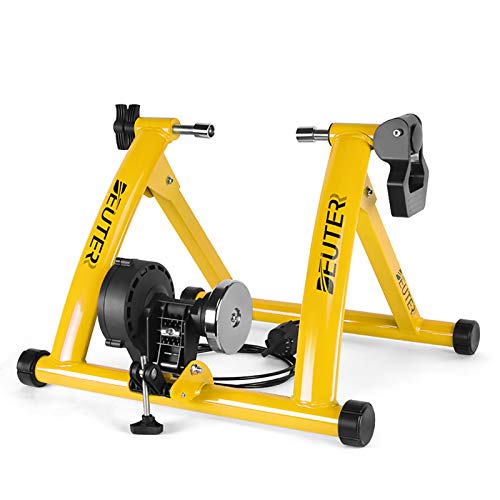
- Six handlebar-adjustable resistance levels
- Folding stand fits 26- to 29-inch and 700c wheels
- Rated for up to 330 pounds
Best For: Simple, affordable indoor riding and off-season exercise
Premium Smart Trainer

- 2,500W output and up to 25% gradient simulation
- ±1% accuracy with no calibration required
- ANT+, Bluetooth, GPS computer, and Zwift compatibility
Best For: Serious riders wanting high-power, realistic indoor training
Budget Magnetic Stand

- Six manually adjustable magnetic resistance levels
- Fits many 26–28-inch and 700C-wheel bikes
- Stable frame with quick release and front riser block
Best For: Simple, stable indoor workouts on a compatible bike
Connected Training Pick

- 2,000W power with ±2% stated measurement error
- ANT+ and Bluetooth support for software training
- Automatic resistance simulates gradients up to 18%
Best For: App-connected riders seeking quiet, automatic resistance control
Best with Extra Features
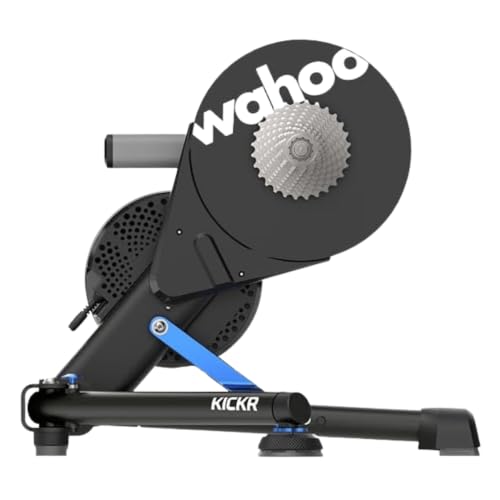
- 2,200W resistance and +/- 1% power accuracy
- Wi-Fi connectivity with automatic calibration
- AXIS feet for enhanced ride feel
Best For: Serious cyclists wanting precise, connected indoor training
Simple Fluid Trainer
Saris Fluid2 Indoor Bike Trainer

- Fluid resistance for conventional indoor workouts
- Fits road, mountain, and hybrid bikes
- Lightweight 7.3-pound aluminum construction
Best For: Straightforward indoor riding and basic virtual training
Connected Wheel-On Trainer

- Electronic resistance with +/- 5% accuracy
- ANT+ FE-C and Bluetooth connectivity
- Wheel-on setup with Zwift certification
Best For: App-based training without removing the rear wheel
Smart Training Upgrade – Wahoo KICKR CORE 2 with Zwift Cog
This direct-drive bike trainer is built for structured indoor riding, with smooth electronic resistance, integrated Wi-Fi, and a Zwift Cog and Click shifter included. It fits 8- to 13-speed bikes and delivers up to 1,800 watts of resistance.
Best For: Cyclists who want connected Zwift training, quick pairing, and a stable road-like ride feel.
Pros:
- Integrated Wi-Fi supports faster pairing and automatic updates.
- Zwift Cog and Click shifter are included for a streamlined setup.
- Direct-drive design provides smooth resistance for hard efforts and structured workouts.
- Fits 8- to 13-speed bikes and supports up to 1,800 watts.
Cons:
- At 13.6 kg, it is less convenient to move than a basic folding trainer.
- Requires an AC power connection for electronic resistance features.
The KICKR CORE 2 is a strong choice when connectivity and realistic resistance matter more than portability. Its included Zwift hardware makes it especially convenient for riders building a dedicated indoor setup.
Portable Fluid Option – Foldable Fluid Bike Trainer Stand
This fluid bike trainer converts a road or mountain bike into an indoor stationary setup without requiring a direct-drive installation. Its progressive resistance increases as you pedal faster, while the foldable stainless-steel frame is designed for storage and travel.
Best For: Riders who want a portable, non-smart trainer for seasonal workouts, fitness, and indoor conditioning.
Pros:
- Fluid resistance provides progressively harder effort as cadence increases.
- Foldable frame and included carrying bag make storage and transport easier.
- Stainless-steel construction, rubber pads, and a front riser block support stability.
- Compatible with most 26- to 29-inch and 700c wheels.
Cons:
- It does not list electronic connectivity or smart-training features.
- Rear-wheel contact may produce more tire wear than a direct-drive trainer.
This model keeps indoor riding straightforward and portable. It is a practical pick for cyclists who value progressive resistance and easy storage over app connectivity or power-based training features.
Connected Cassette Trainer – Wahoo KICKR CORE 2 11-Speed
This direct-drive bike trainer includes an 11-speed cassette and is designed for quiet, connected indoor riding. Integrated Wi-Fi, ±2% power accuracy, and a stated 16% grade simulation make it suitable for structured training and Zwift-compatible workouts.
Best For: Riders with an 11-speed setup who want a ready-to-use smart trainer with built-in Wi-Fi.
Pros:
- Includes an 11-speed cassette for a more complete setup.
- Built-in Wi-Fi supports connectivity and automatic updates.
- Rated for ±2% power accuracy and up to a 16% grade.
- Fits 8- to 13-speed bikes and supports up to 1,800 watts.
Cons:
- The included cassette may not match every bike’s drivetrain configuration.
- Its 13.6 kg weight makes it less portable than a folding wheel-on model.
If you want a smart bike trainer and already ride an 11-speed bike, this package reduces the need to source a cassette separately. Its Wi-Fi and power specifications also make it a capable option for app-based training.
Adjustable Budget Stand – Magnetic Bike Trainer
This magnetic bike trainer offers a simple way to ride indoors when weather or traffic keeps you off the road. Six handlebar-adjustable resistance levels, a folding frame, and compatibility with 26- to 29-inch and 700c wheels make it a flexible option for home exercise.
Best For: Budget-conscious road and mountain-bike riders who want adjustable resistance and easy storage.
Pros:
- Six resistance levels can be changed from the handlebars.
- Folding design supports quick setup, disassembly, and storage.
- Stable pyramid-style frame is rated for up to 330 pounds.
- Fits 26- to 29-inch wheels, including 700c sizes.
Cons:
- Rough mountain-bike tires may create more noise during use.
- It is a wheel-on magnetic trainer rather than a connected smart trainer.
- The frame material is listed as plastic, despite the alloy-steel material listing.
This trainer focuses on basic indoor exercise rather than immersive or data-driven training. It makes sense for riders who need a foldable stand with multiple resistance settings and broad wheel compatibility.
Premium Smart Trainer – ThinkRider XXPRO
The ThinkRider XXPRO is a high-output bike trainer for riders who want realistic, software-controlled indoor workouts. Its direct motor drive delivers up to 2,500W, simulates gradients up to 25%, and supports ANT+ and Bluetooth connections.
Best For: Serious cyclists seeking accurate, powerful, connected indoor training with downhill simulation.
Pros:
- Direct motor drive provides ±1% data accuracy without calibration.
- Generates its own electricity, so it can operate without a power adapter.
- Supports ANT+, Bluetooth, bike GPS computers, and Zwift.
- Simulates climbs and descents, including gradients up to 25%.
Cons:
- Its advanced performance may be more than casual riders need.
- The supplied notes do not specify noise level or included accessories.
With its combination of high power, accurate measurement, and realistic slope control, the XXPRO is a strong choice for demanding virtual rides and structured training sessions.
Budget Magnetic Stand – Sportneer Indoor Bike Trainer
The Sportneer is a practical magnetic bike trainer for converting a compatible road or mountain bike into an indoor setup. It offers six manually adjustable resistance levels, quick bike release, and a stable steel frame with a 300-pound load capacity.
Best For: Home riders who want straightforward, adjustable indoor training without a smart connection.
Pros:
- Fits many bikes with 26–28-inch or 700C wheels and compatible rear axles.
- Six resistance levels can be changed from the handlebar-mounted remote.
- Includes a quick-release lever, front wheel riser block, and skewer.
- Wide base, low center of gravity, and adjustable anti-slip feet improve stability.
Cons:
- Road or slick tires are recommended for lower noise; tire choice affects sound.
- Magnetic resistance is manually adjusted rather than controlled by cycling software.
- Thru-axle bikes require the appropriate non-standard version with adapter.
This trainer focuses on simple setup and dependable stability. It is a sensible option for riders who prefer a traditional indoor stand and do not need virtual gradient control.
Connected Training Pick – ThinkRider X2Max
The ThinkRider X2Max is a connected bike trainer designed for software-guided indoor rides. It supports ANT+ and Bluetooth, delivers up to 2,000W, and automatically adjusts resistance to simulate gradients of up to 18% when paired with compatible cycling software.
Best For: Riders who want quiet, app-connected training with automatic resistance changes and a stable platform.
Pros:
- Supports ANT+ and Bluetooth and works with mainstream software such as Zwift.
- Provides up to 2,000W of power with a stated ±2% power-meter error.
- Automatically matches simulated resistance to map gradients up to 18%.
- Produces about 58dB of noise at 30km/h according to the supplied notes.
Cons:
- Its simulated gradient and power rating are below the XXPRO’s specifications.
- The supplied notes do not specify included accessories or calibration requirements.
The X2Max balances smart features, useful power, and low operating noise. Its automatic resistance control makes it a good fit for structured virtual rides while the I-beam frame supports riding stability.
Best with Extra Features – Wahoo KICKR V6
The Wahoo KICKR V6 is a premium direct-drive bike trainer for riders who want accurate, high-powered indoor training. Its built-in Wi-Fi, automatic calibration, and realistic ride feel make it well suited to structured workouts and virtual cycling.
Best For: Serious cyclists seeking precise, connected indoor training with a realistic road-like feel.
Pros:
- Provides up to 2,200 watts of resistance with stated accuracy of +/- 1%.
- Built-in 2.4 GHz Wi-Fi supports stable, instantaneous ride-data transfer.
- AXIS feet and the high-inertia flywheel enhance side-to-side movement and ride feel.
- Automatic calibration helps maintain accurate power readings without manual calibration.
Cons:
- At 22 kg, it is substantially heavier than the wheel-on Saris trainers.
- The advanced feature set may be more than casual riders need.
The KICKR V6 stands out when power accuracy, connectivity, and realistic movement matter most. Its direct-drive design and included adapters support road, mountain, and hybrid bikes, though its premium, heavy build is best suited to a dedicated training setup.
Simple Fluid Trainer – Saris Fluid2 Indoor Bike Trainer
The Saris Fluid2 is a straightforward wheel-on bike trainer for indoor riding with a fluid resistance mechanism. It fits road, mountain, and hybrid bikes, and its smart-equipped option is compatible with the Zwift app for riders who want a practical entry into connected training.
Best For: Riders wanting a simple indoor trainer for general workouts and compatible virtual cycling.
Pros:
- Fluid resistance provides a conventional indoor training experience.
- Compatible with road, mountain, and hybrid bikes.
- The compact 7.3-pound design is easier to handle and store than heavier smart trainers.
- Includes a limited lifetime warranty.
Cons:
- The supplied notes do not specify power accuracy or built-in wireless standards.
- Its wheel-on design does not offer the direct-drive setup of the KICKR V6.
The Fluid2 is a sensible choice for riders who prioritize a familiar, uncomplicated trainer format. Its broad bike compatibility and lighter weight make it convenient, while buyers seeking detailed smart-training specifications may prefer a more fully documented connected model.
Connected Wheel-On Trainer – Saris M2 Smart Trainer
Saris M2 Smart Indoor Bike Trainer, Compatible with Zwift App, Black, Made in the USA
Check Price On AmazonThe Saris M2 Smart is a wheel-on bike trainer that adds electronic resistance and app connectivity without requiring you to remove the rear wheel. For riders comparing a connected bike trainer, its dual ANT+ FE-C and Bluetooth support offers compatibility with indoor cycling platforms including Zwift.
Best For: Road and mountain-bike riders who want app-controlled workouts in a convenient wheel-on format.
Pros:
- Connects to the rear wheel, so setup does not require wheel removal.
- Dual ANT+ FE-C and Bluetooth support enables connection to indoor cycling apps.
- Zwift certified and includes a one-month Rouvy subscription.
- Electromagnetic resistance delivers a controlled, consistent workout.
Cons:
- Stated power accuracy is +/- 5%, less precise than the KICKR V6’s stated +/- 1%.
- Noise is listed at 69 decibels at 20 mph.
- The supplied bike compatibility details list mountain bikes rather than hybrid bikes.
The M2 Smart offers a useful middle ground: convenient wheel-on setup, electronic resistance, and broad app connectivity. It is a practical fit for riders who want interactive training without moving to a heavier direct-drive system.
How We Picked the Best Bike Trainers
We evaluated these Bike Trainers by looking at the features that have the greatest effect on everyday use: resistance type, setup, connectivity, compatibility, noise, portability, stability, and overall training value. Smart models were considered for app support, wireless protocols, simulated gradients, and power-focused training features. Wheel-on models were assessed for ease of storage, fit across common wheel sizes, resistance adjustment, and suitability for recreational riding.
Because the lineup includes both premium direct-drive units and simpler stands, the “best” choice depends on how you ride. A connected trainer may be worth the additional cost for structured workouts, while a magnetic or fluid trainer can be a practical way to ride indoors without replacing your bike or learning a complex setup.
Quick Comparison
- Best for a connected training setup: Wahoo KICKR CORE 2 and KICKR V6 models.
- Best for high-gradient virtual training: ThinkRider XXPRO and X2Max smart trainers.
- Best for straightforward wheel-on riding: Fluid, Sportneer, and Saris Fluid2 trainers.
- Best for app-connected wheel-on training: Saris M2.
- Best for a simple budget setup: Magnetic bicycle trainer stands.
Key Buying Factors for a Bike Trainer
Resistance and Trainer Style
Direct-drive trainers remove the rear wheel and connect to the drivetrain, usually providing better stability, lower tire wear, and more realistic power control. Wheel-on fluid and magnetic trainers are easier to store and generally work with more existing bikes, but they can transmit more tire noise and may require careful roller adjustment.
Smart Connectivity
If you plan to use Zwift or another training platform, check for ANT+ and Bluetooth support, device compatibility, and whether the trainer can automatically change resistance. A basic indoor stand may be enough for free riding, but smart control is more useful for virtual routes, interval sessions, and performance tracking.
Bike, Cassette, and Wheel Compatibility
Confirm your wheel diameter, axle type, drivetrain speeds, and cassette requirements before ordering. Direct-drive models may include a cassette, Zwift Cog, or neither, so factor in installation and replacement costs. Wheel-on models also need the correct adapter and a compatible tire-to-roller fit.
Noise, Space, and Maintenance
Fluid and direct-drive designs are often preferable when noise matters, although the bike, tire, floor, and riding intensity also affect sound. Look for folding legs or a compact frame if storage space is limited, and use a trainer-specific tire where recommended for wheel-on models.
Who Should Buy Which Bike Trainer?
Choose a premium Wahoo direct-drive trainer if you want reliable app integration, a polished setup, and a strong foundation for frequent structured training. Choose a ThinkRider smart model if high simulated gradients and substantial resistance are priorities and you are comfortable verifying software and drivetrain compatibility.
Choose a Saris M2 or Saris Fluid2 if you want to keep your current bike mounted on its rear wheel while adding indoor training or app compatibility. Choose a Sportneer, Fluid, or basic magnetic stand if affordability, portability, and simple workouts matter more than automatic resistance control.
Before buying, confirm the trainer’s current specifications, included adapters, cassette arrangement, and app compatibility. Those details can vary by package and are more important than headline power or gradient numbers alone.