A touchscreen bike computer can make route planning, ride tracking, and training data easier to manage while you are moving. The best models balance a clear display with dependable navigation, long battery life, and weather-ready durability.
We compare 10 leading options, from compact training computers to premium navigators and sensor bundles, so you can choose the right feature set without paying for capabilities you will not use.
Best 10 Bike Computers with Touchscreen Picks for 2026
Best Navigation Value

- 3.3-inch touchscreen plus physical buttons
- Dual-band, five-satellite positioning
- Voice navigation and automatic rerouting
Best For: Touchscreen navigation and training-focused riders
Best Premium Upgrade

- Vivid 3.5-inch touchscreen display
- Up to 60 hours in battery-saver mode
- Advanced training and group-ride tools
Best For: Performance-focused cyclists wanting premium connected features
Best Compact Offline Mapping
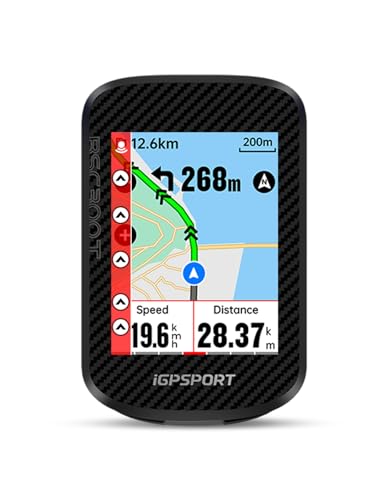
- 2.4-inch touchscreen with six buttons
- Worldwide offline maps and off-course alerts
- Supports 130-plus riding data points
Best For: Lightweight offline navigation and e-bike use
Best Easy-to-Use Navigator

- Glove- and rain-friendly 3-inch touchscreen
- Preloaded road, trail, and indoor profiles
- E-bike routing and ride-awareness features
Best For: Recreational, touring, and e-bike navigation
Best Balanced Touchscreen Pick

- 2.4-inch color touchscreen with three buttons
- Maps, turn-by-turn navigation, and GPX support
- Wi-Fi, Bluetooth, and ANT+ connectivity
Best For: Connected riders wanting navigation and indoor-training support
Best Premium Training Features
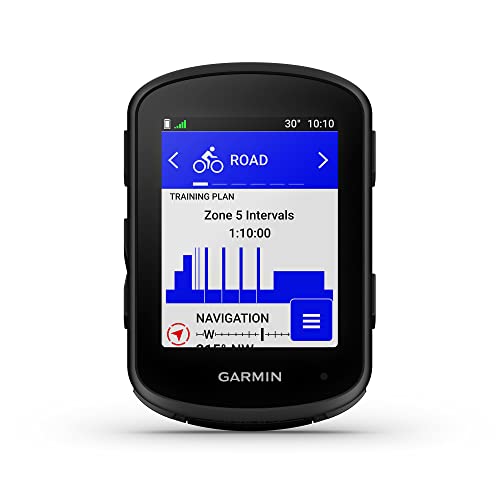
- Touchscreen and button control
- Multi-band GNSS and advanced route tools
- Up to 26 hours of demanding-use battery life
Best For: Training-focused riders using compatible performance sensors
Best Battery Life

- Up to 36 hours of battery life
- 2.4-inch color touchscreen with auto-backlight
- IPX7 waterproof and Bluetooth/ANT+ compatible
Best For: Long-distance riders wanting weather protection and flexible data screens
Long-Distance Navigator
Bryton Rider S810 GPS Computer

- 3.5-inch color touchscreen with tactile buttons
- Up to 50-hour battery life
- Offline maps with turn-by-turn navigation
Best For: Gravel rides, bikepacking, and long-distance exploration
Connected Training Pick
GEOID CC700 Pro Touchscreen GPS Computer

- 2.8-inch color touchscreen plus three buttons
- Wi-Fi auto-sync and offline map downloads
- Smart-trainer support for customizable workouts
Best For: Connected navigation and indoor cycling training
Ready-to-Ride Bundle
Bryton Rider S810 Sensor Package

- Includes heart-rate, cadence, and speed sensors
- 3.5-inch touchscreen with tactile buttons
- 50-hour battery and offline navigation
Best For: Performance training with a complete sensor setup
Best Navigation Value – iGPSPORT BSC500
For riders comparing bike computers with touchscreen controls, the iGPSPORT BSC500 combines a large 3.3-inch display with both touch and button operation. Its dual-band, five-satellite positioning, route imports, automatic rerouting, turn reminders, and voice navigation make it a practical choice for guided rides.
Best For: Riders who want touchscreen navigation, voice prompts, and extensive training features without relying solely on touch controls.
Pros:
- 3.3-inch touchscreen supports up to 12 cycling data fields per page.
- Dual-band positioning supports GPS, BeiDou, GLONASS, Galileo, and QZSS.
- Provides turn reminders, off-course rerouting, route imports, and voice navigation.
- Supports Bluetooth and ANT+ connections, radar and light syncing, and training analysis.
Cons:
- The supplied details do not specify total battery life.
- Its navigation and training feature set may be more than casual riders need.
The BSC500 is a well-rounded touchscreen bike computer for cyclists who value clear route guidance and flexible controls. Its 107-gram design and IPX7 rating add practicality for regular outdoor use.
Best Premium Upgrade – Garmin Edge 1050
The Garmin Edge 1050 is a premium option among bike computers with touchscreen displays, pairing a vivid 3.5-inch color screen with advanced navigation, performance metrics, and connected cycling features. Its responsive touchscreen can create courses on the device, while the built-in speaker adds audible prompts and alerts.
Best For: Serious cyclists seeking advanced training, navigation, group-riding, and safety features in one premium computer.
Pros:
- Large capacitive touchscreen supports on-device course creation and map planning.
- Offers up to 20 hours of battery life in demanding use or 60 hours in battery-saver mode.
- Includes ClimbPro, power guidance, personalized coaching, and advanced cycling metrics.
- Built-in speaker supports navigation prompts, workout cues, and a bike bell.
Cons:
- Many connected features require a compatible smartphone, app, or cycling sensors.
- Its premium feature set may be excessive for basic navigation needs.
With road-hazard alerts, group-ride tools, Garmin Pay, and 64 GB of storage, the Edge 1050 is designed for riders who want a highly capable cycling platform rather than a simple route display.
Best Compact Offline Mapping – iGPSPORT BSC300T
The iGPSPORT BSC300T is a compact choice for riders shopping for bike computers with touchscreen operation and offline maps. Its 2.4-inch screen works with six buttons, while worldwide map downloads, turn prompts, off-course warnings, and support for more than 130 riding metrics make it versatile across road, mountain, and e-bike rides.
Best For: Riders who want offline route guidance, broad sensor compatibility, and e-bike support in a lightweight computer.
Pros:
- Touchscreen and six physical buttons provide flexible operation.
- Supports worldwide offline maps, route previews, turn prompts, and off-course warnings.
- Displays more than 130 data points, including speed, grade, cadence, and temperature.
- Supports ANT+ and Bluetooth sensors, e-bikes, smart trainers, radar, and lights.
Cons:
- The 2.4-inch display is smaller than the screens on the other listed models.
- Battery life is rated at up to 20 hours.
- A USB Type-C cable is not included according to the supplied details.
At 67 grams, the BSC300T is a lightweight navigation and data tool. It is especially appealing if offline maps and e-bike compatibility matter more than a large display or premium training ecosystem.
Best Easy-to-Use Navigator – Garmin Edge Explore 2
The Garmin Edge Explore 2 is an approachable option among bike computers with touchscreen controls, featuring a 3-inch high-resolution display designed for glove and rain use. Preloaded activity profiles, ride-type maps, e-bike routing, and straightforward navigation make it well suited to cyclists who prioritize route exploration over deep performance analysis.
Best For: Recreational and touring cyclists who want simple touchscreen navigation with road, trail, and e-bike guidance.
Pros:
- 3-inch touchscreen is designed to remain visible in direct sunlight and work with gloves and rain.
- Preloaded road, off-road, and indoor profiles simplify setup.
- Maps highlight popular roads, trails, points of interest, traffic, and e-bike routes.
- Supports LiveTrack, GroupTrack, incident detection, and optional sensors and Varia devices.
Cons:
- Battery life is rated at up to 16 hours.
- Heart-rate, speed, cadence, and Varia accessories are sold separately.
- The supplied details list GPS rather than the broader multi-satellite support found on some alternatives.
The Edge Explore 2 keeps navigation central and setup uncomplicated. Its smartphone and e-bike connectivity add useful ride awareness, making it a strong fit for everyday exploring, touring, and mixed-surface cycling.
Best Balanced Touchscreen Pick – Magene C506
The Magene C506 is a practical choice for riders who want bike computers with touchscreen controls, smart navigation, and broad sensor compatibility. Its 2.4-inch color screen works alongside three buttons, while Wi-Fi, Bluetooth, and ANT+ support make it suitable for connected training and everyday rides.
Best For: Riders seeking a lightweight touchscreen computer with navigation, indoor-training features, and extensive device connectivity.
Pros:
- 2.4-inch color touchscreen plus three physical buttons, in a compact 76-gram design.
- Supports downloadable maps, turn-by-turn navigation, custom routes, and GPX files.
- Connects with sensors, smart trainers, radar lights, electronic shifting systems, and other accessories.
- Offers up to 24 hours of battery life in endurance mode and Wi-Fi data uploads.
Cons:
- Some training, customization, and data-analysis features depend on the OnelapFit app.
- Advanced functions such as power-based training require compatible sensors or a smart trainer.
The C506 stands out as a versatile option for cyclists who want touchscreen convenience without giving up physical controls. Its navigation and indoor-training support broaden its usefulness beyond basic ride tracking.
Best Premium Training Features – Garmin Edge 840
The Garmin Edge 840 combines touchscreen and button control with advanced navigation and training tools. For cyclists comparing bike computers with touchscreen displays, it offers multi-band GNSS, adaptive workout guidance, climbing analysis, and up to 26 hours of battery life in demanding use.
Best For: Performance-focused cyclists who want detailed training guidance, accurate positioning, and robust route planning.
Pros:
- Combines a capacitive touchscreen with physical buttons for flexible control.
- Multi-band GNSS helps provide enhanced positioning accuracy in challenging environments.
- Includes ClimbPro, daily suggested workouts, adaptive coaching, stamina insights, and power guidance when paired with compatible sensors.
- Provides up to 26 hours of battery life in demanding use or up to 32 hours in battery-saver mode.
Cons:
- Several advanced training features require compatible power and heart-rate sensors.
- Its performance-oriented feature set may be more than casual riders need.
The Edge 840 is the strongest fit for riders who treat their bike computer as a training partner. Its touchscreen is complemented by buttons, while Garmin’s navigation and performance features support structured, data-driven riding.
Best Battery Life – COOSPO CS600
The COOSPO CS600 is a value-oriented option for riders shopping for bike computers with touchscreen controls and extended battery life. It pairs a 2.4-inch color touchscreen with route navigation, automatic backlighting, wireless connectivity, and IPX7 waterproof protection.
Best For: Riders who prioritize long battery life, weather protection, customizable data screens, and straightforward route following.
Pros:
- Responsive 2.4-inch color touchscreen with automatic backlight adjustment.
- Offers up to 36 hours of battery life and supports two-hour Type-C charging.
- Includes breadcrumb route navigation, GPS/GLONASS tracking, and customizable data dashboards.
- IPX7 waterproof protection and compatibility with Bluetooth and ANT+ accessories.
Cons:
- Cadence, heart-rate, and power tracking accessories are sold separately.
- The CS600 does not include additional sensors or extension mounts.
- Its navigation is described as route or breadcrumb following rather than full turn-by-turn mapping.
With its 36-hour battery and IPX7 rating, the CS600 is well suited to long rides and changeable weather. It is especially appealing when customizable metrics and basic route guidance matter more than a larger premium training ecosystem.
Long-Distance Navigator – Bryton Rider S810 GPS Computer
For riders comparing bike computers with touchscreen controls, the Bryton Rider S810 stands out with a large 3.5-inch color display, tactile buttons, offline navigation, and up to 50 hours of battery life. It is designed for long rides where clear mapping and dependable operation matter.
Best For: Gravel riders, bikepackers, and cyclists planning extended rides away from reliable cell service.
Pros:
- 3.5-inch color touchscreen includes an adaptive light sensor for changing outdoor conditions.
- Tactile anti-slip buttons provide an alternative to touchscreen control in rain or while wearing gloves.
- Up to 50 hours of battery life supports century rides and multi-day adventures.
- Pre-loaded maps, turn-by-turn guidance, and on-device rerouting support offline navigation.
Cons:
- This device-only version does not include the sensor package supplied with the bundle model.
- Advanced features such as heart-rate and power tracking require compatible sensors.
The Rider S810 is a strong choice when battery endurance and off-grid navigation take priority. Its combination of touchscreen convenience and physical controls also makes it practical for rougher terrain and changing weather.
Connected Training Pick – GEOID CC700 Pro Touchscreen GPS Computer
The GEOID CC700 Pro is one of the more connected bike computers with touchscreen controls, pairing a 2.8-inch color display with offline maps, Wi-Fi syncing, automatic rerouting, and smart-trainer support. It is a practical option for riders who want navigation and indoor training in one device.
Best For: Cyclists who want touchscreen navigation, fast wireless syncing, and customizable indoor workouts.
Pros:
- Color touchscreen works alongside three physical buttons for flexible operation.
- Offline map downloads offer turn prompts, street names, zoom, and dual-perspective views.
- Wi-Fi supports AGNSS syncing, ride-record transfers, and firmware updates.
- Supports smart-trainer power targets, resistance levels, and gradient settings.
Cons:
- Reroute planning requires the bike computer to remain connected to the designated app.
- Its 2.8-inch display is smaller than the 3.5-inch screen on the Bryton S810 models.
- DJI camera controls are limited to DJI Action 4 and Action 5 Pro compatibility.
Choose the CC700 Pro if wireless convenience and indoor training are as important as route guidance. Its IPX7 rating, multiple satellite systems, and included screen protector add practical value for regular riding.
Ready-to-Ride Bundle – Bryton Rider S810 Sensor Package
Among bike computers with touchscreen controls, the Bryton Rider S810 Sensor Bundle is suited to riders who want performance data without sourcing accessories separately. It combines a 3.5-inch color touchscreen, 50-hour battery, offline navigation, and included heart-rate, cadence, and speed sensors.
Best For: Performance-focused cyclists who want a complete tracking setup for training and outdoor navigation.
Pros:
- Includes smart heart-rate, cadence, and speed sensors for out-of-the-box ride tracking.
- Large 3.5-inch touchscreen is paired with tactile buttons for glove- and rain-friendly control.
- Up to 50 hours of battery life suits long rides and bikepacking trips.
- Supports offline maps, turn-by-turn guidance, Strava Live Segments, and climb analysis.
Cons:
- The sensor bundle may be more than casual riders need.
- Power meters and rear-view radar are supported, but those accessories are not listed as included.
The Sensor Bundle is the most convenient S810 option for riders building a data-focused setup. The included sensors reduce setup decisions, while the same long battery life and offline navigation make it capable on extended outdoor routes.
How We Picked the Best Bike Computers with Touchscreen
We focused on the features that matter most during real rides: screen size and readability, touchscreen responsiveness, GPS accuracy, map and rerouting capabilities, battery life, wireless connectivity, waterproofing, and compatibility with sensors or e-bike systems. The selection includes premium Garmin models, feature-rich Bryton and iGPSPORT computers, and value-oriented options from Magene, COOSPO, and GEOID.
Because riders have different priorities, we considered both standalone navigation and training use. Models that support ANT+ or Bluetooth accessories can connect to heart-rate monitors, cadence sensors, power meters, lights, and indoor trainers. Included sensor bundles are also noted as a convenient option for riders starting from scratch.
Quick Comparison
| Best For | What to Prioritize | Useful Features |
|---|---|---|
| Advanced training | Sensor support and structured workouts | Power-meter compatibility, training metrics, indoor connectivity |
| Navigation and touring | Maps, rerouting, and screen visibility | Offline maps, turn guidance, climb information |
| Long-distance rides | Battery capacity and charging flexibility | Extended runtime, power-saving modes, fast syncing |
| Value-focused riding | Core GPS features at a lower price | Color display, route recording, Bluetooth or ANT+ support |
| New cyclists | Simple controls and useful guidance | Easy setup, clear menus, reliable navigation |
Key Buying Factors for Bike Computers with Touchscreen
Display and Touchscreen Performance
A larger color screen makes maps and data fields easier to read, but it can add weight and reduce battery life. Check whether the display remains visible in direct sunlight and whether the touchscreen works with gloves or in wet conditions. Physical buttons are valuable when rain, sweat, or rough roads make swiping difficult.
Navigation and Mapping
Turn-by-turn directions, offline maps, rerouting, and off-course alerts are important for unfamiliar roads. If you ride in areas with inconsistent cellular service, choose a computer that stores maps locally rather than relying on a phone connection.
Battery Life and Connectivity
Match advertised battery life to your typical ride length, while allowing for navigation, backlight use, and sensor connections. Wi-Fi can simplify syncing, while Bluetooth and ANT+ provide broad accessory compatibility. E-bike riders should also verify support for their specific system.
Durability and Mounting
For regular outdoor use, look for strong weather resistance, a secure mount, and a rugged housing. IPX7-rated devices are designed to handle significant rain and temporary water exposure, though they should still be used according to the manufacturer’s instructions.
Who Should Buy Which Bike Computers with Touchscreen?
Choose a premium Garmin Edge model if you want polished training tools, extensive ecosystem support, and dependable navigation. The Edge Explore 2 is especially suitable for riders who prioritize straightforward route guidance over advanced performance analysis.
Bryton, iGPSPORT, Magene, and GEOID models are appealing for riders who want large color touchscreens, mapping, and modern wireless features at potentially lower prices. Consider a sensor bundle if you need heart-rate, cadence, or speed data immediately. For casual riders, commuters, and recreational cyclists, a compact computer with reliable GPS and basic route guidance may deliver better value than a high-end training platform.