Balance discs can add controlled instability to seated work, standing drills, mobility routines, and core exercises without taking up much space. The right model depends on how much challenge you want, where you will use it, and whether comfort or athletic training is the priority.
We selected 10 balance discs and wobble cushions with different sizes, surfaces, pump designs, and intended uses. Use the guide below to narrow the list by training goal, adjustability, and value.
Best 10 Balance Discs for Training Picks for 2026
Best Overall

- 13-inch training surface with massage spikes
- Includes hand pump and instructions
- Supports up to 350 pounds
Best For: Adults wanting a versatile stability and flexibility disc
Best Versatile Cushion

- Supports sitting and balance training
- Useful for yoga, Pilates, and core work
- Includes pump with textured surface
Best For: Users combining sensory seating with movement practice
Best for Proprioception
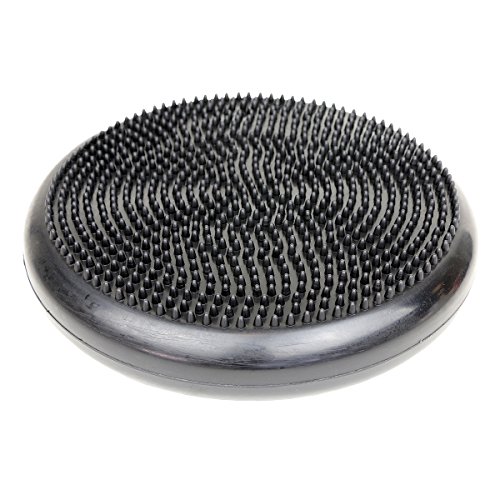
- Use on a seat or as a standing disc
- Nubby and flat sides offer tactile variation
- Supports up to 300 pounds
Best For: Proprioception and lower-extremity strengthening routines
Best Multi-Station Kit

- Includes four pods, cushion, and pump
- Adjustable firmness for varied training
- Textured surfaces support massage and grip
Best For: Multi-user training, rehabilitation, and agility drills
Best Overall for Versatility
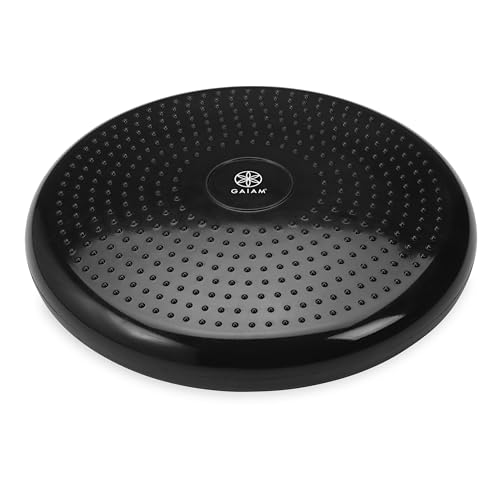
- 16-inch inflatable design with adjustable firmness
- Useful for active sitting and core or balance exercises
- Includes pump; supports up to 250 pounds
Best For: Adults seeking a multipurpose disc for seating and training
Best for Kids and Sensory Seating

- 13.5-inch disc for kids and adults
- Supports sensory seating, posture, balance, and core work
- Includes pump for adjustable firmness
Best For: Classrooms, families, and users wanting a compact wiggle seat
Best for Tactile Training
Special Supplies Stability Cushion

- Soft molded spike surface adds tactile feedback
- Works seated, standing, or during active exercise
- Includes pump and supports up to 400 pounds
Best For: Tactile balance, posture, core, and sensory-focused routines
Versatile Stability Pick
Rancer Wobble Cushion Balance Disc
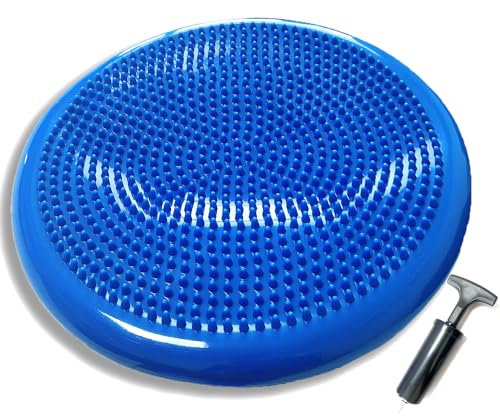
- Adjustable firmness with included pump
- Double-textured, non-slip massage surface
- Supports up to 500 pounds
Best For: Home workouts, posture support, and sensory seating
Portable Coordination Trainer

- 13-inch disc for compact training
- Textured grip for exercises and yoga
- Rated for up to 350 pounds
Best For: Core work, ankle drills, seated exercises, and pet training
Core Training Favorite
ProsourceFit Core Balance Disc

- Designed for core and balance work
- Dual-textured, non-slip surface
- Includes hand pump and supports 300 pounds
Best For: Core workouts, posture-focused seating, and portable training
Best Overall – Black Mountain Stability Disc
Black Mountain Products Exercise Balance Stability Disc with Hand Pump, Black, 13 inch diameter
Check Price On AmazonThe Black Mountain balance disc is a practical choice for balance discs for training, with a 13-inch surface, large massage spikes, and an included hand pump. It is designed for stability, coordination, and flexibility work, while its 350-pound maximum weight recommendation accommodates a wide range of adult users.
Best For: Adults seeking a straightforward, full-size balance disc for stability and flexibility exercises.
Pros:
- Includes a hand pump and instructions.
- Large massage spikes provide traction and tactile feedback.
- Supports balance, coordination, and flexibility training.
- Rated for up to 350 pounds.
Cons:
- The inflation needle must not be inserted too far, or it may damage the disc.
- The supplied notes do not specify adjustable firmness controls.
Choose this model if you want a conventional, portable balance disc with textured grip and basic inflation equipment included.
Best Versatile Cushion – Trideer Wobble Cushion
The Trideer Wobble Cushion is a flexible option among balance discs for training, combining a wobbling seat with a surface for yoga, Pilates, core exercises, stretching, and stability work. Its 13.4-inch PVC design has a non-slip texture and comes with a pump.
Best For: Users who want one cushion for sensory seating, posture practice, and balance exercises.
Pros:
- Works for both sitting and floor-based training.
- Supports core, balance, mobility, and coordination routines.
- Non-slip textured surface helps during movement.
- Includes a pump.
Cons:
- The product is described primarily for kids, although the notes also mention adult workouts.
- The supplied information does not specify a warranty.
This is a strong multipurpose pick for homes, classrooms, offices, or gyms where a balance cushion needs to serve both seated and active uses.
Best for Proprioception – CanDo Inflatable Balance Disc
The CanDo inflatable balance disc is geared toward balance discs for training that also support seated movement. Its inflatable design can act as a dynamic cushion, while the flat side and nubby side allow use for balance training, proprioception, lower-extremity strengthening, and tactile feedback.
Best For: Users prioritizing proprioception, lower-extremity strengthening, or active sitting.
Pros:
- Can be used on a seat or on the floor.
- Nubby and flat sides provide different surface experiences.
- Designed for balance training and proprioception work.
- Has a 300-pound weight capacity.
Cons:
- The supplied notes do not mention an included pump.
- The listed product dimensions may not clearly reflect the 14-inch disc diameter.
Consider the CanDo when tactile variation and dual seated/standing use matter more than bundled accessories.
Best Multi-Station Kit – StrongTek Balance Pod Set
The StrongTek Balance Pod Kit stands out among balance discs for training because it includes four inflatable balance pods, a wobble cushion, and an air pump. Adjustable firmness, textured surfaces, and portable PVC construction support agility, coordination, core stability, rehabilitation, and foot massage routines.
Best For: Families, rehab users, or trainers who need multiple balance stations and adjustable resistance.
Pros:
- Includes four pods, one wobble cushion, and an air pump.
- Firmness can be adjusted for gentler or more demanding exercises.
- Supports balance, agility, coordination, core work, and physical therapy.
- Pods are rated for up to 400 pounds.
Cons:
- The kit takes up more storage space than a single balance disc.
- The supplied notes list different dimensions for the pods and pad, so buyers should confirm which surface suits their routine.
This kit is the most flexible choice here for varied drills, partner training, and progressive routines that benefit from multiple inflatable surfaces.
Best Overall for Versatility – Gaiam Balance Disc
The Gaiam Balance Disc is a versatile pick among balance discs for training, combining active sitting with low-impact balance, mobility, and core exercises. Its 16-inch inflatable design lets you adjust firmness for seated comfort or controlled movement.
Best For: Adults who want one balance disc for office seating, posture-focused routines, and home stability training.
Pros:
- Supports active sitting, upright posture, and gentle movement during desk work.
- Adjustable inflation allows personalized firmness and support.
- Works for yoga, stretching, balance drills, coordination exercises, and core routines.
- Includes a pump and supports users up to 250 pounds.
Cons:
- Its 16-inch size may be larger than needed for users seeking a compact training disc.
- Designed for adults, so it may be less suitable for children than smaller alternatives.
Choose this model if you value flexibility and want a balance disc that transitions easily between chair use and exercise. The lightly textured surface and adjustable air pressure make it practical for everyday movement and stability work.
Best for Kids and Sensory Seating – kisnbld Wobble Cushion
The kisnbld Wobble Cushion is a practical option among balance discs for training when seated focus and posture support are priorities. Its 13.5-inch PVC disc can be used by children or adults, with adjustable firmness from the included pump.
Best For: Families, classrooms, and desk users looking for a compact wiggle seat that also supports balance, coordination, and core exercises.
Pros:
- Designed for sensory seating at home, school, or the office.
- Supports active sitting, posture practice, balance, coordination, standing, and squats.
- Adjustable inflation helps customize the firmness.
- Suitable for both kids and adults and includes an inflation pump.
Cons:
- At 13.5 inches, it offers less seating area than the 16-inch Gaiam disc.
- The supplied notes do not specify a maximum weight recommendation.
This is a strong choice for buyers who want a smaller, family-friendly wobble cushion with both sensory-seating and training uses. Its compact diameter is convenient, though adults should consider the available seating space before buying.
Best for Tactile Training – Special Supplies Stability Cushion
The Special Supplies Stability Cushion stands out among balance discs for training with its soft molded spike surface, which adds tactile feedback during seated, standing, and exercise-based use. The 13-inch TPE disc is built for home workouts, classrooms, therapy sessions, and outdoor fitness.
Best For: Users who want a tactile surface for balance, posture, core-strength, and sensory-focused training.
Pros:
- Supports sitting, standing, active fitness, recovery, balance, and coordination work.
- Soft flexible spikes provide tactile input under the feet or when seated.
- Heavy-duty construction is rated for up to 400 pounds.
- Includes a manual air pump for adjusting inflation.
Cons:
- The raised spike surface may not suit users who prefer a smooth cushion.
- Its 13-inch platform provides less surface area than larger balance discs.
Select this cushion if tactile feedback is an important part of your training or sensory routine. Its high stated weight capacity and multipurpose design also make it a practical option for shared settings such as classrooms or therapy spaces.
Versatile Stability Pick – Rancer Wobble Cushion Balance Disc
For shoppers comparing balance discs for training and everyday movement, the Rancer Wobble Cushion is a flexible option that also works as a seat cushion. Its 13.5-inch PVC disc has adjustable firmness, a double-textured surface, and support for up to 500 pounds.
Best For: Home workouts, posture support, sensory seating, physical therapy, and pet training.
Pros:
- Adjustable firmness with the included inflation pump
- Double-sided textured surface provides grip and massage stimulation
- Supports core strength, stability, coordination, and posture work
- Rated for up to 500 pounds
Cons:
- The textured surface may not suit users wanting a smooth cushion
- Its primary design is a wobble cushion rather than a rigid balance board
The Rancer stands out for buyers who want one disc for training and seated use. Its adjustable inflation and high stated weight capacity make it adaptable for different users and activities.
Portable Coordination Trainer – JFIT Inflatable Balance Disc
The JFIT Inflatable Balance Disc is a practical choice for balance discs for training when you want a compact tool for stability, coordination, posture, and core work. Its textured surface provides grip, while the inflatable design lets you adjust the feel with the included straw.
Best For: Core exercises, yoga, seated drills, ankle work, and pet training at home or in the gym.
Pros:
- Supports balance, coordination, posture, flexibility, and core training
- Textured pattern improves grip during exercises
- Inflatable design allows adjustment for preferred results
- Rated to withstand up to 350 pounds
Cons:
- The supplied model is the 13-inch version, so it offers less surface area than a larger disc
- Inflation uses an included straw rather than a hand pump
Choose the JFIT if portability and multi-use training matter most. The 13-inch format works for several drills and seated exercises without taking up much space.
Core Training Favorite – ProsourceFit Core Balance Disc
The ProsourceFit Core Balance Disc is designed for shoppers seeking balance discs for training with a focus on core engagement and stability. Its 14-inch PVC cushion has two textured sides, an included hand pump, and a 300-pound maximum weight recommendation.
Best For: Core workouts, balance exercises, posture-focused seating, and portable fitness routines.
Pros:
- Engages multiple core muscles while maintaining balance
- Dual-textured surface offers a raised massage side and a smoother side
- Includes a hand pump for adjusting firmness
- Portable 14-inch design for fitness on the go
Cons:
- Lower stated weight capacity than some competing options in this roundup
- The disc is 14 inches wide, which may feel limited for some standing exercises
The ProsourceFit is a strong fit when core training and surface versatility are priorities. Its hand pump and portable size make it convenient for adjusting and transporting between workouts.
How We Picked the Best Balance Discs for Training
We compared these balance discs by intended use, construction, adjustability, surface design, portability, and the range of users they can accommodate. Models with included pumps offer easier setup, while textured or dual-sided surfaces can provide more grip and sensory feedback. We also considered whether each disc is better suited to seated movement, standing balance, lower-body strengthening, or general core work.
Because inflation level changes difficulty, versatility was another key consideration. A softer disc usually creates more movement and challenge, while a firmer disc can feel more stable for beginners, desk use, or longer seated sessions.
Quick Comparison
- Best for general home workouts: Choose a standard inflatable disc with a grippy surface and included pump.
- Best for active sitting: Look for a comfortable wobble cushion with a moderate diameter and controlled movement.
- Best for standing drills: Prioritize traction, durable construction, and a size that fits your stance.
- Best for more variety: Consider a large disc or a pod kit that supports multiple balance exercises.
- Best for portability: Select a lightweight model that can be deflated or stored easily.
Key Buying Factors for Balance Discs for Training
Size and Stability
Disc diameter affects both usable surface area and perceived difficulty. Smaller designs can feel more demanding for focused balance work, while larger models may be easier for seated use or wider stances. Check the listed dimensions against your chair, floor space, and preferred exercises.
Inflation and Adjustability
An included hand pump is useful, but the ability to fine-tune air pressure matters more. Start with moderate inflation and add or release air until the disc feels challenging without making basic movements uncontrolled.
Surface Texture and Grip
Raised bumps, ridges, or dual-textured sides can help prevent slipping and provide tactile feedback. For bare-foot standing exercises, a textured surface may be especially useful; for extended sitting, make sure the texture is not uncomfortable.
Weight Capacity and Durability
Verify the manufacturer’s weight guidance before buying, particularly for standing work or dynamic exercises. Strong seams and puncture-resistant materials are important if the disc will be used frequently or transported often.
Who Should Buy Which Balance Discs for Training?
Beginners and general exercisers should start with an adjustable, moderately sized disc that has reliable traction and a pump. Desk workers may prefer a cushion designed for active sitting with a less aggressive texture and enough room for comfortable posture changes. Athletes and rehabilitation-focused users should look for firmer construction, secure grip, and a size that supports controlled single-leg or lower-body drills. Families, classrooms, and sensory-focused users may benefit from a tactile cushion or a pod kit that allows several movement options.
No balance disc replaces professional guidance for injury rehabilitation or pain management. Begin with short sessions, use a stable support nearby, and stop if an exercise causes sharp pain, dizziness, or unusual joint strain.