A balance board with resistance bands combines instability training with upper- and lower-body resistance, making it a compact option for home workouts, rehabilitation-focused movement, and sports conditioning.
These models vary widely in design, from rocking stepper boards and ski trainers to cork foot-strengthening kits and convertible slant boards. The right choice depends on your training goals, available space, weight capacity, and preferred level of challenge.
Best 10 Balance Board with Resistance Bands Picks for 2026
Best Overall
MERACH Ski-Style Balance Board

- Low-impact side-to-side cardio motion
- Includes two resistance bands and LCD tracking
- Quiet, compact design with 300-lb capacity
Best For: Adults wanting a quiet home cardio and balance trainer
Best for Foot Mobility

- Includes toe bands, roller, ball, and guide
- Natural cork construction with a grippy surface
- Compact design for home, office, or travel
Best For: Foot, toe, and ankle mobility routines
Best Color Option
MERACH Pink-and-White Rocking Stepper

- Ski-style motion for low-impact cardio
- LCD tracks steps, time, and calories
- Compact steel frame with 300-lb capacity
Best For: Quiet home cardio in a compact pink-and-white design
Best Adjustable Design

- Six incline angles from 20 to 45 degrees
- Five resistance bands with varied tension
- Combines stretching, balance, and rotation training
Best For: Adjustable mobility, balance, and lower-body workouts
Best All-in-One Pick
3-in-1 Ski Trainer Balance Board

- Combines gliding, stepping, and rocking workouts
- Includes two detachable resistance bands
- LCD tracks steps, time, calories, and speed
Best For: Full-body training in compact home spaces
Best for Stretching and Rehab
Convertible Wooden Slant Balance Board

- Converts between slant, incline, and balance modes
- Offers five angles from 25° to 45°
- Includes a hook and resistance bands for strength work
Best For: Stretching, mobility, balance, and physical-therapy routines
Best Compact Starter
OLIXIS Slide Stepper Balance Board

- Combines lateral gliding with resistance-band work
- Arrives assembled with LCD time and step tracking
- Compact frame fits small apartments and home offices
Best For: Beginners wanting low-impact, two-footed workouts
Best Adjustable Stretch-and-Balance Pick

- Switches between slant and 180° balance modes
- Four adjustable angles from 25° to 40°
- Includes one resistance band and training poster
Best For: Physical therapy, calf stretching, and ankle stability work
Best Foot-Recovery Kit
Cork Balance Board & Foot Restoration Set
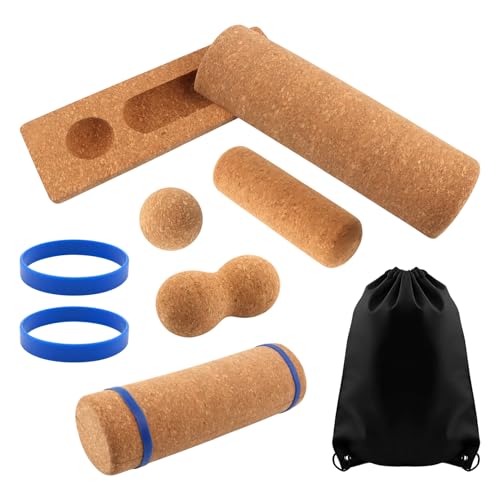
- Includes two cork-covered balancing boards
- Adds toe resistance bands and massage tools
- Packs into an included drawstring carry bag
Best For: Foot mobility, arch activation, and toe strengthening
Best Full-Body Workout Option
LCD Balance Board with Resistance Bands
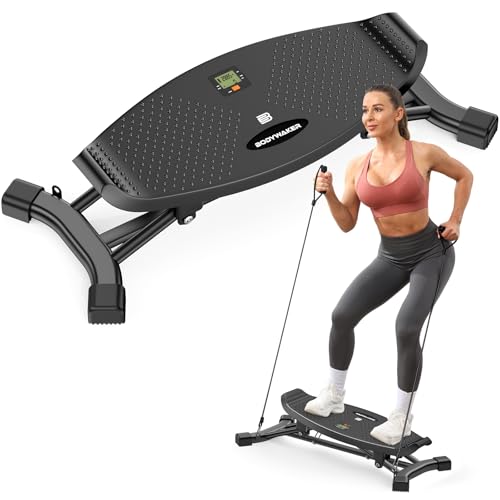
- Tracks time, calories, and steps on an LCD monitor
- Supports low-impact cardio and core and leg training
- Arrives assembled and is rated for up to 300 pounds
Best For: Portable home cardio and full-body balance workouts
Best Overall – MERACH Ski-Style Balance Board
If you want a balance board with resistance bands that also delivers low-impact cardio, the MERACH rocking stepper is a practical home-workout option. Its side-to-side skiing motion targets the thighs and glutes, while the included bands add upper-body or full-body exercise variety.
Best For: Adults seeking a compact, quiet cardio and balance trainer for home use.
Pros:
- Low-impact rocking motion supports balance and leg-focused cardio.
- Includes two resistance bands and an LCD display for tracking steps, time, and calories.
- Quiet operation below 25dB and a 300-pound capacity.
- Arrives ready to use and stores easily under a bed or in a closet.
Cons:
- The side-to-side motion may require caution for beginners or users with balance issues.
- It is primarily a rocking cardio trainer rather than a traditional stationary wobble board.
Choose this model if quiet operation, built-in workout feedback, and a ready-to-use design matter more than advanced balance-board adjustability.
Best for Foot Mobility – Rocalt Cork Foot Trainer
The Rocalt is a compact balance board with resistance bands focused on foot, toe, and ankle training rather than intense cardio. Its cork board works alongside toe bands, a massage roller, and a massage ball for a broader daily mobility routine.
Best For: Runners, yoga users, beginners, and anyone building foot and ankle mobility into a daily routine.
Pros:
- 4-in-1 kit includes a balance trainer, roller, massage ball, toe bands, storage bag, and guide.
- Natural cork surface is described as grippy, quiet, odor-resistant, and moisture-resistant.
- Compact 12-by-4-by-4-inch design is easy to store at home, work, or while traveling.
- Supports balance drills, foot rolling, toe activation, stretching, and warm-ups.
Cons:
- The included toe bands are geared toward foot exercises, not full-body resistance training.
- Its compact size may be less suitable for users seeking a large, dynamic wobble board.
This is the better fit for targeted foot-care and mobility work, especially if you value accessories and portability over cardio performance.
Best Color Option – MERACH Pink-and-White Rocking Stepper
This MERACH balance board with resistance bands uses a skiing-inspired side-to-side motion for low-impact cardio and balance practice. It combines a 300-pound weight recommendation with quiet operation and an LCD monitor, making it convenient for short home sessions.
Best For: Adults who want a compact, visually distinctive balance trainer for light cardio and leg workouts.
Pros:
- Rocking motion engages the thighs and glutes while supporting low-impact exercise.
- LCD monitor displays steps, time, and calories during workouts.
- Quiet operation below 25dB is suitable for discreet home exercise.
- Compact 31-by-13-by-7-inch steel design is easy to move and store.
Cons:
- The supplied details do not list resistance bands among the included components for this color variant.
- Users new to side-to-side training or with balance concerns should use caution.
Its core design suits users who want quiet, trackable rocking cardio, but verify the included accessories if resistance bands are essential to your purchase.
Best Adjustable Design – 3-in-1 Wooden Slant Board
For shoppers who want a balance board with resistance bands that can support stretching, mobility, and strength work, this 3-in-1 wooden model offers multiple training modes. Its adjustable incline angles pair with 180-degree directional balance, 360-degree rotation, and five resistance levels.
Best For: Users who want one portable board for calf stretching, ankle mobility, balance practice, squats, and lower-body resistance work.
Pros:
- Six adjustable angles from 20 to 45 degrees accommodate different stretching needs.
- Includes five resistance bands with different tension levels and a storage bag.
- Supports calf stretching, directional balance, full rotation, squats, and core work.
- Solid poplar wood, an anti-slip PVC surface, and an EVA base support stable use.
Cons:
- It is manually operated, so changing angles requires adjustment rather than electronic control.
- Its broad feature set may be more than needed for shoppers seeking a simple balance board.
This is the most versatile choice in the group for mobility-focused training, particularly when adjustable incline work and multiple resistance levels are priorities.
Best All-in-One Pick – 3-in-1 Ski Trainer Balance Board
If you want a balance board with resistance bands that can support varied home workouts, this 3-in-1 model combines lateral gliding, side-stepping, and rocking balance movements. Its compact, ready-to-use design also adds simple workout tracking through a built-in LCD monitor.
Best For: Full-body home workouts in small spaces, especially for users who want one device for leg, core, balance, and upper-body exercises.
Pros:
- Offers glide, side-stepper, and wobble-board movements in one unit.
- Includes two detachable resistance bands for rows, presses, and curls.
- LCD monitor tracks steps, time, calories, and speed without an app.
- Quiet, non-slip, compact, and rated to support up to 330 pounds.
Cons:
- The LCD monitor’s software-update support is unspecified.
- Its pink finish may not suit every room or preference.
This is the most versatile option of the three for buyers who want a balance board with resistance bands and multiple movement patterns. The quiet operation and book-like storage profile are especially practical for apartments.
Best for Stretching and Rehab – Convertible Wooden Slant Balance Board
This wooden balance board with resistance bands is designed for more than balance training. It converts between a slant board, incline board, and balance board, while five angle settings make it useful for stretching, mobility work, strength exercises, and selected physical-therapy routines.
Best For: Calf stretching, incline exercises, balance practice, and home users who want a versatile tool for mobility or physical-therapy exercises.
Pros:
- Combines slant-board, incline-board, balance-board, and resistance-band functions.
- Provides five adjustable angles from 25° to 45°.
- Textured anti-slip surface helps provide a secure grip.
- Sturdy wood construction supports up to 330 pounds.
Cons:
- It requires assembly, unlike the fully assembled stepper-style options.
- It does not include an LCD monitor for workout metrics.
- The supplied notes do not specify the resistance-band level or length.
Choose this model if stretching and adjustable incline work matter as much as balance training. Its wooden platform and five positions make it the most specialized option for mobility-focused routines, rather than continuous cardio-style stepping.
Best Compact Starter – OLIXIS Slide Stepper Balance Board
For shoppers seeking a compact balance board with resistance bands, the OLIXIS combines gentle lateral gliding with upper-body band work and basic LCD tracking. It arrives fully assembled and is sized for storage under a bed, sofa, or in a closet.
Best For: Beginners and apartment users who want a ready-to-use, low-impact lateral workout with simple progress tracking.
Pros:
- Supports lateral gliding and upper-body resistance-band exercises.
- LCD monitor displays exercise time and step count.
- Compact footprint and fully assembled design suit small spaces.
- Heavy-duty frame and reinforced feet provide a stable base for two-footed workouts.
Cons:
- Its 220-pound stated weight recommendation is lower than the other listed models.
- The supplied warm tip cautions beginners against single-foot stances due to instability.
- The LCD monitor does not list calories or speed among its displayed metrics.
The OLIXIS is a practical entry point for two-footed lateral training, particularly where storage space is limited. Buyers should follow the manufacturer’s beginner guidance and start slowly rather than attempting single-foot balance movements.
Best Adjustable Stretch-and-Balance Pick – 2-in-1 Slant & Balance Board
If you want a balance board with resistance bands that also supports calf stretching, this portable 2-in-1 model is a practical choice. It switches between a slant board and 180° balance board, with four adjustable stretch angles from 25° to 40°.
Best For: Physical therapy, calf and Achilles stretching, ankle stability work, and users who want one compact board for stretching and balance training.
Pros:
- Combines slant-board stretching with 180° directional balance training.
- Four angle settings accommodate lighter stretching through more intensive training.
- Includes a resistance band and training poster, with no assembly required.
- Wood construction, a non-slip base, and PVC sandpaper footing support stable use.
Cons:
- The included package contains one resistance band rather than a multi-band set.
- Its primary design emphasizes stretching and rehabilitation more than cardio workouts.
This is a versatile option when adjustable calf stretching matters as much as balance training. The quick mode change and portable design make it suitable for home, office, or gym use.
Best Foot-Recovery Kit – Cork Balance Board & Foot Restoration Set
This cork balance board with resistance bands is aimed at foot-focused training rather than general full-body workouts. The kit combines softwood balance boards with toe bands, massage tools, and a carry bag for a broader foot and ankle routine.
Best For: Foot and ankle mobility routines, arch activation, plantar-fascia care, toe strengthening, and users who want several recovery tools in one portable kit.
Pros:
- Includes two softwood balancing boards with a natural cork surface.
- Provides two toe resistance bands for progressive, digit-focused strengthening.
- Includes a cork roller, massage ball, and massage peanut ball for foot recovery.
- Comes with a drawstring storage bag for travel and organization.
Cons:
- This is a specialized foot-restoration kit, not a general cardio balance trainer.
- The listed kit does not specify adjustable resistance levels for the bands.
- No warranty is listed in the supplied product details.
Choose this set if your priority is combining balance practice with foot massage and toe resistance work. Its multiple compact components make it useful for a focused recovery routine at home or on the go.
Best Full-Body Workout Option – LCD Balance Board with Resistance Bands
For shoppers seeking a balance board with resistance bands for broader home workouts, this rocker board emphasizes cardio, core, glute, and leg training. It arrives assembled, includes an LCD monitor, and uses a side-to-side motion designed for low-impact exercise.
Best For: Home-gym cardio, core and leg training, calorie-conscious workouts, and users who want basic time, calorie, and step tracking.
Pros:
- Side-to-side rocking motion engages the core, glutes, and thighs.
- LCD monitor tracks workout time, calories, and step count.
- Fully assembled, portable, and compact at 10.4 pounds.
- Heavy-duty steel framing is rated for up to 300 pounds and operates below 25 dB.
Cons:
- The supplied notes do not specify the resistance-band configuration or number of bands.
- Beginners or users with balance concerns may need wall support and a gradual start.
- The rocking workout may be less suitable for shoppers seeking adjustable slant stretching.
This model stands out for users who want measurable, low-impact movement in a ready-to-use home trainer. Its compact build and quiet operation make it convenient for quick workouts in shared living spaces.
How We Picked the Best Balance Board with Resistance Bands
We focused on the features that most affect everyday use: board stability, motion range, resistance-band integration, portability, construction, weight capacity, and versatility. We also considered whether each design supports more than one training style, such as balance work, squats, calf stretching, ankle mobility, foot strengthening, or simulated skiing.
Because product descriptions can use similar language for very different designs, check the included accessories and adjustment details before buying. A board with a single fixed rocker behaves differently from an adjustable slant-and-balance system or a cork foot-training kit.
Quick Comparison
| Best For | Look For |
|---|---|
| Full-body home workouts | Resistance bands, a stable rocker, and a high weight limit |
| Balance and core training | Controlled instability and a nonslip surface |
| Foot and ankle work | Cork construction, textured surfaces, rollers, or massage accessories |
| Mobility and stretching | Slant-board angles and an adjustable or convertible design |
| Ski-style conditioning | A lateral slide or rocking motion with strong band anchors |
Key Buying Factors for a Balance Board with Resistance Bands
Board Motion and Difficulty
Rocking boards encourage forward-and-back control, while wobble boards add multidirectional instability. Slide steppers emphasize lateral movement. Beginners may prefer a wider base or limited motion; experienced users may want a more demanding rocker or 360-degree balance surface.
Construction and Traction
Wood and cork can feel solid and natural underfoot, while molded plastic may be easier to clean and lighter to carry. Look for a textured or nonslip top and a base that will not shift easily on your flooring. Use a mat if the manufacturer recommends one.
Resistance Bands and Anchors
Check whether bands are included, removable, adjustable, or attached through fixed anchor points. Band length and resistance level affect exercise variety. Secure anchors matter because pulling against the bands can increase the board’s movement and the risk of losing balance.
Capacity, Storage, and Safety
Choose a model rated comfortably above your body weight, especially if you plan to use bands or perform dynamic movements. Confirm the folded dimensions, carry weight, and storage requirements. Start near a wall or sturdy support, wear suitable footwear, and avoid advanced movements until basic balance feels controlled.
Who Should Buy Which Balance Board with Resistance Bands?
Choose a rocking stepper with bands if you want one compact tool for squats, rows, presses, and balance drills. A slide-style trainer is better suited to users who want ski-inspired lateral conditioning. Select a cork balance kit if foot, toe, and ankle strengthening are the priority. A slant-board combination makes more sense for people who want calf stretching and mobility alongside balance training.
For a general home gym, prioritize a nonslip surface, reliable band anchors, a comfortable weight rating, and enough motion to challenge you without making every workout unstable. If you are recovering from an injury or managing a medical condition, confirm that the product and exercises are appropriate with a qualified professional before use.