The best ankle weights for running should add manageable resistance without slipping, rubbing, or disrupting your natural stride. Adjustable designs make it easier to begin conservatively and increase load as your training develops.
We selected 10 versatile options ranging from lightweight wearable weights to higher-capacity removable-load models. Use the guide below to match the right pair to your running goals, experience, and comfort requirements.
Best 10 Ankle Weights for Running Picks for 2026
Best Overall Adjustability
Sportneer 2-10 lb Adjustable Ankle Weights

- Removable 1-pound bags
- Soft neoprene construction
- Fits 7.5- to 12.5-inch ankles
Best For: Progressive training and rehabilitation
Best Modular Design
APEXUP Adjustable Ankle Weights

- Five 1-pound modules per ankle
- Compact iron-sand construction
- Usable for arms or ankles
Best For: Gradual resistance increases across workouts
Best for Smaller Ankles
Sportneer 2-7 lb Adjustable Ankle Weights

- 1-3.5 pounds per ankle
- Fits 7- to 11-inch sizes
- 0.6-pound removable bags
Best For: Beginners and lighter resistance training
Best Weight-Range Selection
Iron-Sand Ankle and Wrist Weights

- 2-pound pair in this configuration
- Multiple weight-level options
- Long straps for versatile use
Best For: Light training and ankle-or-wrist workouts
Best Adjustable Pick
Amazon Basics Adjustable Ankle Weights
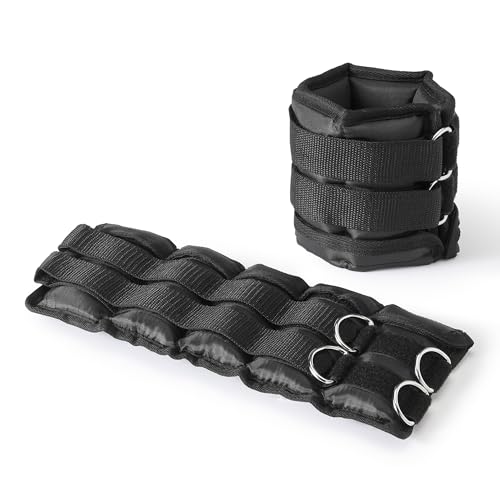
- 0.5–2.5 lb adjustable weight per ankle
- Dual Velcro closure for a secure fit
- Polyester design for varied workouts
Best For: Beginners, progressive training, walking, jogging, and rehabilitation
Best Custom-Fit Option
Adjustable 1–5 lb Ankle Weights

- Removable 0.5 lb weight increments
- Adjustable hook-and-loop strap
- Cotton design with moisture-absorbing interior
Best For: Custom resistance and fit across jogging, fitness, and rehabilitation
Best Lightweight Design
Silicone Wrist and Ankle Weights

- 1 lb per weight, 2 lb pair total
- Wearable on wrists or ankles
- Waterproof, sweat-proof silicone exterior
Best For: Light resistance, yoga, Pilates, recovery, and portable workouts
Best Overall
BAGAIL Sleek Ankle and Wrist Weights

- Sweat-resistant, non-bulky Lycra-SBR fabric
- Secure Velcro and metal-ring closure
- Usable for running, Pilates, walking, and therapy
Best For: Runners seeking comfortable, multipurpose light resistance
Best Heavy-Duty Pick
Becojadde Adjustable Ankle Weights

- Removable blocks for adjustable resistance
- Silicone lining helps limit slipping and chafing
- Compact for running, walking, Pilates, and travel
Best For: Users who want to progress from light to moderate resistance
Best Overall Adjustability – Sportneer 2-10 lb Adjustable Ankle Weights
For shoppers comparing ankle weights for running, the Sportneer pair offers broad adjustability without requiring a separate set for each training stage. Each ankle weight uses five removable 1-pound iron-sand bags, allowing 1 to 5 pounds per ankle or 2 to 10 pounds per pair.
Best For: Walkers, runners, home exercisers, and users who want adjustable resistance for rehabilitation or strength training.
Pros:
- Adjusts from 1 to 5 pounds per ankle.
- Soft, breathable neoprene with moisture-absorbing material.
- Long hook-and-loop straps and a metal D-ring help secure the fit.
- Fits ankle circumferences from 7.5 to 12.5 inches.
Cons:
- The maximum pair weight may be more than some beginners need.
- Fit should be checked carefully before purchase.
This is a versatile option if you want one pair that can support gradual progression. Its wide adjustment range is useful, though lighter users should begin with fewer weight bags and confirm the fit before running.
Best Modular Design – APEXUP Adjustable Ankle Weights
These APEXUP ankle weights for running use five removable 1-pound modules in each weight, so you can begin with lighter resistance and increase the load as your training develops. The compact iron-sand design and breathable sleeve are suited to several types of exercise.
Best For: Fitness enthusiasts, runners, walkers, yoga users, and people incorporating resistance into physical therapy.
Pros:
- Adjusts from 1 to 5 pounds per ankle.
- Compact iron-sand profile helps limit bulk.
- Breathable material and adjustable Velcro straps support comfort and fit.
- Can also be used as arm weights.
Cons:
- The pair can reach 10 pounds, which may be too heavy for beginners.
- The notes do not specify an ankle-size range.
The modular setup makes this pair practical for gradually increasing resistance. If you need a precisely stated fit range, verify sizing before ordering; otherwise, it offers a flexible design for running and general workouts.
Best for Smaller Ankles – Sportneer 2-7 lb Adjustable Ankle Weights
For those seeking ankle weights for running with a more moderate load, this Sportneer pair adjusts from 1 to 3.5 pounds per ankle. Its shorter fit range and removable 0.6-pound sandbags make it a practical choice for lighter training, walking, home workouts, and therapy.
Best For: Beginners, users with smaller ankles or wrists, and people wanting adjustable resistance for walking, jogging, or rehabilitation.
Pros:
- Adjusts from 1 to 3.5 pounds per ankle.
- Designed to fit 7- to 11-inch ankle or wrist sizes.
- Soft, breathable neoprene includes moisture-absorbing material.
- Metal D-ring and extended Velcro straps help reduce slipping.
Cons:
- The 7-pound pair maximum offers less resistance than heavier models.
- Each removable bag weighs 0.6 pounds, so adjustments are less granular than 1-pound increments.
This pair balances a smaller profile with useful adjustability. It is especially appealing when a lighter maximum load and a more compact fit matter more than advanced, high-resistance training.
Best Weight-Range Selection – Iron-Sand Ankle and Wrist Weights
This pair is suited to shoppers who want to choose from multiple weight levels when selecting ankle weights for running, walking, or home fitness. The listed options range from 1 to 20 pounds per pair, while this configuration provides two 1-pound weights for a 2-pound total.
Best For: Beginners who prefer a light pair, users comparing multiple weight options, and people who want ankle or wrist versatility.
Pros:
- The product line offers several weight-level choices.
- This option supplies two 1-pound weights for a 2-pound pair total.
- Iron-shot filling adds resistance for walking, running, and strength work.
- Long hook-and-loop straps allow a customized fit on ankles, wrists, arms, or legs.
Cons:
- The weight is selected by configuration rather than adjusted with removable modules.
- The notes do not provide a specific ankle-size range.
- Buyers must check the listing option carefully to confirm the desired total weight.
This is a straightforward light-resistance choice with broad use across fitness and physical therapy. Its main advantage is configuration variety, but careful selection is important because the listed weight levels are separate options.
Best Adjustable Pick – Amazon Basics Adjustable Ankle Weights
If you want ankle weights for running or walking that can change with your training, this 5-pound Amazon Basics set offers adjustable resistance and a secure dual-closure design. Each weight can be set from 0.5 to 2.5 pounds using removable inserts.
Best For: Beginners, progressive training, walking, jogging, and rehabilitation exercises.
Pros:
- Adjustable inserts support gradual progression from 0.5 to 2.5 pounds per ankle.
- Dual Velcro closures help keep the weights firmly in place.
- Soft polyester construction and balanced weight distribution support extended wear.
- Suitable for walking, jogging, strength training, aerobics, and physical therapy.
Cons:
- The set weighs 5 pounds total, so it may be more resistance than some runners need.
- Weight adjustments require removing or adding inserts rather than changing resistance instantly.
This is a practical choice when adjustability matters more than a minimalist design. Its broad activity range also makes it useful beyond running, particularly for users building resistance gradually.
Best Custom-Fit Option – Adjustable 1–5 lb Ankle Weights
For shoppers comparing ankle weights for running, this pair emphasizes flexible resistance and a snug, adjustable fit. Five removable 0.5-pound sandbags in each pack allow the total pair weight to be adjusted from 1 to 5 pounds.
Best For: Users who want removable weight increments, a customizable strap, and a pair suitable for jogging or general fitness.
Pros:
- Removable weights allow resistance adjustments in 0.5-pound increments.
- Long hook-and-loop straps provide a customizable fit for most ankles.
- Mercerized cotton and moisture-absorbing interior are designed for breathable comfort.
- Useful for jogging, walking, aerobics, gym workouts, and physical therapy.
Cons:
- The supplied specifications describe a total adjustable range of 1–5 pounds, which may not suit users seeking lighter resistance.
- The cotton-based construction may require more care than waterproof silicone designs.
This pair stands out for resistance control and fit adjustment. It is a versatile option for users who want to change training load across jogging, strength work, and rehabilitation sessions.
Best Lightweight Design – Silicone Wrist and Ankle Weights
These compact silicone weights offer a lighter alternative for shoppers seeking ankle weights for running, walking, yoga, or everyday workouts. The pair weighs 2 pounds total, with 1 pound per weight, and can be worn on either the wrists or ankles.
Best For: Light resistance, Pilates and yoga routines, recovery work, and users who prefer a compact, easy-to-clean design.
Pros:
- Lightweight 1-pound-per-piece design provides modest added resistance.
- Can be used on the wrists or ankles for varied exercises.
- Soft silicone exterior with a stainless steel core is sweat-proof and waterproof according to the supplied notes.
- Includes a carrying bag for storage and portability.
Cons:
- The 1-pound-per-weight design offers less resistance than the heavier adjustable pairs.
- The product is described as wrist weights in several specifications, so buyers should confirm ankle compatibility and fit for their intended use.
This is the most compact and lightweight option in the group. It makes sense for low-impact training and cross-training, but runners seeking substantial lower-body resistance may prefer a heavier ankle-specific pair.
Best Overall – BAGAIL Sleek Ankle and Wrist Weights
If you want ankle weights for running that feel secure without a bulky profile, the BAGAIL pair combines sweat-resistant Lycra-SBR fabric with a high-tension hook-and-loop closure. Its iron-sand filling is designed to distribute weight consistently for jogging, walking, Pilates, and other resistance workouts.
Best For: Runners and home exercisers who want a comfortable, multipurpose pair for ankles or wrists.
Pros:
- Non-bulky, sweat-resistant fabric helps reduce chafing.
- High-tension Velcro and a metal ring help keep the weights in place.
- Iron-sand filling, reinforced stitching, and a stated lifetime warranty support long-term use.
- Can be used for running, hiking, walking, Pilates, ballet, and physical therapy.
Cons:
- The listed option is 1 pound per weight, so it may not provide enough resistance for advanced users.
- You should measure your ankle or wrist and consult the size chart before ordering.
Choose this pair if comfort and versatility matter more than highly adjustable loading. It is a practical starting point for adding modest resistance to runs, walks, and targeted leg or arm exercises.
Best Heavy-Duty Pick – Becojadde Adjustable Ankle Weights
These adjustable ankle weights for running offer a straightforward way to change resistance as your training develops. Each weight uses removable blocks, allowing you to select a lighter 1-pound-per-side setup or retain more weight for strength work, walking, Pilates, and other workouts.
Best For: Beginners and intermediate users who want adjustable resistance in a compact pair.
Pros:
- Available in 1-, 2-, or 3-pound weights per side.
- Six removable blocks let you fine-tune resistance.
- Silicone lining is described as skin-friendly, odor-resistant, and easy to clean.
- Compact design suits running, walking, yoga, Pilates, boxing, travel, and rehabilitation exercises.
Cons:
- The supplied specifications list a 2-pound pair, so confirm the selected configuration before purchase.
- Heavier configurations may be more challenging for running than for controlled strength exercises.
This is a flexible choice when one fixed resistance level would be limiting. Start with fewer blocks for lighter activities, then add resistance gradually as your workouts become more demanding.
Best Simple Pick – Adjustable Steel-Plate Ankle Weights
For shoppers seeking ankle weights for running with a broader loading range, this steel-plate design adjusts from 1 to 8 pounds per pair according to the supplied size. Double D-rings, wide hook-and-loop fastening, and a 5mm neoprene comfort pad are intended to improve stability and comfort during cardio and strength sessions.
Best For: Experienced users who want substantial, adjustable resistance for running, circuit training, and rehabilitation.
Pros:
- Removable steel plates provide stepless adjustment from 1 to 8 pounds per pair.
- Double fixation is designed to reduce slipping and rotation during running and jumping.
- Low-profile 6.3-inch design aims to minimize interference with movement.
- Waterproof, wear-resistant materials support walking, swimming, yoga, gym, and outdoor workouts.
Cons:
- Its heavier capacity may be excessive for beginners or casual runners.
- Steel plates can make the weights feel more demanding than lighter sand-filled alternatives.
- The product requires hand washing and plate adjustments before use.
This pair stands out for its wide resistance range and reinforced fastening. It is best suited to users who already understand how much added load they can safely manage and want one set that can scale with training.
How We Picked the Best Ankle Weights for Running
We focused on adjustability, stated weight ranges, strap design, versatility, and suitability for walking, conditioning, strength work, and running-related training. Removable-weight models received particular attention because they allow gradual progression rather than locking you into a single resistance level.
Because ankle weights change leg swing and loading, we also considered practical details such as secure fastening, balanced weight distribution, comfortable padding, and whether the design can be used for lower-impact activities. Product descriptions and listed specifications should be checked before purchase, especially when comparing per-piece weight with total pair weight.
Quick Comparison
| Best For | Look For | Recommended Type |
|---|---|---|
| Beginners | Light starting load and removable inserts | 1–3 lb per ankle |
| Progressive training | Multiple adjustment levels | 2–10 lb per pair or similar |
| Walking and conditioning | Comfortable straps and stable fit | Light-to-moderate adjustable pair |
| Strength or rehabilitation | Wide range and precise loading | Modular weights with small increments |
| Wrist-and-ankle versatility | Compact profile and adaptable closures | Convertible wrist/ankle design |
Key Buying Factors for Ankle Weights for Running
Weight and Adjustability
Start with the lightest useful resistance. For most runners, heavier is not automatically better: excessive load can alter mechanics and increase stress on the hips, knees, ankles, and lower legs. Removable inserts let you test a small load and progress gradually.
Fit and Movement
Choose a pair with secure closures that do not loosen during movement. The weights should sit comfortably above the ankle joint without pressing into the bone or restricting circulation. Avoid any design that shifts, swings, or causes chafing.
Material and Comfort
Look for durable stitching, smooth edges, breathable or padded contact surfaces, and weight pockets that remain evenly distributed. Sweat-resistant materials are useful for frequent workouts, but all wearable weights should be cleaned and dried according to the manufacturer’s instructions.
Training Suitability
Ankle weights are often better suited to walking, controlled drills, strength exercises, and short conditioning intervals than continuous running. If you use them while jogging, begin on a brief, easy session and stop if your stride, posture, or joint comfort changes.
Who Should Buy Which Ankle Weights for Running?
New users and casual walkers: Choose a lightweight adjustable pair so you can prioritize comfort and technique. Experienced exercisers: Select a broader range with removable weights for progressive strength and conditioning sessions. Rehabilitation users: Favor precise, low-increment adjustments and follow the loading guidance of a qualified clinician. Multi-purpose home-gym users: Wrist-and-ankle models offer more flexibility for Pilates, yoga, walking, and resistance exercises.
Whichever pair you choose, treat ankle weights as an optional training tool rather than a requirement for every run. Increase resistance slowly, inspect the straps regularly, and remove the weights if they cause pain, numbness, rubbing, or noticeable changes in running form.