The best adjustable weighted vests make it easier to increase training difficulty without changing your exercise routine. Removable weights let you start light for walking or running, then add load as your strength and conditioning improve.
This roundup compares 10 options across compact fitness vests, women’s walking designs, rucking models, and heavy-duty vests for serious strength work. Focus on fit, weight range, comfort, and how you plan to train.
Best 10 Adjustable Weighted Vests Picks for 2026
Best for Progressive Training
CAP 40-Lb Adjustable Weighted Vest

- Removable 2.5-pound packets adjust the load up to 40 pounds
- Padded shoulders and adjustable waist belt support a stable fit
- Reflective stripes suit walking and running in low light
Best For: Progressive strength, cardio, and functional training
Best for Rucking Comfort
ONETWOFIT Adjustable Weighted Vest

- Removable cast-iron blocks adjust resistance from 2 to 36 pounds
- Extra-thick 1.2-inch shoulder padding helps reduce strain
- Metal buckle, durable nylon, and reflective strips suit outdoor use
Best For: Rucking, walking, running, and loaded outdoor workouts
Best for Everyday Versatility

- Evenly distributed iron sand adds simple workout resistance
- Adjustable straps fit listed chest sizes from 31.5 to 45 inches
- Reflective strips and storage pockets support outdoor workouts
Best For: General fitness, jogging, and everyday strength training
Best for Compact Adjustability
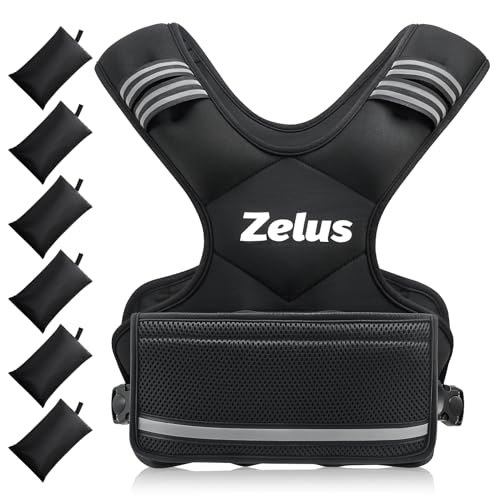
- Six removable 1.5-pound bags provide variable resistance
- Neoprene construction and adjustable fastening support comfort
- Pocket and reflective strips help with practical outdoor use
Best For: Walking, cardio, gym, and bodyweight workouts
Best for Everyday Walking

- Six removable 1 lb sandbags
- Breathable U-shaped design with padded shoulders
- Reflective strips and front storage pocket
Best For: Women adding light resistance to walking and moderate workouts
Best for Heavy Training
Beatboost Adjustable Steel-Weight Vest

- 0.625 lb removable steel bars
- Options from 20 to 60 lb
- Optional full-body accessory bundle
Best For: Experienced users pursuing high-load strength and conditioning
Best for Gradual Progression
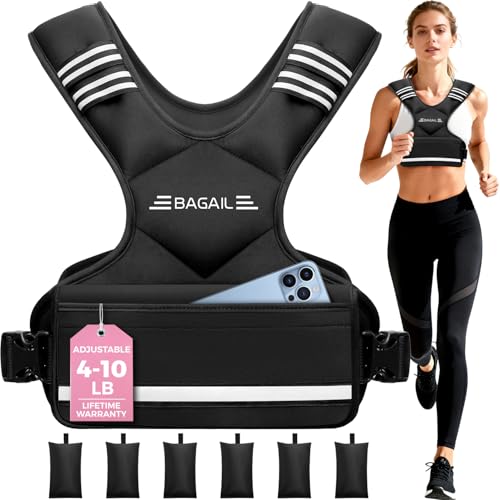
- Starts at a 4 lb base with removable weights
- Comfort-focused U-neck and wide adjustable straps
- Large pocket and 360-degree reflective coverage
Best For: Beginners progressing through walking and light training
Best Overall
APEXUP 20–40 lb Cast-Iron Weighted Vest

- Removable 2.5 lb cast-iron blocks
- 1000D nylon with reinforced stitching
- Padded fit and reflective strips
Best For: Progressive training and demanding outdoor workouts
Best Full-Range Option
ERIC FLAG 0–40 lb Adjustable Weighted Vest
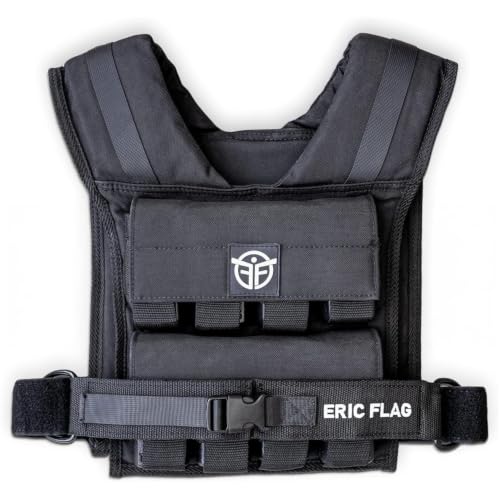
- Adjusts from empty to 40 lb
- Sixteen removable iron weights
- Evenly distributed front and back pockets
Best For: Shared use and gradual resistance progression
Best Lightweight Pick
APEXUP 4–32 lb Neoprene Weighted Vest

- Three moderate weight ranges
- Soft neoprene with ironsand weights
- Large front mesh storage pocket
Best For: Walking, running, cycling, and beginner training
Best for Progressive Training – CAP 40-Lb Adjustable Weighted Vest
For shoppers comparing adjustable weighted vests, the CAP model is built for gradually increasing resistance across strength, cardio, and functional workouts. Its removable 2.5-pound iron ore packets let you customize the load up to 40 pounds.
Best For: Beginners through advanced athletes who want one vest for running, walking, bodyweight exercises, and progressive resistance training.
Pros:
- Adjustable load from 2.5 to 40 pounds using individual weight packets
- Padded shoulders and an adjustable waist belt help provide a secure, evenly distributed fit
- Reinforced nylon and polyester construction with reflective stripes
- Suitable for running, walking, push-ups, squats, lunges, and conditioning
Cons:
- The listed 40-pound vest is relatively heavy and may be more than beginners need at first
- Hook-and-loop closure may offer less tactical-style security than a metal buckle
The CAP is a versatile choice when adjustability matters most. Its broad exercise range and incremental weight packets make it practical for building intensity over time, provided the 40-pound maximum suits your training goals.
Best for Rucking Comfort – ONETWOFIT Adjustable Weighted Vest
This adjustable weighted vest is designed for rucking, walking, running, and gym workouts, with removable cast-iron blocks for changing the resistance. Its thick shoulder padding and metal tactical buckle emphasize comfort and stability during loaded movement.
Best For: Users who want a durable, rucking-oriented vest with removable weights, substantial shoulder padding, and high-visibility details.
Pros:
- Adjusts from 2 to 36 pounds with 16 removable cast-iron blocks
- 1.2-inch shoulder padding is designed to reduce shoulder strain
- 1000D nylon fabric is described as durable, breathable, and sweat-wicking
- Reflective strips and a metal tactical buckle support outdoor use and secure closure
Cons:
- The cast-iron blocks make the vest itself substantial, with a listed bare-vest weight of 2.1 pounds
- Its 36-pound capacity and rucking-focused design may be more than casual users need
Among these adjustable weighted vests, this model stands out for its thick padding, metal hardware, and cast-iron weight system. It is a strong fit for outdoor training and rucking, especially when shoulder comfort is a priority.
Best for Everyday Versatility – ZELUS 12-Lb Weighted Vest
The ZELUS weighted vest offers a straightforward way to add resistance to everyday fitness routines. This version uses evenly distributed iron sand, adjustable buckle straps, reflective strips, and storage pockets, while the product line is available in several fixed weight options.
Best For: Fitness enthusiasts who want a simple, one-size-fits-most vest for jogging, yoga, weightlifting, rope skipping, and general strength training.
Pros:
- Evenly distributed iron sand adds resistance without bulky equipment
- Adjustable straps fit listed chest sizes from 31.5 to 45 inches
- Reflective strips and pockets or pouch add practicality for outdoor sessions
- Available in weight options from 6 to 30 pounds, including this 12-pound version
Cons:
- The supplied version is a 12-pound model rather than a removable-weight design
- Iron sand may offer less precise load adjustment than individual weight blocks
This ZELUS is a sensible option for buyers who value easy setup and everyday versatility over fine-grained adjustability. Start with the lighter available weights if you are new to loaded exercise, then progress as your conditioning improves.
Best for Compact Adjustability – ZELUS Removable-Weight Vest
For shoppers seeking adjustable weighted vests for home or outdoor exercise, this ZELUS model uses six removable 1.5-pound iron-sand bags to vary resistance. Its neoprene construction, hook-and-loop fastening, pocket, and reflective strips support a range of cardio and strength activities.
Best For: Teens and adults who want a low-impact, adjustable vest for walking, gym sessions, cardio, and bodyweight training.
Pros:
- Removable 1.5-pound weight bags allow variable resistance
- Even-load design and hook-and-loop fasteners help create a snug fit
- Soft neoprene material is intended for comfort and durability
- Wide pocket and reflective strips add convenience and visibility
Cons:
- The supplied notes give conflicting capacity details, listing both up to 20 and a 20–32-pound size range
- Hook-and-loop fastening may be less robust for some high-impact activities than a tactical buckle
This ZELUS model is appealing when you want removable resistance in a relatively simple vest format. Verify the exact weight configuration before ordering, since the supplied specifications describe its capacity inconsistently.
Best for Everyday Walking – Women's 6–12 lb U-Shaped Vest
If you want adjustable weighted vests for walking, this women-focused 6–12 lb model offers gradual resistance through six removable 1 lb sandbags. Its U-shaped design, padded shoulders, reflective strips, and front storage pocket make it suited to practical indoor or outdoor workouts.
Best For: Women adding light, adjustable resistance to walking, cardio, strength training, or home-gym sessions.
Pros:
- Six removable 1 lb sandbags provide adjustable weight from 6 to 12 lb.
- U-shaped ventilation, breathable neoprene, and thickened shoulder pads support comfort.
- Reflective strips and a spacious front mesh pocket improve outdoor convenience.
- Adjustable buckle straps and weight distribution help create a more secure fit.
Cons:
- The 12 lb maximum may be limiting for advanced strength training.
- The design and sizing are specifically positioned toward women.
This is a sensible choice when comfort, visibility, and gradual progression matter more than heavy loading. It is especially practical for walking and moderate home workouts.
Best for Heavy Training – Beatboost Adjustable Steel-Weight Vest
Among adjustable weighted vests, the Beatboost stands out for users who need substantially more resistance and precise loading. Removable 0.625 lb steel bars support incremental adjustments, while available configurations range from 20 to 60 lb and may include wrist and ankle weights.
Best For: Experienced users doing strength training, cardio, CrossFit, walking, running, or full-body conditioning.
Pros:
- Removable 0.625 lb steel bars allow fine resistance adjustments.
- Configurations extend from 20 to 60 lb, depending on the selected option.
- Some bundles include wrist weights, ankle weights, shoulder pads, and accessories.
- Adjustable straps, balanced distribution, breathable fabric, and reinforced stitching support demanding workouts.
Cons:
- The listed 20 lb option weighs 22.8 lb, making it a substantial piece of equipment.
- Higher-weight configurations may be excessive for beginners or casual walking.
- Bundle contents vary by selected configuration.
This model is better suited to progressive, high-load training than light recreational use. Confirm the selected configuration before ordering, particularly if you want the complete accessory bundle.
Best for Gradual Progression – BAGAIL Women's U-Neck Vest
For shoppers comparing adjustable weighted vests for walking and light training, the BAGAIL offers a beginner-friendly progression system. It starts with a 4 lb base and uses six removable 1 lb ironsand bags, with size ranges listed up to 10, 18, or 32 lb depending on the selected version.
Best For: Beginners, women, and seniors progressing through walking, jogging, light training, yoga, Pilates, or barre.
Pros:
- A 4 lb base and six removable 1 lb weights support gradual progression.
- U-neck, body-contouring construction, breathable neoprene, and wide adjustable straps focus on comfort.
- A 10-inch front pocket holds larger phones and other workout essentials.
- 360-degree reflective coverage improves visibility during low-light walks.
Cons:
- The vest should be wiped clean rather than machine washed.
- Available weight ranges depend on the selected version, so shoppers should verify the option.
- The comfort-oriented design may be less suitable for very heavy training.
BAGAIL is a strong fit for controlled, incremental training where comfort and visibility are priorities. Its broad range of configurations also lets shoppers choose a starting load that matches their routine.
Best Overall – APEXUP 20–40 lb Cast-Iron Weighted Vest
If you want adjustable weighted vests that can scale with your training, this APEXUP model offers 20, 30, or 40 lb configurations. Removable 2.5 lb cast-iron blocks let you fine-tune the load for walking, running, rucking, calisthenics, or strength work.
Best For: Users who want a durable vest with substantial weight capacity and precise load adjustments.
Pros:
- Removable cast-iron blocks support progressive loading in 2.5 lb increments.
- Heavy-duty 1000D nylon and reinforced stitching are designed for demanding workouts.
- Padded shoulder straps, an adjustable waist belt, and reflective strips add practical comfort and visibility.
- Available in 20, 30, and 40 lb options for different training stages.
Cons:
- The listed 40 lb configuration is substantially heavier than lighter training vests.
- Cast-iron blocks may make the vest less convenient to transport than sand-filled designs.
Choose this model if durability and a high maximum load matter more than keeping the vest especially light. Its removable iron blocks make it a flexible option for users progressing from walks to more demanding resistance work.
Best Full-Range Option – ERIC FLAG 0–40 lb Adjustable Weighted Vest
Among adjustable weighted vests, the ERIC FLAG stands out for its broad 0–40 lb range. Its 16 removable 2.4 lb iron weights fit into evenly distributed front and back pockets, making it suitable for gradual progression across walking, running, calisthenics, and strength training.
Best For: Men and women who want a one-size vest that can start empty and progress up to 40 lb.
Pros:
- Sixteen removable iron weights allow incremental load adjustments from 0 to 40 lb.
- Eight front and eight back pockets help distribute the weight evenly.
- Adjustable straps are designed to provide a secure fit across different body sizes.
- 1000D Oxford nylon is tear- and abrasion-resistant for demanding use.
Cons:
- The vest’s full 40 lb configuration may feel bulky or demanding for beginners.
- Iron weights add more carrying weight when adjusting or storing the vest.
This is a practical pick for households or training programs that need one vest covering multiple resistance levels. The empty-to-40 lb range is especially useful when different users or workout types require different loads.
Best Lightweight Pick – APEXUP 4–32 lb Neoprene Weighted Vest
For shoppers comparing adjustable weighted vests for everyday movement, this APEXUP model offers lighter weight ranges than the heavy-duty options. Six removable ironsand weights provide configurations from 4–10, 12–18, or 20–32 lb, while the neoprene construction and front storage pocket suit walking, running, cycling, and gym sessions.
Best For: Beginners and general fitness users who want moderate adjustable resistance with storage for small essentials.
Pros:
- Three weight ranges accommodate different training stages from 4 to 32 lb.
- Neoprene and ironsand construction are designed for even weight distribution.
- Large front mesh pocket holds items such as a phone, keys, or wallet.
- Reflective straps improve visibility during outdoor workouts.
Cons:
- Its maximum listed range is lower than the 40 lb capacity of the other options.
- Ironsand weights may be less rugged and precise than cast-iron blocks.
- The listed size range corresponds to selected weight configurations rather than a single 0–32 lb adjustment range.
This vest makes sense when moderate resistance, a comfortable neoprene design, and convenient storage are priorities. It is a more approachable choice for walking, running, cycling, and general strength training than a heavier 40 lb vest.
How We Picked the Best Adjustable Weighted Vests
We compared these Adjustable Weighted Vests by looking at their usable weight ranges, removable-weight systems, intended activities, fit features, and practical design details. A vest for running should prioritize stability, comfort, and a close fit, while a rucking or strength vest may benefit from substantially higher capacity.
We also considered whether each design appears suited to different body sizes and training levels. Product specifications such as reflective details, storage pockets, weight increments, and U-shaped or U-neck construction can make a meaningful difference in day-to-day use.
Quick Comparison
| Best For | Look For | Typical Weight Range |
|---|---|---|
| Walking and beginner workouts | Light, secure fit and comfortable shoulder coverage | About 4–12 lb |
| Running and conditioning | Low movement, balanced load, and reflective accents | About 6–30 lb |
| Rucking | Higher capacity and durable construction | About 20–50 lb |
| Strength and calisthenics | Broad adjustability and secure weight pockets | About 20–150 lb |
Key Buying Factors for Adjustable Weighted Vests
Weight Range and Increments
Choose a vest that supports your current level but leaves room to progress. Small increments are useful for gradual conditioning, while higher capacities suit experienced users performing loaded carries, squats, push-ups, or calisthenics.
Fit and Load Stability
A vest should remain close to your torso without restricting breathing or arm movement. Adjustable straps, even weight distribution, and a secure front closure help limit bouncing during running and other dynamic exercises.
Comfort and Ventilation
Padding, breathable materials, and a shape that does not press against your neck can improve longer sessions. Heavier models may feel bulky, so check dimensions and adjustability before buying.
Construction and Safety Details
Look for securely enclosed weights, durable stitching, and easy-to-use adjustment points. Reflective strips can improve visibility for outdoor walking or running, while pockets add convenience but may increase bulk.
Who Should Buy Which Adjustable Weighted Vests?
Beginners and walkers: Start with a lighter vest that offers modest increments and a comfortable, stable fit. Avoid choosing a heavy model simply because it has a larger maximum capacity.
Runners and conditioning-focused users: Prioritize a close-fitting design, balanced loading, and reflective details. Begin with a conservative load and increase it only after your normal pace and form remain comfortable.
Ruckers: Choose a durable, higher-capacity vest with enough adjustability for gradual progression. A secure fit matters more than having the absolute maximum listed weight.
Strength and calisthenics athletes: Look for broad weight adjustment, reliable closures, and a design that stays stable during push-ups, pull-ups, lunges, and loaded carries. Always confirm the vest’s maximum load and your equipment’s safety limits before training heavily.