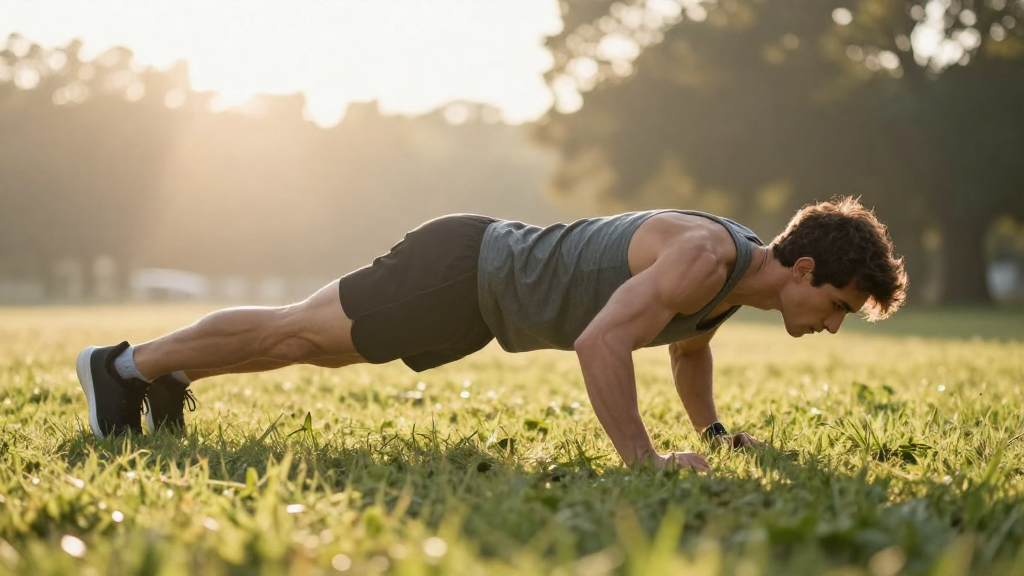
Looking to sculpt your body and improve your fitness level?
A workout with bodyweight is an efficient way to achieve your fitness goals without any equipment.
As more people embrace home workouts, bodyweight exercises have surged in popularity for their effectiveness and convenience.
In this article, we’ll explore how to do a workout with bodyweight, delve into its benefits, and provide you with an effective bodyweight workout routine.
What is a Bodyweight-Only Workout?
A bodyweight-only workout utilizes the weight of your own body as resistance.
This form of exercise is primarily focused on functional movements, meaning it mimics everyday activities.
Here are some key characteristics of bodyweight workouts:
- No Equipment Needed: Great for those who might not have access to a gym or equipment.
- Adaptability: Suitable for all fitness levels, as exercises can be modified.
- Functional Strength: Enhances stability, flexibility, and core strength.
Why Choose a Workout with Bodyweight?
What Are the Benefits of Bodyweight Workouts?
A workout with bodyweight offers numerous advantages:
-
Convenience:
– Can be done anywhere, be it at home, at a park, or while traveling. -
Cost-Effective:
– No need to invest in gym memberships or equipment. -
Increased Flexibility:
– A perfect option for those with a busy schedule, allowing you to work out at any time. -
Versatile and Diverse:
– Numerous exercise variations to target different muscle groups. -
Reduced Risk of Injury:
– Generally lower impact than weighted exercises, making it safer for beginners.
How Does It Improve Fitness Levels?
A workout with bodyweight can help you improve:
-
Strength: Targets major muscle groups through exercises like push-ups, squats, and pull-ups.
-
Endurance: Enhances cardiovascular health, especially when paired with high-intensity interval training (HIIT).
-
Flexibility: Many bodyweight exercises, like lunges or yoga poses, promote flexibility.
-
Balance and Coordination: Many bodyweight exercises require balance, improving stability.
What Exercises Should You Include?
What Are Some Effective Bodyweight Exercises?
When planning your workout with bodyweight, consider including the following exercises:
-
Push-Ups:
– Targets the chest, shoulders, and triceps. -
Squats:
– Works on the thighs, hips, and glutes. -
Lunges:
– Builds strength in the legs and core stability. -
Planks:
– Excellent for core strength and maintenance of posture. -
Burpees:
– A full-body exercise that combines strength and cardio. -
Mountain Climbers:
– Focuses on the core while also providing a cardiovascular boost. -
Jumping Jacks:
– Great for warming up and improving cardiovascular fitness.
How to Structure Your Workout Routine?
To create a balanced workout with bodyweight, consider the following structure:
-
Warm-Up (5-10 minutes):
– Include dynamic stretches and light aerobic activity (e.g., jogging in place). -
Main Workout (20-30 minutes):
– Circuit Style: Choose 5-7 of the exercises above and perform them in a circuit.
- Example Circuit:
- 10 Push-Ups
- 15 Squats
- 12 Lunges (each leg)
- 30-Second Plank
- 10 Burpees
- 30 Mountain Climbers
- 15 Jumping Jacks
- Repeat the circuit 2-3 times with 1-2 minutes rest between rounds.
- Cool Down (5-10 minutes):
– Engage in static stretching to help muscles recover and improve flexibility.
How Often Should You Workout?
What Is the Recommended Frequency for Bodyweight Workouts?
For effective results, it is recommended to:
-
Aim for 3-5 days a week of bodyweight training.
-
Allow rest days in between sessions to promote muscle recovery.
-
Combine with other forms of exercise, like cardio (running, cycling, etc.) or yoga.
Can You Scale Your Bodyweight Workout?
How Do You Modify Exercises for Different Levels?
A workout with bodyweight can be easily modified for all levels:
Beginners:
- Push-Ups: Start with incline push-ups (hands on a bench).
- Squats: Perform chair squats using a chair for assistance.
Intermediate:
- Push-Ups: Standard push-ups or incline to decline push-ups.
- Squats: Add jump squats for an added challenge.
Advanced:
- Push-Ups: One-arm push-ups or explosive clapping push-ups.
- Squats: Pistol squats for unilateral leg strength.
What About the Advanced Fitness Levels?
Individuals looking for a challenge can explore the following advanced options:
- Plyometric Exercises: Incorporate jumps and explosive movements.
- Isometric Holds: Engage in exercises like wall sits and static lunges for strength endurance.
- Complex Movements: Combine exercises, such as burpees with a push-up.
Conclusion: Ready to Start Your Bodyweight Journey?
Embarking on a workout with bodyweight is advantageous for both beginners and seasoned athletes.
Not only is it convenient and cost-effective, but it also builds strength, endurance, and flexibility.
With minimal space and no equipment required, bodyweight workouts can fit into any lifestyle.
Create your tailored workout routine and stick to your fitness goals.
Whether you’re working out at home, in a park, or on vacation, the possibilities of a bodyweight workout are endless.
So get moving, stay consistent, and redefine your fitness journey today!