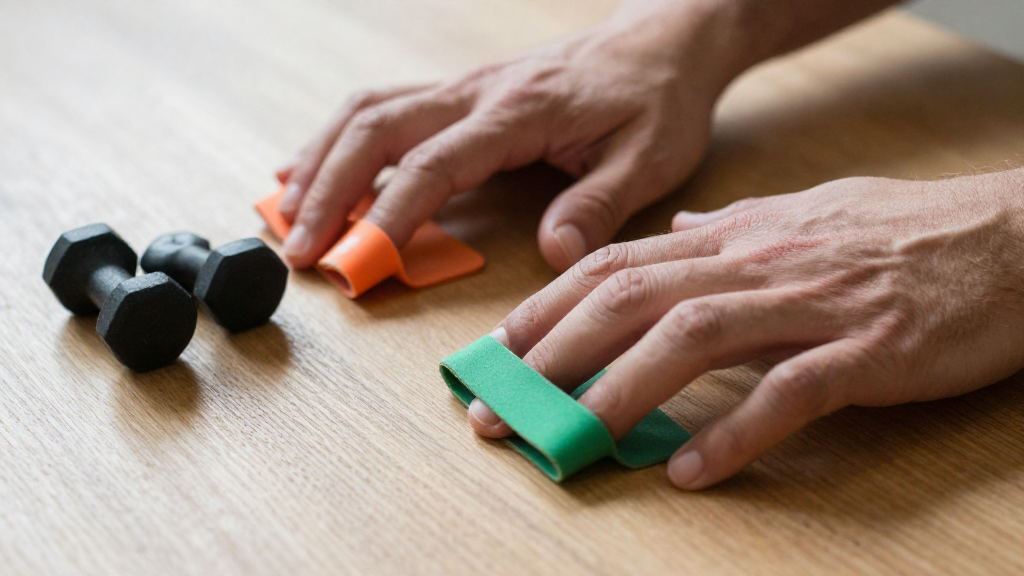
In today’s digital age, many of us overlook the importance of keeping our hands and fingers strong and flexible. Finding an effective workout for fingers can significantly improve your grip strength, dexterity, and overall hand health.
Why Should You Consider a Workout for Fingers?
Engaging in a regular workout for fingers can yield numerous benefits:
-
Enhanced grip strength: A strong grip is essential for sports, lifting weights, or daily activities.
-
Injury prevention: Strengthening your fingers can help prevent common injuries such as tendonitis or repetitive strain injuries.
-
Improved dexterity: Increased finger agility is crucial for musicians, artists, and anyone using their hands extensively.
-
Better performance: Whether typing, playing an instrument, or performing sports, a well-conditioned hand can result in improved performance.
What Are Effective Exercises for Finger Workouts?
When searching for a workout for fingers, consider these effective exercises that target strength, flexibility, and coordination.
1. Finger Stretch
How to do it:
-
Start by spreading your fingers wide apart.
-
Hold this position for 5-10 seconds.
-
Repeat 3-5 times for each hand.
2. Finger Thumb Taps
How to do it:
-
Touch the tip of your thumb to the tip of each finger sequentially.
-
Complete the cycle 2-3 times for each hand.
This exercise warms up the fingers and improves coordination.
3. Squeeze Ball
How to do it:
-
Get a stress ball or a hand exerciser.
-
Squeeze the ball with your fingers and thumb, holding for 5 seconds.
-
Relax and repeat 10-15 times for each hand.
This is an excellent workout for fingers that enhances grip strength.
4. Finger Lifts
How to do it:
-
Place your hand flat on a surface, palm down.
-
Lift each finger off the surface one at a time, holding each lift for 2-3 seconds.
-
Repeat 5-10 times for each hand.
This exercise improves both strength and flexibility.
5. Wrist Rolls
How to do it:
-
Extend your arms in front of you.
-
Rotate your wrists in a circular motion clockwise for 10-15 seconds, and then counterclockwise.
While not a direct workout for fingers, neck and forearm mobility is essential.
6. Rubber Band Stretch
How to do it:
-
Place a rubber band around the fingers and thumb of one hand.
-
Open your fingers against the resistance of the band, holding for 5 seconds.
-
Relax and repeat 10-15 times.
This is a great workout for fingers that emphasizes resistance training.
How Often Should You Perform a Finger Workout?
To maximize the benefits of your workout for fingers, aim to incorporate these exercises into your routine 3-4 times a week.
Make sure to allow for rest days in between sessions to prevent overuse injuries.
Are There Any Specific Techniques for Musicians?
Musicians, especially guitarists or pianists, have unique finger requirements. Here’s a tailored workout for fingers in their context:
1. Chromatic Scale Exercise
How to do it:
-
Practice playing chromatic scales up and down the neck of a guitar or on a piano.
-
Focus on keeping your fingers light and agile.
2. Finger Independence Drill
How to do it:
-
Place your left hand on a keyboard or fretboard.
-
Shift your fingers independently, practicing scales or chords.
This builds finger strength and independence, crucial for fluid playing.
What Tools Can Aid Your Finger Workout?
If you’re serious about your workout for fingers, consider investing in some hand strength tools like:
-
Grip trainers: Devices designed for improving grip strength.
-
Finger exercisers: Used for strengthening individual fingers.
-
Therapy putty: Helps reduce stress while strengthening fingers.
These tools can enhance your workout and provide added resistance to your exercises.
Can You Prevent Injuries with a Finger Workout?
Incorporating a dedicated workout for fingers can play a significant role in preventing injuries.
Regularly strengthening your hand muscles can maintain balance and flexibility throughout your fingers while reducing stress on ligaments and tendons.
Tips for Preventing Finger Injuries:
-
Warm up: Always start with a good warm-up to prevent straining your muscles.
-
Listen to your body: If you feel discomfort or pain, take a break.
-
Stay consistent: Regular exercise helps maintain finger strength over time.
Conclusion
Finding an effective workout for fingers is essential for maintaining grip strength, dexterity, and overall hand health.
From easy stretches to more comprehensive strengthening exercises, there are many ways to keep your fingers fit.
Whether you’re a musician, athlete, or anyone who relies on fine motor skills, incorporating a focused finger workout can make a significant difference in your performance.
Make it a practice to ensure balanced and healthy hands—your body will thank you!