The HANDBODE Pull Up Bar review starts with one simple question: do you want a more serious training station than a doorway bar can offer?
If you need a heavy-duty mounted solution for pull-ups, chin-ups, and knee raises, this one deserves a close look.
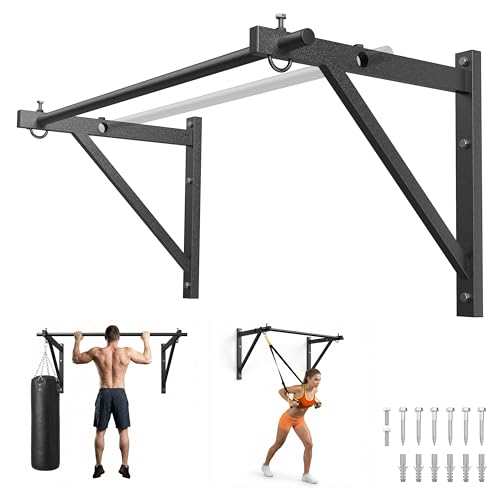
HANDBODE Pull Up Bar Review Summary
If you want a stable, space-saving pull-up station that feels built for real training, the HANDBODE Pull Up Bar makes a strong case.
It is best suited to home gym owners and garage gym users who can mount equipment into concrete or wood and want a bar that supports more than basic pull-ups.
What stands out most is the combination of 500 lb maximum weight support, two adjustable depth positions, and accessory hooks that expand training options beyond simple vertical pulling.
That makes it more versatile than many budget doorway bars and more compact than a freestanding power tower.
For buyers asking is HANDBODE Pull Up Bar worth it, the answer is yes if you value mounting security, room for movement, and long-term durability.
It is less appealing for renters or anyone who cannot drill into a structural surface, but for the right setup it offers a practical and confidence-inspiring home gym upgrade.
Scorecard
| Category | Score | Why it matters |
|---|---|---|
| Stability and load support | 9.0 | Heavy-duty wall-mounted design and 500 lb weight capacity suggest strong support for pull-ups and other upper-body movements. |
| Adjustability and exercise versatility | 9.0 | The bar can switch between two wall offsets and includes hooks for bands or sandbags, making it useful for multiple training styles. |
| Installation flexibility | 8.0 | Designed for concrete and wooden surfaces, with notes covering wall-mounted use and ceiling installation in taller garage setups. |
| Build quality and durability | 8.0 | Iron construction and powder-coated, rust-resistant finish point to long-term durability for indoor and outdoor use. |
| Workout functionality | 9.0 | Suitable for pull-ups, chin-ups, knee raises, and accessory-based resistance training, giving it broad home-gym usefulness. |
| Space efficiency | 8.0 | Wall-mounted format keeps floor space open, which is ideal for compact home gyms or garage training areas. |
Bottom line: the HANDBODE Pull Up Bar is a serious mounted training tool for buyers who want durability, versatility, and a cleaner footprint than freestanding equipment.
Key Features and Specifications of HANDBODE Pull Up Bar
The HANDBODE Pull Up Bar is designed as a wall-mounted home gym station with a 52-inch bar format and a construction focused on heavy use.
Below are the details that matter most when comparing it with other pull-up bars.
| Specification | Details |
|---|---|
| Brand | HANDBODE |
| Material | Iron |
| Mounting type | Wall mount |
| Maximum weight recommendation | 500 lb |
| Adjustable depth | 13.8 in or 21.6 in from the wall |
| Wall-mounted position note | 14 in or 22 in from the wall |
| Finish | Powder-coated |
| Installation surfaces | Concrete and wooden surfaces |
| Use environments | Indoor and outdoor |
| Variant name | 52-inch wall mounted pull up bar |
| Special features | Two sturdy hooks for bands, sandbags, and accessories |
| Exercise types | Pull-ups, chin-ups, knee raises, and accessory-based upper-body training |
| Ceiling installation note | Suitable for garage gyms with ceilings over 9.5 ft |
From a buyer’s perspective, the biggest spec is the 500 lb capacity.
That number is not just marketing fluff; it signals that HANDBODE is aiming at lifters who care about rigidity and confidence under load.
The adjustable depth also matters because it lets you choose between a tighter profile and a deeper setup depending on your exercise style and available room.
The powder-coated finish is another useful design choice.
It helps protect the iron body against wear and corrosion, which is especially relevant if you plan to use the bar in a garage, basement, or outdoor training area.
Pros and Cons of HANDBODE Pull Up Bar
Every mounted pull-up bar has tradeoffs, and the HANDBODE Pull Up Bar pros and cons are pretty clear once you look at the installation style and intended use.
Pros
- Strong 500 lb load capacity supports serious upper-body training.
- Adjustable depth positions improve comfort and movement clearance.
- Two accessory hooks add band, sandbag, and hybrid training options.
- Iron construction should hold up well in a long-term home gym setup.
- Rust-resistant powder coat makes it more suitable for indoor or outdoor use.
- Wall-mounted design preserves floor space compared with a power tower.
Cons
- Requires proper mounting, so it is not a casual no-tools option.
- Best installed on suitable structural surfaces, which may exclude some renters.
- Ceiling-install notes can be confusing because the listing mixes wall and ceiling language.
- Installation quality is critical; poor mounting will undermine its advantages.
In practical terms, the biggest drawback is not the product itself but the commitment required to install it correctly.
If you are comfortable drilling into concrete or wood and checking the load-bearing surface, the downsides are manageable.
If not, a doorway bar or freestanding tower may be a better fit.
Who Should Buy HANDBODE Pull Up Bar?
The HANDBODE Pull Up Bar is a smart buy for lifters who want a dedicated upper-body training station without giving up floor space.
It is especially good for people building a home gym, upgrading a garage gym, or looking for a stable pull-up setup that can handle heavier training styles.
- Buy it if you want a wall-mounted bar with strong support and room for progression.
- Buy it if you use pull-ups, chin-ups, knee raises, or band-assisted training regularly.
- Buy it if you have a concrete or wooden surface you can mount into securely.
- Buy it if you prefer a compact setup over a freestanding power tower.
- Skip it if you rent and cannot drill into structural surfaces.
- Skip it if you need a truly portable or plug-and-play solution.
For most buyers, this is a good fit when the goal is stability first, convenience second.
That tradeoff is exactly why mounted bars often outperform cheaper alternatives for serious training.
Best Wall and Ceiling Setup Options
One of the more interesting parts of the HANDBODE design is how it can be adapted to different mounting scenarios.
The bar is primarily a wall-mounted pull-up bar, but the listing also notes ceiling-style use in taller garage gyms.
That makes setup planning especially important.
If you are mounting to a wall, the adjustable depth positions of 13.8 inches or 21.6 inches from the wall give you different training clearances.
A shorter offset can feel better for smaller rooms or tighter layouts, while the deeper offset gives more room for leg movement and kipping-style space considerations.
The wall-mounted positions are also described as 14 inches or 22 inches from the wall, which reinforces the same basic idea: you can choose the footprint that fits your room and movement pattern.
For ceiling installation, the note about garage ceilings over 9.5 ft is a helpful reminder that pull-up bars need vertical clearance.
Taller users especially should think about headroom, knee room, and whether their chosen installation leaves enough space for full range-of-motion reps.
That matters even more if you use weighted pull-ups or want controlled hanging leg raises.
Buyer takeaway: the bar is at its best when the installation matches the workout style.
A good mount turns it into a highly capable training station; a rushed installation turns it into a compromise.
How the Adjustable Depth Changes Your Training
Adjustable depth is one of the reasons this model stands out in the home gym equipment category.
On paper, it sounds like a small feature.
In real training, it changes how the bar feels under your hands and how much space you have in front of the wall.
With the shallower position, the HANDBODE Pull Up Bar keeps the bar closer to the wall.
That may suit users who want a more compact profile and a cleaner look in the room.
It can also feel more practical if your ceiling or surrounding layout is limited.
The deeper position creates more clearance, which is useful for stricter movement patterns, knee raises, and any setup where you want your legs and torso to stay away from the wall.
That flexibility also helps if you train multiple ways.
For example, one user may prefer strict pull-ups from a controlled dead hang, while another may use the bar for band-assisted reps and accessory work.
The inclusion of two sturdy hooks means the bar can support a more varied training approach, especially if you want to hang resistance bands or add external loading like sandbags.
This is where the HANDBODE Pull Up Bar starts to feel like a true home-gym tool instead of a single-use accessory.
Versatility matters, especially if you want one piece of equipment to cover several training goals.
Home Gym Exercises You Can Do With It
The obvious use is pull-ups, but the HANDBODE setup has enough structure to support a more complete upper-body routine.
That makes it a practical option for people who want to build strength without filling a room with large machines.
- Pull-ups for back, biceps, and grip strength.
- Chin-ups for a slightly more biceps-focused variation.
- Knee raises to train the core and hip flexors.
- Hanging leg variations if your clearance and mobility allow.
- Band-assisted pull-ups for progression and volume work.
- Weighted training using a belt or compatible loading method, assuming your installation is secure.
- Accessory resistance work with the built-in hooks for bands or sandbags.
The key buying factor here is not just whether the bar can hold weight, but whether it supports your training progression.
The HANDBODE Pull Up Bar does well because it gives you room to grow from bodyweight movements into more advanced work.
Indoor vs Outdoor Durability
The powder-coated finish and rust-resistant design are especially appealing for buyers who do not train in a climate-controlled room.
A garage gym, basement, or even a sheltered outdoor setup can expose equipment to temperature swings, humidity, and general wear.
Because the bar is made from iron with a protective finish, it should be more durable than basic painted equipment that chips easily.
That said, outdoor use still requires common sense.
If the bar is exposed to constant rain, direct moisture, or poor mounting conditions, no finish will fully solve the problem.
The better interpretation is that the HANDBODE Pull Up Bar is more resilient than average, not maintenance-free.
For buyers comparing it with cheaper bars, this matters a lot.
A bar that rusts, loosens, or flexes under load becomes frustrating fast.
A more durable build is worth paying attention to because pull-up bars are used with dynamic force, not just static weight.
Alternatives to Consider Before You Buy
If the HANDBODE Pull Up Bar is close to what you need but not quite perfect, there are a few common alternatives worth comparing.
- REP Fitness pull-up bars if you want a well-known home gym brand with a reputation for sturdy equipment.
- Yes4All pull-up bar if you want to compare more budget-friendly mounted options.
- Titan Fitness pull-up bar if you are shopping for garage gym hardware and want a similar heavy-duty direction.
- Power tower pull-up station if you cannot drill into walls and need a freestanding alternative.
- Doorway pull-up bar if your space is small and you want a lower-commitment setup.
Compared with these alternatives, the HANDBODE unit makes the most sense when you want mounting security and training versatility more than easy portability.
What to Check Before Installing
Before you buy, the most important question is not just whether the bar looks sturdy.
It is whether your wall, ceiling, and layout can support it correctly.
- Confirm the mounting surface is concrete or solid wood as intended.
- Measure your clearance so your knees, feet, and head have enough room during reps.
- Check ceiling height if you plan a garage-style installation, especially above 9.5 ft.
- Verify the hardware plan so you know what anchors, fasteners, and tools you need.
- Think about your movement style because stricter reps and dynamic work need different spacing.
This is where many buyers make mistakes.
A pull-up bar can only be as good as its installation, so treat the install process as part of the product decision rather than an afterthought.
Is HANDBODE Pull Up Bar Worth It?
So, is HANDBODE Pull Up Bar worth it?
For the right buyer, absolutely.
It offers the kind of serious load support, adjustable depth, and workout versatility that make a home gym feel more complete and more capable.
The value proposition is strongest if you want a mounted pull-up station for a garage or home gym and you can install it correctly into concrete or wood.
In that scenario, the HANDBODE Pull Up Bar gives you a durable, space-efficient way to train pull-ups, chin-ups, knee raises, and accessory movements without sacrificing floor space.
The main reason to pass is simple: if you need an easy no-drill solution, this is not it.
But if you are comfortable with a more permanent installation, the HANDBODE Pull Up Bar looks like a practical, well-rounded, and confidence-building buy.
Final verdict: buy it if you want a mounted pull-up bar that prioritizes stability, versatility, and long-term home gym usefulness.
Skip it only if installation is a problem or you need a renter-friendly alternative.
Recommendation: For most garage gym and home gym owners, this is a strong choice worth considering before moving to a larger power tower or more expensive rack attachment.