The best plyometric boxes for seniors can support step-ups, balance practice, strength work, and carefully scaled power training—not just high jumps. A stable, appropriately sized box can make home workouts more versatile while reducing unnecessary impact.
We selected 10 options with different combinations of foam padding, wooden cores, non-slip surfaces, height settings, and assembly requirements. Use the guide below to choose a box that matches your mobility, confidence, and available training space.
Best 10 Plyometric Boxes for Seniors Picks for 2026
Soft & Forgiving

- Three heights: 16, 20, and 24 inches
- Dense foam core with textured, non-slip vinyl
- 400-pound capacity for varied home workouts
Best For: Beginners seeking a padded, versatile platform for step-ups and strength exercises
Compact & Rigid
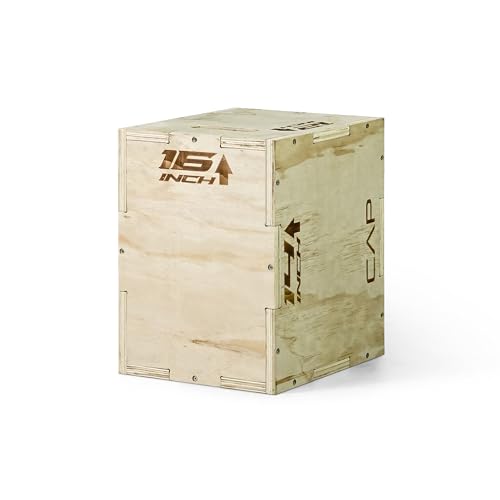
- Rotates to 12-, 14-, and 16-inch heights
- Engineered-wood construction with smooth edges
- Built-in carry handles and 300-pound recommendation
Best For: Seniors wanting a compact, firm platform with a low 12-inch starting height
Lightweight & Cushioned
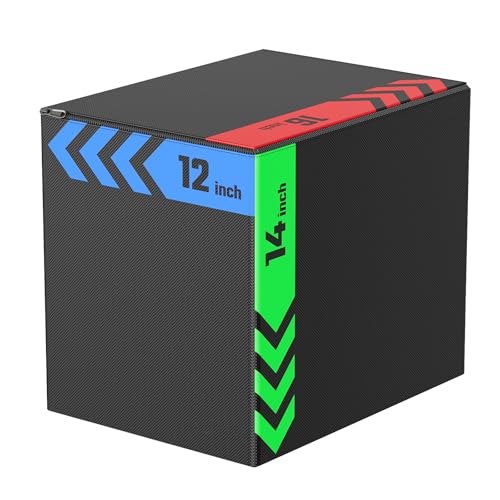
- Three heights from 12 to 16 inches
- Heavy foam with an anti-slip, sweat-resistant cover
- Lightweight design with a 200-pound load limit
Best For: Seniors wanting a portable, cushioned box for low-height step-ups and Pilates
High-Capacity Cushioning

- Three orientations: 12, 14, and 16 inches
- Wooden core wrapped in EVA foam and vinyl
- 440-pound maximum capacity with non-slip PVC surface
Best For: Seniors wanting a structured yet cushioned box for controlled step-ups
Compact Stability Pick

- Fully assembled and tool-free
- Non-slip surface with rubber corner pads
- Supports up to 550 pounds
Best For: Low-height, controlled step-ups and beginner conditioning
Adjustable Training Choice

- Rotates between 12, 14, and 16 inches
- Sturdy wooden puzzle-box construction
- Includes carry handles and exercise guidance
Best For: Gradual progression across multiple training heights
Versatile Home-Gym Pick
Yes4All 3-in-1 Wooden Plyo Box

- Three height levels in one box
- Supports step-ups and strength exercises
- Plywood construction with home-friendly finishes
Best For: Multipurpose home workouts and controlled strength training
Adjustable Cushion Pick
NEWBULIG 3-in-1 Plyometric Jump Box

- Three rotating height options
- Cushioned foam-filled construction
- Lightweight, textured cover
Best For: Adjustable, lower-impact step-ups at home
Impact-Absorbing Value
BalanceFrom 3-in-1 Foam Plyometric Box

- Three flip-adjustable heights
- Shock-absorbing foam construction
- Non-slip PVC exterior
Best For: Cushioned step-ups and strength routines
Low-Profile Wooden Option
Amazon Basics 3-in-1 Wooden Plyo Box

- 12-, 14-, and 16-inch heights
- 450-pound stated capacity
- Handles and sanded edges
Best For: Firm, low-height indoor step-ups
Soft & Forgiving – REP Soft Plyo Box
For seniors looking at plyometric boxes, the REP Soft Plyo Box emphasizes forgiving landings and flexible height selection. Its three-sided design provides 16-, 20-, and 24-inch options for step-ups, box squats, balance work, and other movements, while the dense foam core and textured vinyl cover help reduce concerns about hard edges.
Best For: Beginners and seniors who want a padded, multipurpose box for controlled step-ups, strength work, and gradual conditioning.
Pros:
- Three height options allow progressive training and lower-height exercise selection.
- Dense foam construction and a non-slip vinyl cover provide a softer training surface.
- 400-pound maximum weight capacity supports a wide range of users.
- Can also be used for box squats, glute thrusts, push-ups, and balance work.
Cons:
- The lowest listed height is 16 inches, which may still be high for some seniors.
- At 20 by 20 by 24 inches, it may require more storage space than a compact step platform.
The REP is a strong choice when landing comfort and versatility matter most. Seniors should still begin with controlled step-ups rather than jumps and confirm that the selected height feels secure.
Compact & Rigid – CAP Barbell 3-in-1 Plyo Box
The CAP Barbell is a compact option for seniors comparing plyometric boxes for controlled step-ups and low-impact training. Rotating the engineered-wood box provides 12-, 14-, and 16-inch heights, while smooth edges, recessed hardware, and built-in handles support practical home-gym use.
Best For: Seniors who prefer a firm, compact platform and want multiple lower height settings for step-ups, balance drills, or strength exercises.
Pros:
- Its 12-inch lowest setting is useful for gradual step-up progression.
- Three height options accommodate different exercises and comfort levels.
- Interlocking panels, countersunk screws, and smooth-finished edges support a durable design.
- Built-in carry handles make repositioning easier.
Cons:
- The rigid wood surface does not provide the impact cushioning of a soft foam box.
- The 14-by-12-inch footprint may offer less standing room than larger platforms.
This CAP model suits seniors who prioritize a low starting height and a firm surface. Because it is made from engineered wood, place it on a stable, level floor and use it for controlled movements rather than beginning with jumps.
Lightweight & Cushioned – PAPABABE 3-in-1 Jump Box
The PAPABABE 3-in-1 Jump Box is a lightweight choice for seniors shopping for plyometric boxes that can also support step-ups and floor-based routines. Its 12-, 14-, and 16-inch orientations provide a relatively low starting height, while heavy foam and a sweat-resistant anti-slip cover offer a more comfortable alternative to rigid equipment.
Best For: Seniors who need a portable, cushioned box for low-height step-ups, squats, Pilates, and general home-gym conditioning.
Pros:
- The 12-inch height offers an accessible starting point for step-up exercises.
- Heavy foam provides shock absorption and a softer surface than wood or metal.
- Anti-slip, sweat-proof 1000D Oxford fabric is designed for traction and durability.
- At about 15 pounds, it is relatively easy to move between exercises.
Cons:
- The 200-pound maximum load is lower than the capacity of the other listed soft boxes.
- Its 12-by-14-inch base may feel narrow for users wanting a larger stepping surface.
With its low height and portable foam construction, the PAPABABE is well suited to gentle progression and multipurpose workouts. Check the 200-pound load limit and keep exercises controlled, especially when using the box for step-ups.
High-Capacity Cushioning – Yes4All Soft-Padded Plyo Box
The Yes4All Soft-Padded Plyo Box combines a wooden core with EVA foam and a vinyl cover, making it a practical option among plyometric boxes for seniors who want support without an entirely soft, unstable platform. Its 16-, 14-, and 12-inch orientations provide adjustable exercise heights for step-ups, squats, and other controlled movements.
Best For: Seniors seeking a stable, high-capacity box with a cushioned surface for step-ups, strength work, and low-impact conditioning.
Pros:
- Three height options include a relatively accessible 12-inch setting.
- Wooden core adds structure while EVA foam cushions the exterior.
- PVC surface is designed to provide traction and water resistance.
- 440-pound maximum capacity offers substantial support for a broad range of users.
Cons:
- The product details list a 16-by-14-inch footprint, which may feel limited for some users.
- Its wooden core may feel firmer than a fully foam box.
- The listed warranty is 30 days for returns and one year from the manufacturer.
The Yes4All offers a useful balance between firmness and cushioning, with a low height option and a notably high stated capacity. Seniors can use the 12-inch side for controlled step-ups before considering more demanding movements.
Compact Stability Pick – JFIT 6-Inch Plyometric Box
For seniors comparing plyometric boxes for seniors, the JFIT 6-inch box offers a low platform that can suit controlled step-ups and beginner conditioning work. It arrives fully assembled and uses a steel frame, non-slip landing surface, and rubber corner pads.
Best For: Seniors seeking a compact, low-height platform for gradual training and stability-focused exercises.
Pros:
- Fully assembled with no tools required.
- Low 6-inch height is approachable for beginner movements.
- Non-slip vinyl surface and rubber corner pads support stable use.
- Heavy-duty construction supports up to 550 pounds.
Cons:
- Its small 11-by-11-inch top platform provides limited landing space.
- Only one height is included.
This is the most compact option in the group and avoids assembly altogether. Its low profile may be useful for seniors prioritizing controlled step-ups over high-impact box jumps.
Adjustable Training Choice – GoSports 3-in-1 Launch Box
The GoSports Launch Box gives seniors considering plyometric boxes for seniors three height settings—12, 14, and 16 inches—in one wooden box. Rotating the box changes the height, while the puzzle-box construction, sanded edges, and carry handles add practical convenience.
Best For: Seniors who want adjustable training heights and a box that can accommodate gradual progression.
Pros:
- Three marked heights provide 12-, 14-, and 16-inch options.
- Thick wooden construction is designed for support.
- Sanded edges and carry handles improve handling.
- Exercises are included for different training levels.
Cons:
- Assembly is required.
- The lowest setting is 12 inches, higher than the JFIT option.
- Wood construction may require careful placement on the workout surface.
The adjustable design makes this a flexible choice for seniors who want to begin at the lowest setting and progress only as comfortable. It is less suitable if you specifically need a very low platform or a no-assembly setup.
Versatile Home-Gym Pick – Yes4All 3-in-1 Wooden Plyo Box
For home users choosing plyometric boxes for seniors, the Yes4All 3-in-1 wooden box provides three height options in a single unit. Its plywood construction supports step-ups, split squats, push-ups, and other training movements, while the furniture-style finish can blend into a home gym or living space.
Best For: Seniors wanting one multipurpose box for low-impact strength exercises and home workouts.
Pros:
- Three height levels support varied exercise selection.
- Works for step-ups, split squats, push-ups, and plyometric exercises.
- Durable plywood construction is designed for stability.
- Available in four sizes and three vintage colors.
Cons:
- Assembly is required.
- The listed unit measures 16 by 14 by 12 inches, so it may take more floor space.
- The supplied notes do not specify a weight capacity.
This box stands out for exercise variety and home-friendly styling. Its multiple levels can support progression, but seniors should verify the setup is stable and select a height appropriate for their mobility and balance.
Adjustable Cushion Pick – NEWBULIG 3-in-1 Plyometric Jump Box
For shoppers comparing plyometric boxes for seniors, the NEWBULIG 3-in-1 model offers a cushioned, adjustable approach to step-ups and other controlled exercises. Rotating the box provides three height options, while its textured cover is designed to improve traction.
Best For: Seniors who want a lightweight, cushioned box for adjustable-height step-ups and moderate home workouts.
Pros:
- Three height options from a rotating 3-in-1 design
- Foam and pearl cotton filling cushion landings
- Textured Oxford cloth cover supports grip
- Lightweight and ready to use without assembly
Cons:
- The listed small size weighs 10 pounds and may be less substantial than heavier boxes
- The notes describe training versatility but do not specify a weight capacity
Its adjustable format and cushioning make this a practical option for seniors prioritizing comfort and easy repositioning. Use the lowest suitable height and focus on controlled step-ups rather than high-impact jumps.
Impact-Absorbing Value – BalanceFrom 3-in-1 Foam Plyometric Box
Among plyometric boxes for seniors, the BalanceFrom 3-in-1 foam box stands out for shock-absorbing construction and multiple height settings. Its flip design supports step-ups and strength exercises, while the PVC exterior adds traction during movement.
Best For: Seniors seeking a foam exercise box with adjustable heights, a non-slip surface, and a high stated weight capacity.
Pros:
- Three height options through a flip design
- Shock-absorbing foam helps reduce workout impact on joints
- Textured PVC exterior provides traction
- Stated weight capacity of up to 330 pounds
Cons:
- The 24-inch maximum height may be more than needed for beginner step-ups
- Foam construction may not feel as firm as a wooden box
This model offers useful adjustability and cushioning for progressive training. Seniors should begin with the lowest setting and verify that the box remains stable for their chosen exercise.
Low-Profile Wooden Option – Amazon Basics 3-in-1 Wooden Plyo Box
For seniors evaluating plyometric boxes for seniors, this Amazon Basics wooden model offers three relatively low heights—12, 14, and 16 inches—for step-ups and conditioning work. Clear height indicators and smooth, sanded edges support straightforward indoor use, though assembly is required.
Best For: Seniors who prefer a sturdy wooden box with lower height settings, handles, and a high stated weight capacity.
Pros:
- Three lower height options from 12 to 16 inches
- Supports up to a stated 450 pounds
- Sanded edges help prevent scratches
- Built-in handles make repositioning easier
Cons:
- Requires assembly before use
- Wood construction does not provide the cushioning of foam models
- Designed primarily for indoor training
The lower settings and wide handles make this a sensible choice for controlled step-ups, especially when a firmer platform is preferred. Because it lacks foam cushioning, use supportive footwear and place it on a suitable indoor surface.
How We Picked the Best Plyometric Boxes for Seniors
We focused on features that matter most for controlled, low-impact training: stability, surface traction, usable height options, edge comfort, construction quality, and ease of setup. Three-in-one designs are especially useful because they provide multiple working heights, allowing users to start with step-ups or incline exercises before progressing to more demanding movements.
Foam-covered models received particular attention for users who want softer contact around the shins, while wooden boxes can appeal to buyers who prioritize rigidity and a firm platform. No box eliminates fall risk, so every option should be used on a clear, level surface and at an appropriate height.
Quick Comparison
| Feature | What to look for | Best suited to |
|---|---|---|
| Soft foam exterior | Padded edges and a grippy cover | Beginners and cautious step-up training |
| Wooden core | Rigid support with padded or finished surfaces | Users wanting a stable, durable platform |
| Three height settings | Several orientations or sizes | Progressive training and shared households |
| Single fixed height | Simple, sturdy construction | Buyers with one clearly defined use |
| Non-slip base or top | Textured surface and minimal movement | Home gyms with smooth flooring |
Key Buying Factors for Plyometric Boxes for Seniors
Choose a Manageable Height
For many older adults, a low box is more useful than a tall jump platform. It supports step-ups, supported balance drills, calf raises, and incline exercises without requiring deep hip or knee flexion. A three-position box can provide room to progress, but the lowest setting should be stable and easy to approach.
Prioritize Stability and Grip
Look for a broad footprint, a firm core, textured covering, and a base that does not slide easily. Place the box on level flooring, avoid loose rugs, and test it with gentle pressure before stepping up. A box that rocks, shifts, or feels undersized is not a good match.
Consider Padding and Construction
Soft foam can reduce discomfort if a shin contacts the edge, but excessive softness may feel less secure underfoot. Wooden models generally provide a firmer feel and may last longer, though sharp or poorly finished edges are undesirable. Check weight limits and dimensions before buying.
Think About Storage and Setup
Measure the workout area and storage location. No-assembly designs are convenient, while assembled wooden boxes may require tools and careful tightening. Leave enough clearance around the box for mounting, stepping down, and recovery.
Who Should Buy Which Plyometric Boxes for Seniors?
Choose a soft, padded box if comfort and confidence are your priorities, especially for step-ups and beginner exercises. Choose a wooden or wood-core model if you want a rigid platform for controlled strength work and have a stable training area. Choose a three-in-one design if multiple users will share the equipment or you want to adjust difficulty over time.
Most seniors should begin with step-ups rather than jumps, use a support such as a rail or sturdy countertop when appropriate, and stop if balance, joint pain, or fatigue becomes a concern. If you have a history of falls, significant osteoporosis, recent surgery, or cardiovascular limitations, ask a qualified clinician or physical therapist whether this type of equipment is suitable before training.