A compact belt squat machine can help you train legs hard without loading your spine the same way a back squat does. That makes it a smart pick for home gyms, garage gyms, and shared spaces where safety and footprint matter.
In this roundup, we focus on space-saving designs, attachment compatibility, load capacity, and ease of use so you can choose the right setup for your training style and rack or cable system.
Best 10 Compact Belt Squat Machine Picks for 2026
Heavy-Duty All-in-One Pick
Mikolo Belt Squat Machine, Leg Press and Home Gym Helper

- 1000 lb capacity with 11-gauge steel construction.
- Non-slip pedals and 3 weight stop positions.
- Includes plate storage and supports multiple exercises.
Best For: Home gym users who want a versatile lower-body station with storage.
Rack-Mounted Value Pick
Fitvids Adjustable Jammer Arms for Belt Squats

- Fits 3" x 3" racks with 5/8" or larger holes.
- Rated 600 lb per arm and made from 11-gauge steel.
- Adds belt squats plus curls, rows, and guided deadlifts.
Best For: Rack owners who want an affordable belt squat alternative.
Freestanding Space-Saver Pick
GEAR FOR FIT Commercial Belt Squat Machine

- Vertical storage design saves space when not in use.
- Caster base makes it easier to move around.
- Supports up to 400 kg with 50 mm plates.
Best For: Small gyms that want a dedicated but movable belt squat machine.
Cable-Machine Accessory Pick
THEFITGUY Belt for Cable Squats and Hip Thrusts
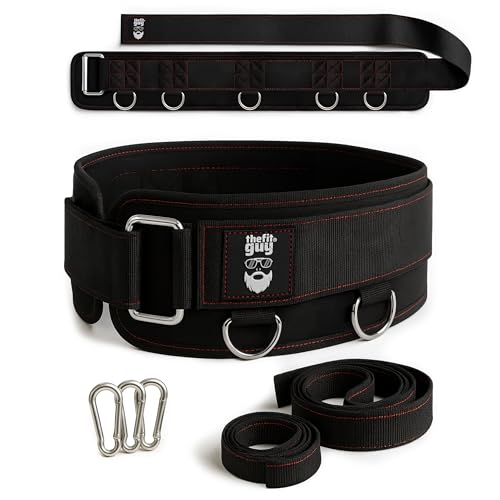
- Built for cable squats and cable hip thrusts.
- Five attachment points with two straps and hooks.
- Fits waists from 32" to 52" and many pulley setups.
Best For: Cable machine owners who want a belt-based squat and hip thrust option.
Rack-Mounted Heavy-Duty Pick
Universal Rack-Mounted Belt Squat System
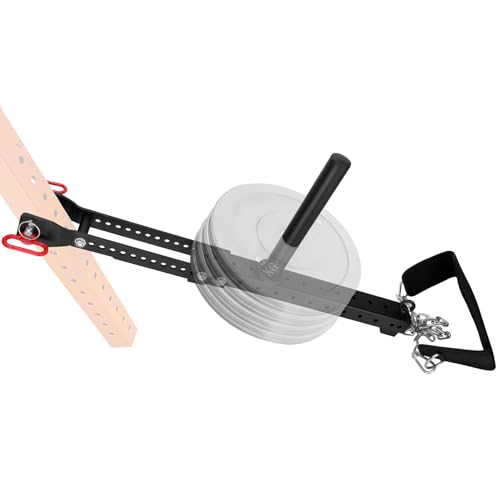
- 1100 lb capacity with steel-frame construction
- Adjustable 31.2" to 45" lever arms
- Fits common rack hole and upright sizes
Best For: Rack owners who want a high-capacity, adjustable belt squat attachment
Portable Platform Pick
Portable Cable-Linked Squat Platform

- Connects to cable machines or resistance bands
- Anti-slip footing and rubber base
- Comes with a custom belt and smooth pulley
Best For: Home gym users who need a lightweight, portable belt squat platform
Support Belt Pick

- Low-profile straps help prevent bunching
- Reinforced EVA back for lumbar support
- Secures with adjustable strap and metal buckle
Best For: Users who need a stable, comfortable belt for squat attachments or machines
Rack-Ready Belt Squat Attachment

- Fits 3"x3" and 2"x2" racks with 1/2" or 5/8" holes.
- Adjustable lever arms range from 28" to 46.5".
- Also supports curls, rows, and guided deadlifts.
Best For: Compatible rack owners who want a versatile, compact belt squat attachment.
Olympic-Bar Belt Squat Attachment

- Fits 2-inch Olympic barbells for home gym use.
- High-strength steel construction supports up to 500 lbs.
- Multiple holes and accessory options add flexibility.
Best For: Lifters with a 2-inch Olympic barbell who want a simple heavy-duty attachment.
Low-Profile Belt Squat Belt

- Low-profile padded straps are designed to stay flat.
- Reinforced EVA back adds lumbar support.
- Adjustable metal-buckle fit stays secure under tension.
Best For: Lifters who need a supportive belt for rack, machine, or lever-arm belt squats.
Heavy-Duty All-in-One Pick – Mikolo Belt Squat Machine, Leg Press and Home Gym Helper
If you want a compact belt squat machine that does more than one job, the Mikolo is built around lower-body training with a belt-squat setup that can also be adjusted for rows and deadlifts. It uses a hip belt to shift the load off the back, which makes it a practical option for lifters who want to train legs more comfortably while still keeping the movement heavy and controlled.
Best For: Home gym users who want a versatile, heavy-duty belt squat setup with built-in plate storage.
Pros:
- 11-gauge steel construction with a 1000 lb capacity.
- Non-slip gritted pedals and 3 weight stop positions for safer setup.
- Built-in plate storage helps keep a home gym organized.
- Adjustable belt and handles allow squats, rows, and deadlifts.
Cons:
- At 81.8″ x 52.3″ x 39″, it is not the smallest footprint in this group.
- Better suited to dedicated home-gym space than tight apartment setups.
Overall, the Mikolo stands out if you want a compact belt squat machine in the sense of being a single-piece, multi-use lower-body station rather than a stripped-down attachment. Its strength is the combination of capacity, safety features, and storage, which makes it appealing for serious home training.
Rack-Mounted Value Pick – Fitvids Adjustable Jammer Arms for Belt Squats
Fitvids Squat Lever Arm Plate Loaded Gym Fitness Equipment Curls Rows Guided Deadlifts Black
Check Price On AmazonIf your goal is to mimic a compact belt squat machine without buying a standalone unit, these Fitvids jammer arms are a practical rack-mounted approach. They fit 3″ x 3″ racks with 5/8″ or larger holes and can be used for belt squats along with curls, rows, and guided deadlifts, making them a flexible add-on for a garage gym.
Best For: Rack owners who want a cheaper way to add belt squat capability and other guided movements.
Pros:
- Fits 3″ x 3″ squat racks with 5/8″ or larger holes.
- Rated for 600 lb per arm and built from 11-gauge steel.
- Supports belt squats, curls, rows, and guided deadlifts.
- Can replace a much more expensive dedicated belt squat machine.
Cons:
- Requires a compatible rack to use.
- Does not function as a standalone machine.
This is a smart buy if you already have the right rack and want belt squat functionality without dedicating floor space to a full machine. It is less about being a complete station and more about delivering a cost-effective way to expand a power rack.
Freestanding Space-Saver Pick – GEAR FOR FIT Commercial Belt Squat Machine
The GEAR FOR FIT unit is a freestanding compact belt squat machine designed for spaces where easy storage and mobility matter. Its vertical storage design and caster base make it easier to move and tuck away than many larger commercial-style lower-body stations, while still giving you a dedicated belt squat solution.
Best For: Small commercial spaces or home gyms that need a portable freestanding belt squat setup.
Pros:
- Vertical storage design helps it fit constrained spaces.
- Casters make it easier to move around the room.
- Supports up to 400 kg with 50 mm plates or 250 kg with 25 mm sleeves.
- Includes the base, attachment, and belt with chain.
Cons:
- At about 70 lb, it is portable but still a substantial piece of equipment.
- Load capacity depends on the sleeve size used.
For buyers who want a dedicated belt squat machine but need smarter storage and mobility, this model hits a useful middle ground. It is built for lower-body training first, while the vertical storage and casters make it easier to live with in limited space.
Cable-Machine Accessory Pick – THEFITGUY Belt for Cable Squats and Hip Thrusts
If you are shopping for a compact belt squat machine alternative, this THEFITGUY belt is aimed at cable machines instead of being a standalone station. It is designed for cable squats and cable hip thrusts, with multiple attachment points and strap lengths that let you adapt the setup to different pulley positions and resistance styles.
Best For: Lifters with cable machines who want a simple belt-based setup for squats and hip thrusts.
Pros:
- Designed for cable squats and cable hip thrusts.
- Five attachment points plus two straps and three metal hooks for setup flexibility.
- Fits waists from 32″ to 52″.
- Compatible with single and dual pulley machines, classic machines, and smart gyms.
Cons:
- Requires a compatible cable machine.
- Not a standalone belt squat machine.
This is the most accessory-focused option in the roundup, so it makes sense for people who already train on pulley equipment and want a belt-based lower-body movement pattern. It is a practical way to add squat-style work without buying another large machine.
Rack-Mounted Heavy-Duty Pick – Universal Rack-Mounted Belt Squat System
If you want a compact belt squat machine that works with a standard rack setup, this attachment keeps things simple while still offering serious load capacity. It uses an adjustable lever design, fits common 2”x2”, 2”x3”, and 3”x3” uprights, and is built to help you train lower body movements without the usual back and hip compression of barbell squats.
Best For: Lifters who want a rack-mounted belt squat attachment with high capacity and broad compatibility.
Pros:
- 1100 lb weight capacity for heavy training
- Adjustable lever arms from 31.2″ to 45″
- Fits 1-inch and 5/8-inch holes on common rack sizes
- Includes a padded adjustable belt and requires no assembly
Cons:
- Requires a compatible power rack or upright setup
- Attachment format is less portable than standalone platforms
This is a strong option if you want a durable belt squat solution that integrates into an existing rack without much setup. The main appeal is its combination of heavy-duty construction, adjustability, and versatility for other lower-body movements.
Portable Platform Pick – Portable Cable-Linked Squat Platform
This compact belt squat machine is built around a portable platform that connects to a cable machine or resistance band, making it a flexible option for smaller home gyms. The anti-slip footing, rubber base, and commercial-grade pulley are designed to keep the movement smooth and stable while still staying easy to move and use.
Best For: Lifters who want a portable belt squat setup that works with cables or resistance bands.
Pros:
- Portable 31 lb platform design
- Connects to a cable machine or resistance band
- Anti-slip footing with rubber base for stability
- Includes a custom belt with detaching latch release
Cons:
- Depends on a cable machine or resistance band setup
- Less of an all-in-one standalone unit than rack-mounted systems
If portability matters more than maximum hardware integration, this platform is the most travel-friendly choice here. It focuses on simple operation and durability, which makes it a practical pick for users who need a compact lower-body training solution.
Support Belt Pick – Low-Profile Support Belt
For anyone shopping for a compact belt squat machine setup, the belt itself matters as much as the hardware. This low-profile option is designed to stay flat, move cleanly, and provide structured back support on racks, lever arms, and belt squat machines without riding up or bunching during sets.
Best For: Lifters who want a supportive, low-profile belt for rack attachments and belt squat machines.
Pros:
- Low-profile side straps help keep the belt from riding up
- Reinforced 5-panel EVA back adds structured lumbar support
- Adjustable inner strap and metal buckle help keep it secure
- Built for up to 350 lbs and long training sessions
Cons:
- Belt only, so it requires compatible squat hardware
- 350 lb limit is lower than some full attachment systems
This is a smart add-on if your current setup needs a more comfortable and stable belt. It is less of a full machine solution and more of a purpose-built support piece, but that focus is exactly what makes it appealing.
Rack-Ready Belt Squat Attachment – Adjustable Multi-Use System
If you want a compact belt squat machine setup without dedicating floor space to a full standalone unit, this rack attachment is built for that role. It fits 3″x3″ or 2″x2″ power racks, works with 1/2″ or 5/8″ holes, and can flip to suit different rack styles. The adjustable length also helps it adapt to different lifter heights and training positions.
Best For: Home gym lifters who want a compact, rack-mounted belt squat option with extra versatility.
Pros:
- Adjustable lever arms extend from 28″ to 46.5″ for a more customized fit.
- Compatible with 3″x3″ and 2″x2″ racks, plus 1/2″ or 5/8″ holes.
- Can also be used for curls, rows, and guided deadlift-style movements.
- Steel construction and a 2-year warranty add some peace of mind.
Cons:
- Requires a compatible power rack, so it is not a standalone machine.
- At 7.51 kg, it is still an attachment rather than a fully integrated system.
Overall, this is a practical choice if you already have a compatible rack and want a flexible, space-saving way to train legs with belt squats. The extra exercise options make it more useful than a single-purpose attachment.
Olympic-Bar Belt Squat Attachment – Heavy-Duty 500 lb Build
This compact belt squat machine attachment is designed for lifters who train with a 2-inch Olympic barbell and want a simple way to add belt squats to a home gym. Its high-strength steel build and stated 500 lb load capacity make it a solid option for straightforward lower-body work. Multiple holes also help it fit different user heights and setup preferences.
Best For: Home gym users with a 2-inch Olympic barbell who want a simple, heavy-duty belt squat attachment.
Pros:
- Made from high-strength steel for durability.
- Rated to withstand up to 500 lbs.
- Works with a variety of handle accessories, including D handles and rope handles.
- Multiple holes help accommodate different heights and sizes.
Cons:
- Only works with 2-inch Olympic barbells, so compatibility is limited.
- More of an attachment than a full belt squat machine.
If your setup already centers on an Olympic barbell, this attachment offers a straightforward way to build belt squat training into a compact home gym. The simple install and accessory compatibility add useful flexibility.
Low-Profile Belt Squat Belt – Secure Heavy-Duty Support
For buyers comparing a compact belt squat machine setup, the belt itself matters as much as the rack or attachment. This model is built to stay low, keep plates clear of the thighs, and support deeper squats on racks and machines. Its padded construction and secure buckle are aimed at lifters who want a stable, comfortable connection under load.
Best For: Lifters who want a supportive belt for belt squats on racks, machines, or lever arms.
Pros:
- Low-profile padded side straps are designed to stay flat and avoid bunching.
- Reinforced 5-panel EVA back adds structured lumbar support.
- Adjustable 2″ inner strap and metal buckle are made to stay secure.
- Long 57″ design is intended to keep plates clear of the thighs.
Cons:
- Supports up to 350 lbs, which may not suit every heavy lifter.
- The 57″ length may be too long for some flat-ground setups without a platform.
As a belt-focused purchase, this is best for lifters who already have a compatible belt squat setup and want better comfort and stability. The low-profile design and secure fit are the standout features here.
How We Picked the Best Compact Belt Squat Machine
We looked for products that make lower-body training more practical in tight spaces, with an emphasis on build quality, stated weight limits, attachment versatility, setup simplicity, and how well each option fits common home-gym layouts. We also prioritized designs that reduce clutter and can be stored or moved more easily than a full commercial machine.
Quick Comparison
The best Compact Belt Squat Machine for you depends on your setup. Full freestanding units are typically the most stable and closest to a commercial gym feel. Rack attachments and belt systems are usually the most space-efficient. Platform-style and cable-compatible options can be a good middle ground if you already own a compatible machine or power rack.
Key Buying Factors for a Compact Belt Squat Machine
Footprint and Storage
Measure the floor space you actually have, including the room needed to step in and out safely. If your gym is tight, favor foldable, detachable, or rack-mounted options over standalone frames.
Compatibility
Check rack tubing size, hole spacing, and bar or cable requirements before you buy. A belt squat accessory is only useful if it fits your existing setup without extra adapters or modifications.
Load Capacity and Stability
Choose a model with a real-world capacity that exceeds your planned training load. For heavier users or advanced lifters, stability matters as much as rated weight. Heavier steel construction and secure attachment points can make a noticeable difference.
Belt Comfort and Adjustability
A good belt should distribute pressure across the hips and waist without digging in. Adjustable straps, structured support, and multiple attachment points can improve comfort and help you keep the load positioned correctly.
Training Versatility
Some designs support squats only, while others also work for lunges, hip thrusts, or accessory leg work. If you want more than one movement pattern, look for a setup that can handle several exercises without constant reconfiguration.
Who Should Buy Which Compact Belt Squat Machine?
If you want the most gym-like feel and have the room, a freestanding unit is often the best fit. If your priority is saving space, a rack attachment or belt system is usually the smarter buy. If you already use a cable machine or want a portable option, a platform-based solution can offer good value and flexibility. The right Compact Belt Squat Machine should match your space, your rack, and the amount of weight you plan to use—without adding unnecessary complexity.