The best ab rollers for circuit training make it easier to add focused core work between strength, conditioning, and bodyweight exercises. Stability, comfortable knee support, and smooth movement matter when fatigue starts to affect form.
We compared 10 options ranging from compact single-wheel designs to wider models with elbow supports, automatic rebound assistance, resistance bands, timers, and other useful accessories.
Best 10 Ab Rollers for Circuit Training Picks for 2026
Stable Wide-Wheel Pick

- 3.2-inch dual-wheel design
- Stated 500-pound capacity
- Includes knee pad
Best For: Portable, stability-focused core circuits
All-in-One Circuit Kit

- Includes bands and attachments
- Built-in activity and rep tracker
- Automatic rebound and braking
Best For: Full-body home circuit training
High-Capacity Portable Pick

- 3.1-inch textured wheel
- Stated 600-pound capacity
- Two adjustable knee pads
Best For: Portable core circuits with added knee support
Assisted Beginner Option

- Dual wheels improve balance
- Padded elbow support
- Automatic rebound and brake system
Best For: Controlled, beginner-friendly core circuits
Most Stable

- 3.4-inch dual wheels improve stability
- Textured tread grips multiple floor types
- Steel frame supports up to 440 pounds
Best For: Beginners and stable home-gym circuits
Best for Advanced Control

- Rounded 1.97-inch wheel raises balance demands
- Steel core supports up to 500 pounds
- Textured wheel and grooved handles aid control
Best For: Experienced users adding stability work to circuits
Best Assisted Option
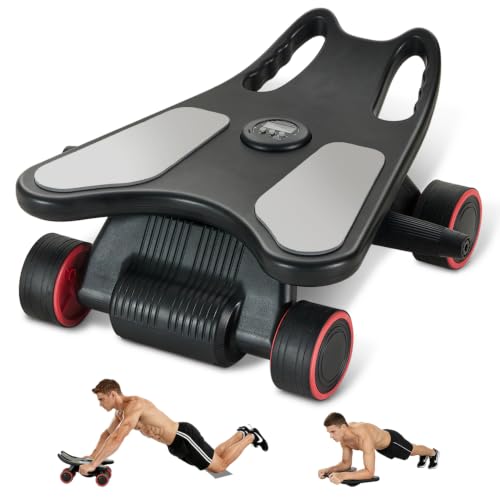
- Four wheels and elbow supports improve stability
- Spring-assisted rebound helps the return motion
- Timer supports structured circuit intervals
Best For: Beginners needing support and timed workouts
Compact Core Builder

- Targets abs, obliques, and lower back
- Rubberized wheel with foam handles
- Compact 2-pound design for home or travel
Best For: Space-conscious home gyms and basic circuit training
Stable Circuit Starter

- 2.8-inch dual wheels improve stability
- Includes a thick knee pad
- Portable design with steel shaft and EVA handles
Best For: Beginners and users prioritizing balance support
Supported Core Trainer
DMoose Ab Roller with Elbow Support
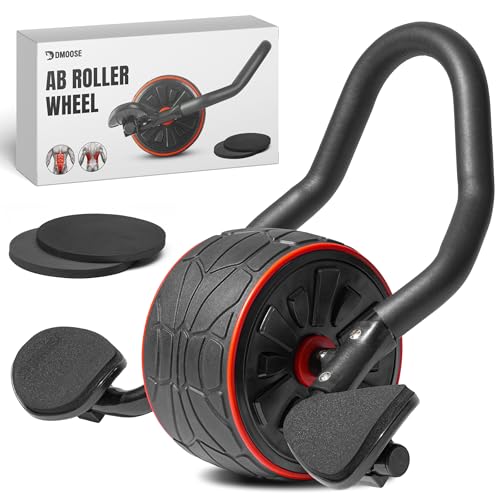
- Padded elbow rests and two knee pads
- Wide rubber-coated wheel rolls quietly
- Stainless steel frame for demanding workouts
Best For: Users seeking extra support and cushioning in circuits
Stable Wide-Wheel Pick – Abiarst Ab Roller
For shoppers comparing ab rollers for circuit training, the Abiarst stands out for its 3.2-inch dual-wheel design, which provides more support than a typical single wheel. Its compact build and included knee pad make it practical for home, office, gym, or outdoor sessions.
Best For: Users who want a stable, portable ab roller with a high stated weight capacity.
Pros:
- Wide dual-wheel layout adds support and stability.
- Stainless steel shaft has a stated 500-pound maximum capacity.
- Comfortable EVA rubber cotton handles provide a nonslip grip.
- Includes a knee pad and packs easily for portable workouts.
Cons:
- The set is centered on the ab roller rather than a broad range of accessories.
- Wheel-based rollout exercises still require controlled form and progression.
The Abiarst is a straightforward choice for circuit training when stability, portability, and a wide wheel matter more than bundled resistance equipment.
All-in-One Circuit Kit – 4-Wheel Ab Roller Set
This four-wheel system is designed for ab rollers for circuit training that extend beyond core work. It combines a tracked ab roller with resistance bands, handles, ankle straps, a door anchor, and a travel bag for varied home or travel workouts.
Best For: Users who want one kit for core, upper-body, lower-body, and mobility circuits.
Pros:
- Includes a four-wheel roller, five resistance bands, straps, handles, door anchor, and storage bag.
- Built-in tracker helps monitor workout activity and repetitions.
- Five-layer anti-slip construction is designed for traction, shock absorption, quieter movement, and floor protection.
- Automatic steel rebound and auxiliary braking support controlled rollouts and returns.
Cons:
- The larger accessory set may be more than needed for users seeking only an ab wheel.
- The stated maximum weight recommendation is 300 pounds.
Among these options, this is the most versatile circuit-training package, especially if you want to alternate ab rollouts with band exercises without buying separate equipment.
High-Capacity Portable Pick – Wide Ab Roller
For ab rollers for circuit training that prioritize a firm base and easy transport, this model pairs a 3.1-inch wheel with a textured surface for added floor friction. It also includes two adjustable knee pads and ergonomic EVA handles for more comfortable sessions.
Best For: Users seeking a compact, high-capacity roller with adjustable knee support.
Pros:
- Wide 3.1-inch wheel and textured surface support stability and control.
- Stainless steel rod has a stated 600-pound maximum capacity.
- Two adjustable knee pads help customize positioning and cushioning.
- Compact design assembles in four steps and fits in a gym bag or suitcase.
Cons:
- It is primarily a single-purpose roller without resistance-band accessories.
- The supplied dimensions and weight-capacity claim do not replace checking personal fit and form.
This roller is a practical pick for straightforward circuits, particularly when portability, knee comfort, and a sturdy wide-wheel feel are priorities.
Assisted Beginner Option – BERTER Elbow-Support Roller
The BERTER offers a more supported approach to ab rollers for circuit training, using separate wheels, padded elbow rests, and an automatic rebound design. That setup is intended to improve control and reduce wrist and shoulder pressure during core-focused sessions.
Best For: Beginners or users who prefer elbow support and assisted returns during rollouts.
Pros:
- Separate dual wheels expand ground contact for improved balance and control.
- Padded elbow rests and a curved handle support a more comfortable position.
- Automatic steel rebound and a built-in brake system help control movement.
- Compact design is suitable for home, office, gym, or outdoor use.
Cons:
- At 3.5 pounds, it is heavier than some simpler ab rollers.
- The 300-pound maximum weight recommendation is lower than some competing models in this roundup.
- Its assisted design may appeal less to users seeking an entirely traditional rollout.
The BERTER is a distinct option for circuit training when comfort and assisted control are more important than minimalist construction or maximum portability.
Most Stable – Ultra-Wide Ab Roller
For shoppers comparing ab rollers for circuit training, this model prioritizes stability and traction. Its 3.4-inch dual wheels, textured tread, and high-carbon steel construction make it a practical choice for controlled roll-outs across different floor types.
Best For: Beginners and home-gym users who want a stable, durable roller for core and full-body circuits.
Pros:
- Wide dual wheels help reduce wobbling and tipping.
- Textured wheels provide grip on hardwood, tile, laminate, carpet, and mats.
- High-carbon steel construction supports up to 440 pounds.
- Compact design and cushioned, non-slip handles are convenient for home or travel.
Cons:
- Its wider, stability-focused design may feel less challenging to advanced users seeking more balance demand.
- A knee pad is included, but the product notes do not specify its dimensions or cushioning.
This is a well-rounded option when steady movement, dependable traction, and broad muscle engagement matter more than a highly demanding balance challenge.
Best for Advanced Control – AGREJO Ab Roller
Among ab rollers for circuit training, the AGREJO model is designed to make balance and dynamic stability part of the workout. Its slightly rounded 1.97-inch wheel encourages more active control while the steel core and textured surface support demanding home-gym sessions.
Best For: More experienced users who want a compact roller that adds balance demands to core circuits.
Pros:
- Slightly rounded wheel design increases balance and dynamic-stability demands.
- Strong steel core supports up to 500 pounds.
- Textured, non-slip wheel is designed for firm floor contact.
- Finger-groove EVA-covered handles improve comfort, and assembly is simple.
Cons:
- The narrower 1.97-inch wheel may be less forgiving for beginners.
- It does not list a knee pad or rebound-assistance feature.
Choose this AGREJO roller if your circuit training already includes controlled roll-outs and you want balance to play a larger role. Its high weight capacity adds confidence, but beginners may prefer a wider base.
Best Assisted Option – Auto-Rebound Ab Roller
For ab rollers for circuit training with extra guidance, this four-wheel model combines elbow supports, automatic rebound assistance, and a built-in timer. Its wider base and quiet, shock-absorbing wheel design are geared toward steady home workouts and beginner-friendly progression.
Best For: Beginners who want assisted returns, supported positioning, and timed core circuits.
Pros:
- Automatic rebound spring assists the return phase and may reduce strain.
- Four wheels and elbow supports promote stability and targeted positioning.
- Built-in timer supports structured intervals and circuits.
- Silent, anti-slip, shock-absorbing construction is designed for different flooring.
Cons:
- The product notes list a maximum weight recommendation of only 20 pounds, so capacity should be verified carefully before purchase.
- Its larger assisted design is less compact than a basic ab wheel.
- Plastic construction may offer a different durability profile than steel-core rollers.
This is the most feature-rich choice for users who value support and consistency over traditional rolling feel. The rebound mechanism and timer suit interval work, but the listed weight recommendation is an important limitation to investigate.
Compact Core Builder – REP Fitness Ab Roller Wheel
For shoppers comparing ab rollers for circuit training, the REP Fitness Ab Roller Wheel is a compact option for adding controlled core work to HIIT, bodyweight, or resistance circuits. Its rubberized wheel and foam handles are designed for steady movement on carpet or hard floors.
Best For: Home gyms, apartments, travel workouts, and users seeking a straightforward core-training tool.
Pros:
- Targets the abs, obliques, and lower back.
- Non-slip rubberized wheel supports smooth control.
- Lightweight, portable design weighs 2 pounds.
- Supports users up to 250 pounds.
Cons:
- Single-wheel design may require more balance than wider dual-wheel models.
- Does not include a knee pad or elbow support.
The REP wheel is a practical choice when storage space and portability matter. It offers the basic rolling motion needed for circuit training without adding bulky equipment, though users wanting extra stability or padding may prefer a more comprehensive kit.
Stable Circuit Starter – Upgraded Dual-Wheel Ab Roller
Among ab rollers for circuit training, this upgraded dual-wheel model emphasizes stability and includes a knee pad for more comfortable floor work. Its wide wheels, steel shaft, and portable construction suit controlled core exercises at home, in the office, or while traveling.
Best For: Beginners and mixed-level users who want added balance support and knee cushioning during circuits.
Pros:
- 2.8-inch-wide dual wheels help reduce side-to-side movement.
- Includes a thick knee pad for added support.
- Stainless steel shaft and EVA foam handles are built for regular use.
- Rated for a maximum recommended weight of 500 pounds.
Cons:
- Wider dual-wheel construction may feel less compact than a simple single-wheel roller.
- Plastic and steel construction may not offer the premium feel of a more specialized frame.
This kit is a sensible pick for circuit sessions where steady form and quick setup are priorities. The dual wheels can make the learning curve more approachable, while the included knee pad helps reduce the need for additional accessories.
Supported Core Trainer – DMoose Ab Roller with Elbow Support
For ab rollers for circuit training with built-in support, the DMoose Ab Roller adds padded elbow rests and two knee pads to the rolling exercise. Its wide rubber-coated wheel is designed for quiet, smooth movement, while the stainless steel frame suits demanding home or gym sessions.
Best For: Users wanting a more supported ab-roller setup with elbow, knee, and grip cushioning.
Pros:
- Padded elbow rests provide an alternative supported position.
- Includes two knee pads for added workout comfort.
- Wide rubber-coated wheel is designed to roll smoothly and quietly.
- Stainless steel frame supports durable use and is rated up to 330 pounds.
Cons:
- At 2.45 kg, it is heavier than the other listed options.
- Its larger supported design may take more storage space than a basic ab wheel.
- Maximum recommended weight is lower than the dual-wheel model.
The DMoose stands out when comfort and supported positioning are more important than minimum weight. It is well suited to structured circuits that include repeated core work, provided you have room for its more substantial frame.
How We Picked the Best Ab Rollers for Circuit Training
We focused on features that matter during repeated sets and fast transitions: wheel stability, handle comfort, rollout control, knee protection, construction quality, and setup simplicity. We also considered whether extras such as resistance bands, ankle straps, door anchors, timers, or elbow supports add practical value rather than unnecessary complexity.
Because circuit workouts vary widely, the selection includes both straightforward wheels for experienced users and assisted or wider designs that can make core training more approachable. Always check the stated weight capacity and inspect moving parts regularly, especially if the roller is used frequently.
Quick Comparison
| Type | Best For | What to Look For |
|---|---|---|
| Standard single-wheel roller | Simple, portable workouts | Comfortable handles and a durable wheel |
| Wider or four-wheel roller | Added stability during circuits | Balanced tracking and smooth rolling |
| Automatic-rebound roller | Beginners or controlled repetitions | Predictable assistance and adjustable resistance |
| Elbow-support roller | Users needing wrist relief | Secure forearm padding and stable alignment |
| Accessory bundle | Full-body home circuits | Useful bands, anchors, and reliable attachments |
Key Buying Factors for Ab Rollers for Circuit Training
Stability and Wheel Design
A wider base or multiple wheels can reduce side-to-side wobble, which is useful when moving quickly between exercises. A narrow wheel may feel more challenging and portable, but it demands better control and shoulder stability.
Support and Comfort
Look for padded handles that do not slip and a knee pad large enough to maintain a comfortable starting position. Elbow-support models can reduce wrist loading, though they may feel less familiar than traditional handles.
Resistance and Rebound Control
Assisted rebound systems can help users maintain a safer range of motion, while unassisted wheels provide a more direct challenge. Choose a design that lets you control both the rollout and return rather than relying on momentum.
Build Quality and Storage
Check the wheel assembly, handle connection, surface grip, and any resistance mechanism. Compact, easy-to-clean equipment is particularly valuable when it must be stored between circuit sessions.
Who Should Buy Which Ab Rollers for Circuit Training?
Beginners: Choose a wider, multi-wheel, or rebound-assisted model with generous knee support. These features can make learning the movement more manageable.
Intermediate users: A standard roller with smooth tracking and comfortable handles is usually the best balance of challenge, portability, and value.
Advanced trainees: Favor a durable, responsive wheel that allows longer rollouts and strict tempo control. Extra stability may be less important than precise movement.
Home-circuit enthusiasts: An accessory bundle can expand exercise variety, but prioritize a well-built roller first. Bands and anchors are worthwhile only if they fit your existing routine and storage space.
Whichever model you choose, begin with short-range rollouts, brace your trunk, avoid arching your lower back, and increase distance gradually as your control improves.