Training indoors can make gravel fitness easier to maintain through bad weather, busy schedules, and limited daylight. The right trainer should match your bike’s drivetrain, axle standards, tire or cassette setup, and preferred workout style.
Our roundup covers 10 options, from connected direct-drive trainers with virtual shifting to compact wheel-on stands for occasional use and travel. Use the guide below to narrow the list by compatibility, realism, noise, portability, and budget.
Best 10 Bike Trainers for Gravel Bikes Picks for 2026
Best Smart Trainer for Gravel Bikes
Wahoo KICKR CORE 2 with Zwift Cog

- Direct-drive trainer with smooth, road-like resistance
- Includes Zwift Cog and Click Shifting
- Wi-Fi connectivity and 8- to 13-speed compatibility
Best For: Connected gravel-bike training and structured indoor workouts
Best Budget Magnetic Trainer for Gravel Bikes
Sportneer Magnetic Bike Trainer Stand

- Six handlebar-controlled resistance levels
- Fits 26- to 28-inch and 700C wheels
- Includes front riser block and quick-release lever
Best For: Simple, affordable indoor fitness riding
Best Cassette Smart Trainer for Gravel Bikes

- Includes an 11-speed cassette
- 1800W resistance and up to 16% grade simulation
- Built-in Wi-Fi with plus-or-minus 2% power accuracy
Best For: 11-speed gravel bikes and connected structured training
Best Portable Trainer for Gravel Bikes
Feedback Sports Omnium Over-Drive

- Lightweight 14-pound design with travel bag
- Fits 16- to 29-inch wheels and multiple axle types
- Progressive resistance with smooth aluminum rollers
Best For: Travel, event warmups, and compact storage
Best Overall
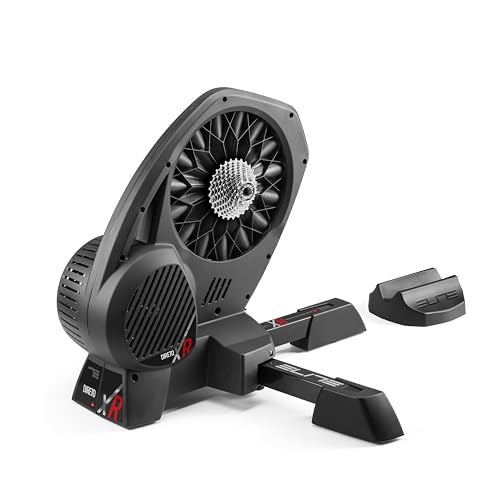
- ±1.5% stated power accuracy
- Simulates climbs up to 24%
- Broad gravel-bike compatibility
Best For: Precise, app-connected indoor training
Best High-Power Option
ThinkRider XXPRO Smart Trainer

- 2500W maximum power
- Simulates gradients up to 25%
- ANT+ and Bluetooth connectivity
Best For: High-intensity climbing and interval workouts
Best Portable Value

- Fits most 26–29-inch and 700c wheels
- Progressive fluid resistance
- Foldable with carry bag
Best For: Simple, portable indoor fitness riding
Smart Performance Pick
ThinkRider X2Max Smart Trainer

- ANT+ and BLE connectivity
- 2,000W output and 18% slope simulation
- Stable frame with approximately 58 dB operation
Best For: Connected indoor training and realistic virtual rides
Budget Folding Pick
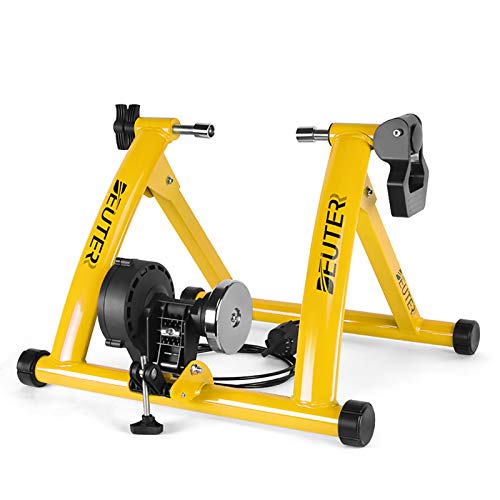
- Fits 26- to 29-inch wheels and 700c
- Six handlebar-adjustable resistance levels
- Folding design with 330-pound load capacity
Best For: Simple, space-conscious indoor workouts
Fluid-Ride Pick
Saris Fluid2 Indoor Bike Trainer

- Fluid resistance for traditional indoor riding
- Fits road, mountain, and hybrid bikes
- Smart-equipped option supports Zwift
Best For: Reliable fluid training with optional connected features
Best Smart Trainer for Gravel Bikes – Wahoo KICKR CORE 2 with Zwift Cog
For riders seeking bike trainers for gravel bikes with connected training features, the Wahoo KICKR CORE 2 combines direct-drive stability, electronic resistance, and broad drivetrain compatibility. Its included Zwift Cog and Click Shifting setup is designed for a faster start, while integrated Wi-Fi supports pairing and automatic updates.
Best For: Gravel riders who want a feature-rich indoor trainer for structured workouts and Zwift sessions.
Pros:
- Direct-drive design delivers smooth, road-like resistance for hard efforts.
- Zwift Cog and Click Shifting are included for a streamlined setup.
- Fits 8- to 13-speed bikes and supports up to 1800W.
- Integrated Wi-Fi enables faster pairing and automatic updates.
Cons:
- At 13.6 kg, it is less convenient to move than a lightweight portable trainer.
- Its connected features require access to power and compatible training apps or devices.
The KICKR CORE 2 is a strong choice when realistic resistance and smart connectivity matter more than portability. Check your gravel bike’s axle and drivetrain requirements before buying.
Best Budget Magnetic Trainer for Gravel Bikes – Sportneer Magnetic Bike Trainer Stand
The Sportneer is a straightforward option among bike trainers for gravel bikes, using magnetic resistance and a handlebar-mounted remote. It accommodates 26- to 28-inch or 700C wheels, includes a front-wheel riser block, and is built for quick indoor setup.
Best For: Riders who want an affordable, simple trainer for basic indoor endurance and fitness sessions.
Pros:
- Six resistance levels allow quick intensity changes from the handlebar remote.
- Fits many bikes with 26- to 28-inch or 700C wheels.
- Wide base and five adjustable anti-slip feet support stable riding.
- Quick-release lever makes mounting and removing the bike convenient.
Cons:
- Thru-axle bikes require the non-standard version with the appropriate adapter.
- Noise can vary by tire material and tread; slick or road tires are recommended.
- Magnetic resistance offers less automated control than a smart trainer.
This trainer suits gravel riders who prioritize value and simple resistance changes over app connectivity. Confirm the axle configuration and use a suitable tire for the smoothest, quietest experience.
Best Cassette Smart Trainer for Gravel Bikes – Wahoo KICKR CORE 2 11-Speed
For gravel bikes with an 11-speed drivetrain, this KICKR CORE 2 package offers a ready-to-use cassette-equipped setup. It provides direct-drive training, built-in Wi-Fi, up to 1800W of resistance, and reported power accuracy of plus or minus 2 percent for structured indoor sessions.
Best For: 11-speed gravel-bike owners who want a connected trainer with the cassette included.
Pros:
- Includes an 11-speed cassette, reducing setup complexity for compatible bikes.
- Supports up to 1800W and a simulated grade of up to 16 percent.
- Built-in Wi-Fi supports connected training and updates.
- Designed for quiet, smooth direct-drive riding with plus-or-minus 2% power accuracy.
Cons:
- The included 11-speed cassette may not match every gravel-bike drivetrain.
- It weighs 13.6 kg, so it is not the most portable option.
- Bike fit and axle compatibility should be checked before installation.
This package is particularly practical when your gravel bike uses 11 speeds and you want to avoid sourcing a separate cassette. Riders with other gearing may prefer the Zwift Cog version or need additional setup components.
Best Portable Trainer for Gravel Bikes – Feedback Sports Omnium Over-Drive
The Feedback Sports Omnium Over-Drive stands out among bike trainers for gravel bikes when portability is the priority. Its fork-mount design works with 16- to 29-inch wheels, supports quick-release and 12mm or 15mm thru-axles, and includes a travel bag for storage or event-day warmups.
Best For: Traveling gravel cyclists who need a lightweight trainer for warmups, transport, and compact storage.
Pros:
- Weighs 14 pounds and includes a heavy-duty travel bag.
- Fits a broad range of wheel sizes and fork standards.
- Progressive Eddy Current resistance provides a more outdoor-like feel.
- Machined aluminum rollers are designed for smooth, quiet operation.
Cons:
- Fork-mount setup means the front wheel must be removed.
- It does not provide the app-connected Wi-Fi features of a smart trainer.
- The compact design offers a different riding feel from a full direct-drive trainer.
The Omnium is a practical pick for gravel riders who train at races, travel frequently, or lack permanent trainer space. Its broad compatibility and low weight make it easier to carry, while progressive resistance keeps warmups more natural.
Best Overall – Elite Direto XR Smart Trainer
For cyclists seeking bike trainers for gravel bikes, the Elite Direto XR is a versatile direct-drive option with broad axle and drivetrain compatibility. Its interactive resistance, accurate power measurement, and app connectivity suit structured indoor training.
Best For: Gravel riders who want precise, app-connected training and realistic climbing simulation.
Pros:
- Measures power with stated accuracy of ±1.5%.
- Simulates gradients up to 24% for demanding workouts.
- Works with many road, gravel, and mountain bikes, including common QR and thru-axle sizes.
- Connects with Zwift, TrainerRoad, ROUVY, and other platforms.
Cons:
- Some axle adapters and freehubs are sold separately.
- At 40 pounds, it is less convenient to move than a basic wheel-on trainer.
The Direto XR is a strong all-around choice when compatibility, measured power, and interactive workouts matter more than portability. Check the included freehub and adapter setup against your gravel bike before buying.
Best High-Power Option – ThinkRider XXPRO Smart Trainer
The ThinkRider XXPRO is a direct-drive smart trainer for gravel riders who prioritize high resistance capacity. With 2500 watts, simulated gradients up to 25%, and ANT+ and Bluetooth connectivity, it is designed for demanding indoor sessions.
Best For: Riders wanting strong climbing simulation, high power capacity, and flexible wireless connectivity.
Pros:
- Offers up to 2500 watts of resistance and simulates gradients up to 25%.
- Claims ±1% data accuracy with no calibration required.
- Supports ANT+, Bluetooth, bike GPS, PC, and Zwift connections.
- Can generate its own electricity or operate with the included power adapter.
Cons:
- The supplied details identify bike compatibility primarily as road bike use, so gravel-bike fit should be confirmed.
- Its warranty is listed as one year.
The XXPRO stands out for maximum resistance and downhill simulation, but it is worth verifying axle, cassette, and frame compatibility before selecting it specifically for a gravel bike.
Best Portable Value – Fluid Bike Trainer Stand
This fluid wheel-on stand is a practical entry point for bike trainers for gravel bikes, converting a compatible road or mountain bike into an indoor stationary setup. Its foldable stainless-steel frame, progressive resistance, and included carry bag make it convenient for seasonal training and travel.
Best For: Gravel cyclists who want a simple, portable, non-smart trainer for general fitness and indoor riding.
Pros:
- Compatible with most 26- to 29-inch and 700c wheels.
- Progressive fluid resistance increases as pedaling speed rises.
- Foldable frame and included bag simplify storage and transport.
- Front riser block, rubber pads, and dual-lock hardware support a stable setup.
Cons:
- It is a wheel-on trainer rather than an interactive smart direct-drive model.
- Its single listed setting offers less adjustment than electronic trainers.
- Compatibility depends on the bike using a supported wheel size.
The stand is a good fit for straightforward indoor miles, conditioning, and intervals without app-based control. It is especially appealing when portability and a compact storage footprint matter.
Smart Performance Pick – ThinkRider X2Max Smart Trainer
If you want connected training, the ThinkRider X2Max is a strong option among bike trainers for gravel bikes. Its electromagnetic resistance, dual ANT+ and BLE connectivity, and support for software such as Zwift make it suited to structured indoor rides. The trainer supports up to 2,000 watts, simulates slopes up to 18%, and reports power accuracy of ±2%.
Best For: Gravel riders who want app-connected training and realistic resistance changes.
Pros:
- Supports ANT+ and BLE connectivity with mainstream cycling software.
- Provides up to 2,000 watts of power and 18% simulated slope resistance.
- I-beam triangular structure is designed for balance and stability.
- Runs at about 58 dB at 30 km/h, according to the supplied specifications.
Cons:
- Cassette is not included.
- At 35.2 pounds, it is less convenient to move than a basic folding trainer.
The X2Max is the most capable choice here for virtual riding and demanding workouts. Confirm cassette requirements and bike compatibility before purchase.
Budget Folding Pick – Magnetic Indoor Bike Trainer
This magnetic stand is a practical, straightforward choice among bike trainers for gravel bikes when you want indoor exercise without smart features. It fits 26- to 29-inch wheels, including 700c, and offers six handlebar-adjustable resistance levels. Its folding design also makes storage and transport easier.
Best For: Riders seeking an affordable, manually adjustable trainer for occasional indoor workouts.
Pros:
- Fits bicycles with 26- to 29-inch wheels, including 700c sizes.
- Six resistance levels can be adjusted from the handlebars.
- Folding construction supports convenient storage and setup.
- Rated for a load capacity of up to 330 pounds.
Cons:
- Rough MTB tires may produce noticeable noise and vibration.
- It uses manual magnetic resistance rather than app-controlled smart resistance.
This trainer makes sense for simple fitness riding and riders who value portability over connected features. Smooth tires and a mat may help reduce indoor vibration.
Fluid-Ride Pick – Saris Fluid2 Indoor Bike Trainer
The Saris Fluid2 offers a conventional fluid-resistance setup for gravel riders comparing bike trainers for gravel bikes. It is compatible with road, mountain, and hybrid bikes, and the supplied listing identifies a smart-equipped option with Zwift compatibility. Its aluminum frame and limited lifetime warranty add appeal for regular indoor use.
Best For: Riders who prefer fluid resistance and broad road or mountain bike compatibility.
Pros:
- Fluid resistance provides a traditional indoor training format.
- Compatible with road, mountain, and hybrid bikes.
- Available as a smart-equipped option compatible with Zwift.
- Includes a limited lifetime warranty.
Cons:
- The supplied specifications list only one resistance setting.
- Smart features are associated with the smart-equipped option, so verify the exact configuration.
The Fluid2 is a sensible middle ground for riders who want a familiar fluid trainer and the possibility of app-based training. Check the selected version if Zwift connectivity is important.
How We Picked the Best Bike Trainers for Gravel Bikes
We evaluated these trainers against the needs of gravel riders: broad bike compatibility, stable resistance, setup complexity, portability, noise, smart-training support, and long-term value. We also considered whether each design is best suited to structured workouts, virtual riding, warm-ups, travel, or occasional indoor exercise.
Direct-drive models generally provide the most consistent power measurement and realistic resistance, while wheel-on trainers are often simpler and less expensive. Smart connectivity was treated as a useful advantage rather than a requirement, since not every rider needs app-based training.
Quick Comparison
| Trainer type | Best for | Main advantage | Watch for |
|---|---|---|---|
| Smart direct-drive | Frequent structured training | Accurate resistance and app control | Higher cost and drivetrain setup |
| Wheel-on fluid | Quiet everyday riding | Progressive, road-like resistance | Tire wear and calibration |
| Wheel-on magnetic | Budget workouts | Simple, affordable setup | Less realistic resistance |
| Portable or roller-style | Travel and warm-ups | Compact storage and transport | Usually less stable or less immersive |
Key Buying Factors for Bike Trainers for Gravel Bikes
Bike and Drivetrain Compatibility
Check wheel size, axle spacing, cassette body, gear count, and derailleur clearance before buying. A gravel bike may use 700c wheels, a 1x or 2x drivetrain, thru-axles, and a wide-range cassette. Direct-drive trainers may require a compatible cassette or freehub, while wheel-on models need the correct skewer or axle adapter.
Smart Features and Resistance
ANT+ and Bluetooth support allow compatible apps to control resistance and record power. Smart trainers are worthwhile for riders using Zwift, TrainerRoad, or similar platforms. If you only need steady indoor mileage, a basic magnetic or fluid trainer may be sufficient.
Noise, Stability, and Accuracy
Fluid and direct-drive trainers are typically smoother and quieter than basic magnetic units. Look for a wide, stable base and firm locking mechanism, especially if you plan to sprint or perform high-intensity intervals. Power accuracy matters most when training by precise zones or following a structured plan.
Portability and Storage
Choose a folding or lightweight model if you must store the trainer after every ride or take it to events. Direct-drive units are usually heavier, whereas compact travel trainers sacrifice some resistance range or stability for convenience.
Who Should Buy Which Bike Trainers for Gravel Bikes?
- Best for serious indoor training: Choose a smart direct-drive model with app-controlled resistance and reliable power measurement.
- Best for virtual riding on a budget: Look for an entry-level smart trainer or a smart-equipped fluid trainer.
- Best for occasional workouts: A magnetic wheel-on stand keeps setup simple and costs less.
- Best for quiet, natural-feeling rides: A fluid trainer or direct-drive design is usually the better fit.
- Best for travel and warm-ups: Pick a lightweight portable trainer that folds or includes a carrying bag.
Before ordering, verify the trainer’s current adapter, cassette, and software requirements against your exact gravel bike. Compatibility is more important than maximum wattage for most riders.