The right stretching strap for legs can make hamstring, calf, hip, and foot stretches easier to control. Looped designs help you adjust intensity gradually, while padded foot straps can add comfort during longer holds.
We compared these 10 options by construction, loop layout, adjustability, comfort, length, and suitability for common mobility and physical-therapy routines.
Best 10 Stretching Strap for Legs Picks for 2026
Controlled Rehab Pick

- Non-elastic for controlled tension
- Multiple loops for positioning
- 75 inches with user guide
Best For: Physical therapy and gradual leg mobility work
Wide-Grip Mobility Pick
12-Loop Physical Therapy Strap

- Wide 1.5-inch SBR construction
- 12 reinforced positioning loops
- Includes bag and instruction manual
Best For: Athletic recovery and structured mobility training
Foot-Cradle Pick
Foot and Calf Stretching Strap
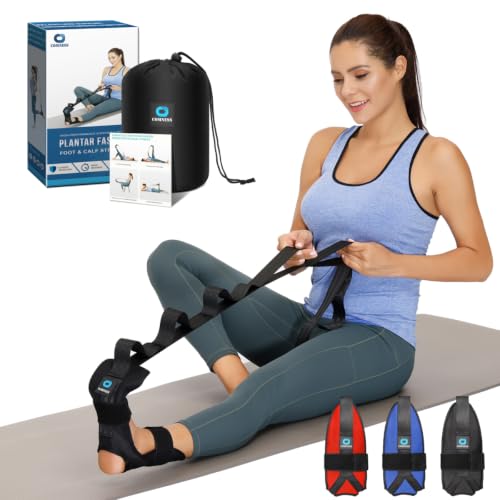
- Ergonomic foot cradle
- Six-loop positioning system
- Useful for foot and calf work
Best For: Targeted foot, ankle, and lower-leg stretching
Beginner-Friendly Loop Pick

- Numbered loops for repeatable positioning
- Comfort-focused neoprene handles
- Includes guide and carry bag
Best For: Beginners and home flexibility routines
Best Padded Pick
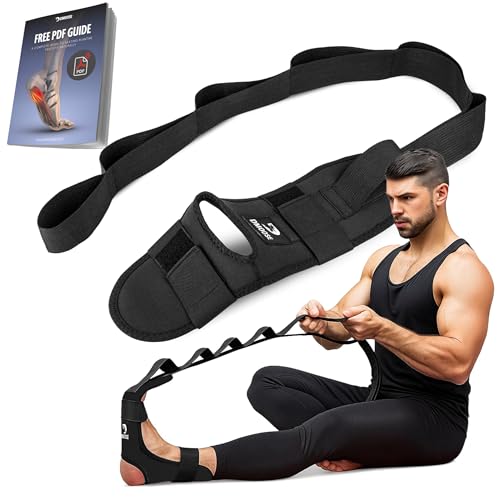
- 8 mm neoprene foot padding
- Seven grip loops for tension control
- Adjustable fit with rehabilitation e-guide
Best For: Padded foot and calf stretching during rehabilitation
Best Simple Loop Strap

- Ten loops for adjustable positioning
- Non-elastic nylon construction
- 75-inch beginner-friendly length
Best For: General stretching, yoga, Pilates, and physical therapy
Best for Travel

- Soft neoprene-wrapped handles
- Ten numbered loops for tracking
- Bag, guide cards, and foldable poster included
Best For: Portable stretching, rehabilitation, yoga, and Pilates
Most Versatile
Professional Loop Stretching Strap
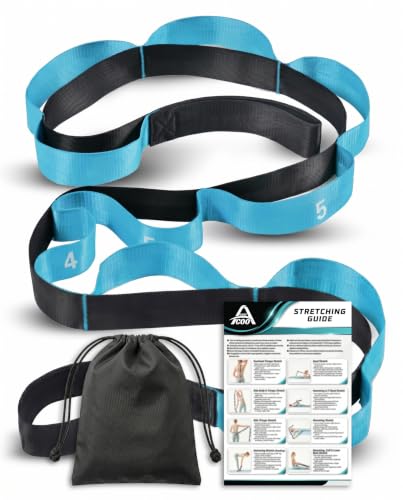
- Two length and style options
- 10 numbered loops on professional version
- Includes pouch and exercise guide
Best For: Rehabilitation, mobility work, and travelers wanting format options
Best Lightweight Option
Abiarst 10-Loop Stretching Strap
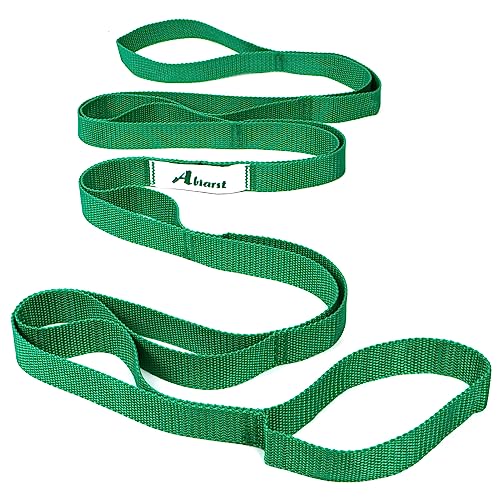
- 75-inch by 1-inch compact design
- Ten individual loops
- Washable, durable fabric
Best For: General stretching, Pilates, dance, and portable workouts
Best for Rehab Tracking

- 10 numbered loops for controlled stretches
- Designed for post-surgery recovery
- Includes illustrated stretch chart
Best For: Knee, hip, ACL, and MCL rehabilitation
Controlled Rehab Pick – Trideer Loop Stretching Strap
For shoppers seeking a stretching strap for legs that prioritizes controlled movement, this Trideer model uses a non-elastic design and evenly spaced loops. It is suited to hamstring, calf, hip, back, and post-surgery range-of-motion work without snap-back.
Best For: Physical therapy, rehabilitation, and controlled hamstring or leg stretching.
Pros:
- Non-elastic construction provides predictable tension without recoil.
- Multiple loops make it easy to adjust hand and foot positions.
- Reinforced woven webbing is designed for repeated daily use.
- Compact 75-inch design includes a user guide.
Cons:
- Its 1-inch width may offer less grip area than wider straps.
- The non-elastic design does not provide band-like resistance.
This is a practical stretching strap for legs when stability and incremental positioning matter more than elasticity. Its physical-therapy-style loop layout also makes it versatile for broader mobility routines.
Wide-Grip Mobility Pick – 12-Loop Physical Therapy Strap
This stretching strap for legs combines a wide 1.5-inch profile with 12 reinforced loops, giving users several positions for hamstring, hip, calf, and lower-back mobility work. Its SBR construction is designed for a comfortable, sweat-resistant grip.
Best For: Athletes, rehabilitation routines, and users who want a wider 8-foot strap.
Pros:
- Twelve loops support varied hand and foot positions.
- Wide SBR material is designed to reduce digging into skin.
- Supports PNF stretching, recovery, and range-of-motion work.
- Includes an instruction manual and storage bag.
Cons:
- The 8-foot length may be more strap than some compact routines need.
- At 1.5 inches wide, it may pack less compactly than narrower models.
Choose this model if you value a wider grip and extensive loop adjustment. It is a strong option for structured mobility sessions at home, in the gym, or during travel.
Foot-Cradle Pick – Foot and Calf Stretching Strap
Unlike a standard stretching strap for legs, this foot and calf stretcher uses an ergonomic cradle and six-loop webbing to focus on the foot, ankle, calf, Achilles area, and hamstrings. It can be positioned in two orientations for different stretches.
Best For: Foot, calf, arch, and lower-leg stretching, including plantar-fascia-focused routines.
Pros:
- Cradle design supports the foot during targeted stretching.
- Six rugged loops allow multiple stretching positions.
- Can be used for the arch, quadriceps, calf, and hamstrings.
- Includes an instruction manual and carrying pouch.
Cons:
- Its specialized foot cradle is less general-purpose than a simple yoga strap.
- The 60-inch length is shorter than several full-length loop straps.
This is the most specialized choice in the group. Its foot-supporting design makes it particularly useful when your routine centers on the foot and lower leg rather than general full-body stretching.
Beginner-Friendly Loop Pick – Numbered Nylon Stretch Strap
This nylon stretching strap for legs uses numbered loops and comfortable neoprene handles to help users track positions during stretching, Pilates, fitness, ballet, dance, and physical therapy. The 78-inch version provides a practical balance of reach and portability.
Best For: Beginners and users who want numbered loops, guided exercises, and a carry bag.
Pros:
- Numbered loops make positioning and progress easier to monitor.
- Neoprene handles are designed to improve hand and foot comfort.
- Non-elastic nylon offers stable control during stretching.
- Includes a carry bag and free exercise guide.
Cons:
- This listed version has 10 loops, while the alternate version has 12 loops and is longer.
- It does not provide elastic resistance or stretch.
For a straightforward home stretching setup, this model offers useful guidance and easy-to-reference loops. It is especially appealing if you are new to strap stretching or want a simple way to repeat positions consistently.
Best Padded Pick – DMoose Foot & Calf Stretcher
If you need a stretching strap for legs that adds cushioning around the foot, the DMoose Foot & Calf Stretcher is designed for supported rehabilitation and flexibility work. Its padded foot design, adjustable closures, and seven hand loops provide multiple ways to control tension.
Best For: Users seeking padded support for plantar fasciitis, hamstring tightness, heel spurs, Achilles tendonitis, or general leg flexibility training.
Pros:
- 8 mm neoprene padding helps cushion the foot during stretching.
- Seven hand loops offer varied grip positions and tension control.
- Adjustable hook-and-loop straps accommodate different foot sizes.
- Includes a step-by-step rehabilitation exercise e-guide.
Cons:
- Its specialized foot-stretcher design may be less versatile than a basic flat yoga strap.
- The product is supplied as a single 52-inch strap.
Choose this model when comfort and foot support matter more than maximum versatility. The built-in padding and adjustable fit make it particularly suited to rehabilitation-focused stretching.
Best Simple Loop Strap – Oak-Sports Stretching Strap
For a straightforward stretching strap for legs, the Oak-Sports Yoga Strap uses a non-elastic nylon construction and 10 loops to help beginners adjust their reach. Its 75-inch length supports leg, foot, waist, and arm stretches for yoga, Pilates, exercise, and physical therapy.
Best For: Beginners and budget-minded users who want a lightweight, non-elastic strap for general stretching and physical therapy exercises.
Pros:
- Ten loops provide several hand and foot positions.
- Non-elastic nylon offers stable resistance while stretching.
- 75-inch length is designed to be accessible for beginners.
- Includes a 12-month warranty and customer service support.
Cons:
- The 1-inch width provides less grip surface than wider strap designs.
- It does not include padding or a dedicated foot sleeve.
This is a practical all-purpose option if you prefer a simple looped strap without extra cushioning. Its long length and multiple loops make it easy to adapt as your flexibility improves.
Best for Travel – Trideer Loop Stretching Strap
The Trideer Stretching Strap is a convenient stretching strap for legs when portability and grip comfort are priorities. Its long nylon design has 10 numbered loops, soft neoprene-wrapped handles, and a drawstring bag for taking it to workouts or physical therapy sessions.
Best For: Travelers and active users who want a long loop strap with cushioned handles, exercise guidance, and compact storage.
Pros:
- Soft neoprene-wrapped handles provide a more comfortable grip.
- Ten numbered loops make progress and positioning easier to track.
- Includes a 32-page detachable guide card set for recovery-focused movements.
- Drawstring bag and foldable poster support travel and storage.
Cons:
- Its 81-inch length may be more strap than some users need.
- It is supplied in a single blue strap configuration.
Consider the Trideer if you want a feature-rich strap that can move from home workouts to travel. The numbered loops, cushioned handles, and included guidance make it especially useful for structured stretching routines.
Most Versatile – Professional Loop Stretching Strap
This stretching strap for legs gives you two format options: an 86-inch, 10-loop professional version for structured tracking or a lighter 75-inch minimalist design. The non-elastic nylon construction offers firm control for hamstring work, rehabilitation, yoga, and mobility exercises.
Best For: Physical therapy, knee rehabilitation, seniors, and users who want a choice between numbered loops and a compact strap.
Pros:
- 86-inch version has 10 numbered loops for tracking progress.
- Non-elastic nylon provides stable leverage during stretches.
- Professional version includes a carry pouch and exercise guide.
- Can assist with leg positioning in bed, a wheelchair, or a car.
Cons:
- The professional 86-inch version is wider and heavier than the minimalist option.
- The strap is non-elastic, so it does not provide spring-assisted stretching.
Choose the professional style for rehab structure and accessories, or the 75-inch option if portability and a slimmer grip matter more.
Best Lightweight Option – Abiarst 10-Loop Stretching Strap
The Abiarst stretching strap for legs is a lightweight 75-inch nylon strap with 10 loops, giving each hand or foot a defined grip for gradual flexibility work. Its washable, skin-friendly fabric suits home workouts, physical therapy, Pilates, dance, and everyday stretching.
Best For: Users seeking an affordable, compact multi-loop strap for general flexibility training and exercise recovery.
Pros:
- Ten individual loops support adjustable positioning.
- Durable, tight-knit fabric is washable and designed not to fray or break.
- Lightweight 0.1 kg construction is easy to carry.
- Suitable for yoga, Pilates, dance, gymnastics, and physical therapy.
Cons:
- At 75 inches long and 1 inch wide, it offers less reach than longer straps.
- No exercise guide or carry pouch is listed in the supplied details.
This is a straightforward choice for shoppers who want a simple, lightweight loop strap without added accessories or a larger professional format.
Best for Rehab Tracking – KneeSled Ultra Stretch Strap
The KneeSled Ultra is a practical stretching strap for legs when controlled, repeatable positioning matters. Its 10 numbered loops help you work through hamstring, calf, quad, foot, and knee stretches while monitoring range-of-motion progress during recovery or everyday mobility training.
Best For: Post-surgery or injury rehabilitation, including knee, hip, ACL, and MCL recovery, plus yoga and Pilates mobility work.
Pros:
- Ten numbered loops provide clear stretch-level control.
- Non-elastic nylon supports steady heel slides, leg raises, and stretches.
- Includes an illustrated stretch chart for setup guidance.
- Can be used for rehab, yoga, Pilates, and daily mobility.
Cons:
- Its 80-inch length and 1-inch width may feel less substantial than wider straps.
- The KneeSled knee glider is a separate product.
With numbered loops and a guide included, this strap is particularly well suited to users who want a structured approach to rehabilitation and measurable flexibility work.
How We Picked the Best Stretching Strap for Legs
We focused on practical features that affect control, comfort, and versatility rather than relying on product names alone. The shortlist includes non-elastic straps with multiple loops, foot-and-calf stretchers, and longer designs for users who need extra reach. We also considered whether each strap appears suited to yoga, general flexibility training, rehabilitation exercises, or targeted foot and lower-leg work.
Because fit and medical needs vary, product descriptions should be checked carefully for dimensions, materials, padding, and intended use. Anyone recovering from an injury should follow guidance from a qualified clinician.
Quick Comparison
| Best For | Look For | Recommended Design |
|---|---|---|
| General leg stretching | Multiple easy-to-reach loops | Non-elastic loop strap |
| Hamstrings and hips | Long length and secure grip | 8-foot or similar strap |
| Calves and feet | Adjustable fit and padding | Foot-and-calf stretcher |
| Physical therapy routines | Clear positioning and gradual adjustment | Wide strap with numbered or spaced loops |
Key Buying Factors for a Stretching Strap for Legs
Loop Count and Placement
More loops provide finer adjustments, which can be useful when improving flexibility gradually or following a therapy routine. Check that the loops are large enough to grip comfortably and positioned where you can reach them without twisting awkwardly.
Length and Width
A longer strap can work better for seated hamstring stretches and users with limited reach. Wider webbing may feel more stable and distribute pressure across the hands, while a compact strap is easier to store and carry.
Elasticity and Construction
Non-elastic straps give consistent resistance and make it easier to measure progress by changing loop position. Look for sturdy stitching, reinforced loop edges, and fabric that will not feel excessively rough against the skin.
Comfort and Foot Security
If the strap will be used around the foot, padding or a wider contact area can reduce pressure. Adjustable foot-and-calf models may be preferable for targeted plantar fascia, Achilles, or calf routines, but they should never cause numbness or sharp pain.
Who Should Buy Which Stretching Strap for Legs?
Choose a standard looped strap if you want one versatile tool for hamstrings, quadriceps, hips, calves, and general stretching. A longer model is a better fit for taller users or floor-based stretches that require extra reach. For foot and calf mobility, an adjustable padded stretcher can provide a more secure hold than a basic hand-held strap. If you are following physical-therapy exercises, prioritize clear loop spacing, predictable resistance, and the design recommended by your clinician.