Resistance bands can add controlled load to sprint drills, helping athletes reinforce acceleration mechanics, leg drive, posture, and lateral stability without relying solely on weights or machines.
This roundup compares 10 resistance bands for sprint mechanics, from dynamic resistance belts and bungee cords to leg bands with multiple tension levels. The right choice depends on your training goal, available space, experience, and how much resistance you need.
Best 10 Resistance Bands for Sprint Mechanics Picks for 2026
Best Multi-Directional Kit
Acceleration Speed Cord Bungee Kit
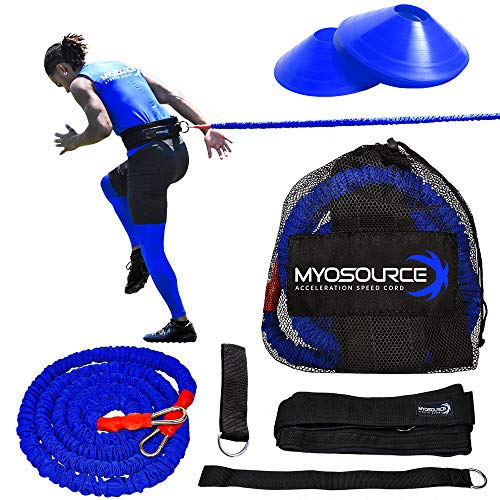
- 360-degree D-ring supports drills in any direction.
- Includes three belt sizes and eight agility cones.
- Works for solo anchored or partner training.
Best For: Multi-directional acceleration and agility sessions
Best Heavy-Duty Trainer
SKLZ Recoil 360 Resistance Belt
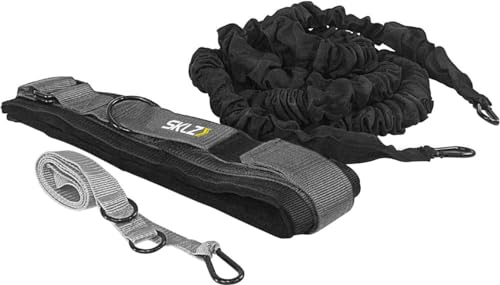
- Free-motion ring supports nearly any training angle.
- Stretches 8–22 feet with 15–50 pounds of resistance.
- Adjustable belt works for solo or coached drills.
Best For: Heavy resistance and multi-directional power training
Best Adjustable Set
Elite Supplies 11-Piece Leg Bands

- Four band levels run from 10 to 30 pounds.
- Includes leg straps and a mesh carry bag.
- Useful for sprint, leg, and glute activation work.
Best For: Progressive lower-body strength and activation
Best High-Tension Bungee
Resistance Running Training Band
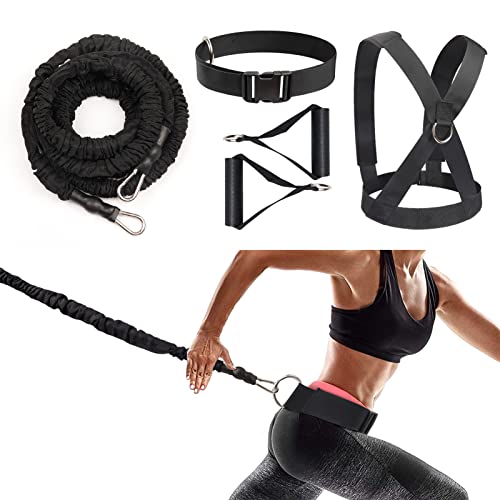
- Offers up to 80 pounds of tensile strength.
- Includes adjustable back and waist belts.
- Handles support home resistance exercises.
Best For: High-tension resisted running and agility work
Partner-and-Anchored Speed Set

- Two bands plus belts, handles, and anchor strap
- Solo anchored or partner-resisted training
- Adjustable 24–36-inch waist belts
Best For: Multi-sport athletes wanting versatile resisted speed drills
Elastic Sprint Trainer
Explosive Force Resistance Rope
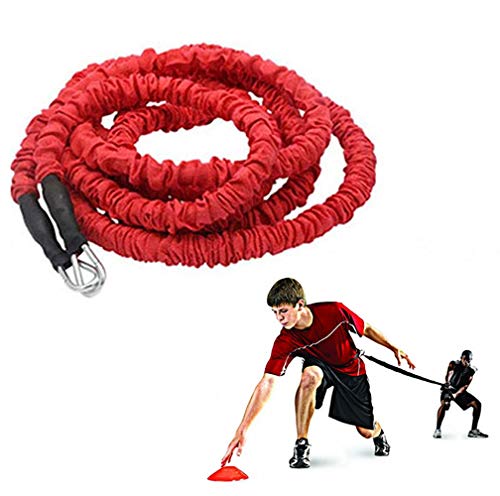
- Supports speed and explosive-force training
- Stretches up to three times its length
- Available in three rope lengths
Best For: Runners and athletes wanting simple resisted movement drills
Progressive Leg-Speed System

- Four resistance levels from 30 to 85 pounds
- Leg-mounted design supports natural movement
- Includes training videos and stretching strap
Best For: Athletes wanting adjustable, structured speed training
Best Elastic Cord for Explosive Starts
- Elastic cord stretches up to three times its original length
- Designed for speed, power, agility, and strength drills
- Works with a partner or stable grounded anchor
Best For: Resisted acceleration and full-body athletic conditioning
Best Adjustable Leg-Band System
Kbands Speed and Strength Bands
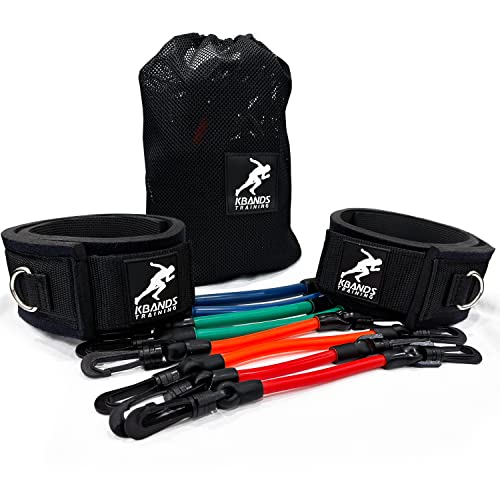
- Padded thigh bands are designed to resist rolling and slipping
- Eight stackable bands provide multiple resistance options
- Includes several digital speed and agility training programs
Best For: Hip-strength and structured leg-focused speed training
Best Multidirectional Sprint Bungee
Pseudois Resistance Bungee Band

- 8-foot cord stretches to 20 feet for dynamic resistance
- 360-degree rotation supports movement in every direction
- Includes an adjustable waist belt and door anchor
Best For: Multidirectional sprint, shuffle, and jump training
Best Multi-Directional Kit – Acceleration Speed Cord Bungee Kit
For athletes comparing resistance bands for sprint mechanics, the Kinetic Bands Acceleration Speed Cord is a complete, multi-directional option. It combines a high-tension speed cord with an adjustable belt, anchor and partner-training straps, plus eight portable agility cones.
Best For: Athletes who want solo or partner acceleration, deceleration, and change-of-direction drills.
Pros:
- 360-degree D-ring supports resistance training in any direction.
- Three belt sizes accommodate waists from 31 inches and under to 40 inches and over.
- Includes eight stackable cones for quick-feet and agility work.
- Supports both anchored solo sessions and partner-resisted drills.
Cons:
- Offers one resistance level rather than adjustable levels.
- The kit weighs 2.3 pounds, so it is not the lightest option.
This is a strong all-in-one choice when sprint mechanics work needs more than straight-line resistance. Its belt sizing and included cones add versatility, while the single high-tension level may be less suitable for athletes seeking finely graduated loading.
Best Heavy-Duty Trainer – SKLZ Recoil 360 Resistance Belt
The SKLZ Recoil 360 is a focused choice for resistance bands for sprint mechanics, with a free-motion ring that lets athletes train against resistance from almost any angle. Its sheathed flex cord stretches from 8 to 22 feet and provides a stated 15 to 50 pounds of resistance.
Best For: Athletes training acceleration, power, and multi-directional movement with a coach, teammate, or solo.
Pros:
- Free-motion ring supports resistance at almost any angle.
- 8- to 22-foot stretch accommodates varied drill distances.
- Provides a broad stated resistance range of 15 to 50 pounds.
- Adjustable belt is designed for drills across multiple sports.
Cons:
- Includes the band only, with no cones or additional handles listed.
- Has one resistance level rather than interchangeable levels.
- The product notes specify no warranty.
The Recoil 360 is best suited to buyers who want a dedicated, heavy-tension resistance trainer rather than a full accessory kit. Its long stretch range and directional freedom make it practical for structured sprint and power drills.
Best Adjustable Set – Elite Supplies 11-Piece Leg Bands
The Elite Supplies 11-piece set gives athletes several loading choices for resistance bands for sprint mechanics, leg workouts, and glute activation. It includes leg straps, four pairs of natural-rubber bands rated from 10 to 30 pounds, and a mesh carry bag.
Best For: Athletes who want graduated resistance for leg strength, activation, and sprint-focused conditioning.
Pros:
- Four resistance options range from 10 to 30 pounds.
- Includes two leg straps for lower-body training.
- Supports speed, agility, power, strength, and endurance work.
- Mesh carry bag helps organize the compact set.
Cons:
- The notes do not list a waist belt, anchor, or partner strap.
- These bands are shorter than dedicated long sprint cords.
- The product details identify overall tension support as light.
This set is a flexible choice for athletes who want to vary resistance across warm-ups, activation, and strength drills. It is less specialized for long resisted sprints, but the four levels make it useful for progressive lower-body work.
Best High-Tension Bungee – Resistance Running Training Band
For buyers seeking resistance bands for sprint mechanics with substantial loading, this bungee cord set supports resisted running, lateral movement, and overspeed-style training. It offers up to 80 pounds of tensile strength and includes adjustable back and waist belts plus handles.
Best For: Sprinters and multi-sport athletes working on acceleration, agility, leg strength, and resisted or assisted movement.
Pros:
- Provides up to 80 pounds of tensile strength as the cord stretches.
- Includes both a back belt and an adjustable waist belt.
- Handles allow resistance exercises beyond belt-based sprint drills.
- Can support outdoor sprint practice and home resistance training.
Cons:
- Lists one resistance level rather than multiple interchangeable levels.
- The product details identify it as a single resistance strap style.
- The supplied notes do not mention cones or a carry bag.
This set stands out when maximum stated tension and multiple attachment formats matter. The belt and handle options broaden its use, although athletes wanting lighter, more precisely stepped resistance may prefer a multi-level band set.
Partner-and-Anchored Speed Set – 80lb Exercise Bands
For athletes comparing resistance bands for sprint mechanics, this speed and agility set offers a flexible setup for resisted runs, acceleration work, and explosive-power training. It includes two bands, adjustable waist belts, handles, and an anchor strap for solo or partner sessions.
Best For: Athletes who want both partner-assisted and anchored speed training across multiple sports.
Pros:
- Includes two 6.6-foot, 40-pound bands with two waist belts, two handles, and a fix strap.
- Supports solo anchored workouts or partner-resisted drills.
- Adjustable waist belts fit 24 to 36 inches.
- Comes with a portable storage bag and offers up to 80 pounds of tension.
Cons:
- Offers one resistance level rather than multiple selectable levels.
- Waist-belt sizing should be checked before ordering.
This is a practical choice when training variety matters. The anchor and partner options make it more adaptable than a simple single-band setup, while the included accessories keep the kit ready for field-based speed work.
Elastic Sprint Trainer – Explosive Force Resistance Rope
This elastic resistance rope is a straightforward option for athletes seeking resistance bands for sprint mechanics, speed development, and explosive-force work. Its stretch-based design can be used with a partner or attached to a stable grounded object for individual drills.
Best For: Runners and field-sport athletes who prefer a simple, heavy-duty resistance rope for resisted movement training.
Pros:
- Designed to support speed, strength, agility, balance, and explosive-force training.
- Can extend up to three times its original length.
- Available in 6.6-foot, 9.8-foot, and 16.6-foot options.
- Works for partner training or individual anchored sessions.
Cons:
- The supplied version has one resistance level.
- Partner use is recommended for creating a challenging resisted workout.
With its uncomplicated rope format and multiple length choices, this trainer suits buyers who already have a clear plan for resisted runs or agility drills. It is less of a complete accessory kit than the other options, but its focused design keeps setup simple.
Progressive Leg-Speed System – Kinetic Bands
For structured resistance bands for sprint mechanics training, the Kinetic Bands system emphasizes a natural running motion while providing four resistance levels. Adjustable leg straps, swivel clips, a stretching strap, and digital training resources make it suitable for progressive speed and agility sessions.
Best For: Athletes and coaches seeking adjustable, movement-friendly leg resistance for progressive speed training.
Pros:
- Provides four color-coded resistance levels from 30 to 85 pounds.
- Designed to preserve a full range of motion during running and multi-directional drills.
- Includes adjustable leg straps, swivel clips, a stretching strap, and a carry bag.
- Digital training videos and workout guides are included.
Cons:
- The listed configuration is intended for ages 13 and over.
- The system costs more in setup complexity than a single resistance rope.
This is the most progression-focused option in the group. Its multiple levels and leg-mounted design can help athletes vary training demands while practicing speed, agility, balance, and sport-specific movement patterns.
Best Elastic Cord for Explosive Starts – Dynamic Acceleration Trainer
For athletes seeking resistance bands for sprint mechanics, the YNXing Dynamic Resistance Trainer provides a straightforward way to add partner- or anchor-based resistance to acceleration, strength, and agility drills. Its elastic cord can stretch up to three times its original length and is offered in multiple lengths.
Best For: Runners and field-sport athletes practicing resisted acceleration, power, and agility drills.
Pros:
- Supports training for explosive force, speed, jumping power, agility, and balance.
- Can be used with a partner or connected to a stable grounded object.
- Available in several cord lengths, with the listed setup supporting up to 80 pounds of resistance.
- Suitable for lower-body, upper-body, back, chest, shoulder, and core exercises.
Cons:
- Listed as having one resistance level, so load adjustment is limited.
- Partner assistance or a secure anchor is needed for many drills.
- The supplied details do not specify a dedicated storage bag or digital training program.
This is a practical choice if you want a simple elastic-cord system for resisted running and all-around athletic conditioning. Its single resistance level makes it less adaptable than a multi-band kit, but its long, stretchable cord suits partner-based acceleration work.
Best Adjustable Leg-Band System – Kbands Speed and Strength Bands
For resistance bands for sprint mechanics that emphasize hip and leg strength, Kbands combines padded thigh bands with stackable resistance options. The system is designed for speed, agility, lunges, squats, hip work, and glute exercises, with training downloads included.
Best For: Athletes building hip strength and explosiveness through structured leg, speed, and agility sessions.
Pros:
- Padded thigh bands are designed not to roll or slip during movement.
- Rotational clips support mobility during multidirectional exercises.
- Includes eight resistance bands with options ranging from light to heavy and stackable configurations.
- Comes with Speed 101, Leg Toner, Agility FX, and 123 Reaction Pro digital training programs.
Cons:
- This setup focuses on leg and hip exercises rather than full-body cord resistance.
- The supplied information lists broad resistance categories, so exact resistance depends on the selected band.
- It may require more setup and band selection than a single-cord trainer.
Kbands is the most configurable option here for athletes who want progressive resistance around the thighs and hips. Its padded straps, rotational clips, and included programs make it well suited to repeatable sprint-preparation and agility routines.
Best Multidirectional Sprint Bungee – Pseudois Resistance Bungee Band
For resistance bands for sprint mechanics that need forward, lateral, and backward movement, the Pseudois Resistance Bungee uses an adjustable padded waist belt and a 360-degree rotation ring. Its 8-foot nylon cord stretches to 20 feet for resisted sprints, shuffles, jumps, and other athletic drills.
Best For: Field and court athletes practicing multidirectional acceleration, defensive movement, and explosive power.
Pros:
- 360-degree rotation supports forward sprints, lateral slides, backpedals, and vertical jumps.
- The cord stretches from 8 feet to 20 feet for dynamic resistance over longer movement distances.
- Adjustable padded waist belt is designed for movement in multiple directions.
- Includes a door anchor for solo resistance training at home.
Cons:
- Listed with one medium resistance level, limiting fine load progression.
- Partner training or the included door anchor is needed to create resistance.
- Requires inspection of the cord and clips before use.
This bungee is a strong fit for athletes whose sprint mechanics work includes lateral and backward movement, not just straight-line acceleration. The rotating belt and door anchor add versatility, while the single resistance level keeps the setup simple rather than highly progressive.
How We Picked the Best Resistance Bands for Sprint Mechanics
We focused on the features that matter most during sprint-specific training: resistance consistency, attachment security, usable range of motion, adjustability, portability, and suitability for drills such as resisted starts, acceleration runs, lateral shuffles, and overspeed work. We also considered whether each kit appears designed for individual athletes, team training, or general conditioning.
Because resistance-band specifications can vary by seller and package, verify the listed tension, included accessories, dimensions, and recommended user weight before purchasing. A band should challenge technique without forcing an unnatural stride or compromising control.
Quick Comparison
| Type | Best For | Main Advantage | Watch For |
|---|---|---|---|
| Dynamic resistance belt | Acceleration and resisted runs | Allows movement through a full sprint pattern | Needs a secure anchor or training partner |
| Leg resistance bands | Marches, drills, and hip activation | Targets hip flexors, glutes, and stride mechanics | Can restrict form if tension is excessive |
| Bungee cord set | Multi-directional and team drills | Flexible setup for speed and agility work | Check cord length and attachment quality |
| Resistance rope | Explosive strength conditioning | Useful for power and stamina circuits | May be less specific to sprint technique |
Key Buying Factors for Sprint Mechanics
Resistance and Progression
Look for multiple resistance levels or adjustable loading so you can begin with technical drills and progress gradually. Light resistance is generally more suitable for maintaining sprint posture and rhythm, while heavier loading can be reserved for short acceleration or strength-focused work.
Fit and Attachment Security
Belts should sit firmly around the hips without slipping, and leg bands should remain positioned without pinching or rolling. Carabiners, handles, loops, and anchors should be easy to inspect. Avoid using damaged elastic or unsecured attachment points at high speed.
Training Space and Setup
For home use, choose a compact kit that works with a sturdy anchor or partner. Outdoor athletes may prefer longer cords that support resisted runs, while teams may benefit from sets with several bands and quick adjustments.
Drill Compatibility
Match the product to your intended drills. Short leg bands suit activation and marching patterns; longer bungees are better for resisted acceleration, lateral movement, and partner-assisted work. Overspeed training requires extra caution and should not replace technical coaching.
Who Should Buy Which Resistance Bands for Sprint Mechanics?
Beginners should choose a simple, adjustable band or belt with moderate resistance and clear setup instructions. Sprinters focused on acceleration may prefer a dynamic resistance belt or long bungee cord that permits powerful starts without excessively altering stride length. Athletes working on hip stability, knee drive, and warmups should consider leg bands with several resistance levels.
Teams and multi-sport athletes will get more versatility from a kit with multiple cords, handles, or interchangeable bands. Coaches should prioritize durable attachment hardware and easy tension changes. If portability is the priority, select a lightweight set that fits in a training bag and can support drills without requiring bulky equipment.