Improving ankle mobility can support better balance, cleaner movement, and more comfortable stretching. The right board can help you gradually work through limited dorsiflexion, calf tightness, and single-leg instability.
We selected 10 balance boards with different designs, adjustment systems, weight capacities, and training features so you can match your choice to home workouts, mobility practice, or structured rehabilitation.
Best 10 Balance Board for Ankle Mobility Picks for 2026
Best Compact Pick
StrongTek Single-Leg Mobility Board

- Focused single-leg ankle training
- Non-slip pads and floor-gripping base
- Folds with carry bag and exercise guide
Best For: Portable, targeted ankle balance practice
Best Versatile Design
3-in-1 Slant and Balance Board
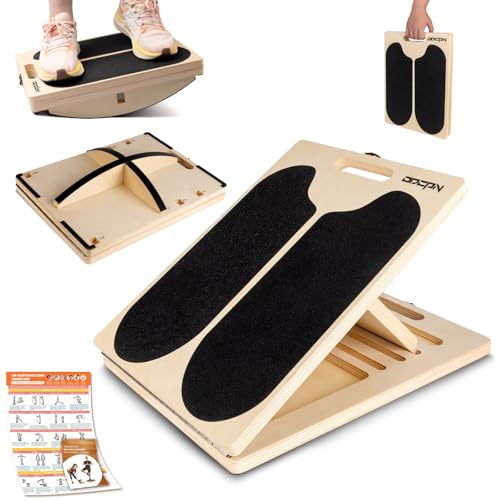
- Six adjustable calf-stretch angles
- 180-degree and 360-degree balance modes
- Includes poster and quick-switch panels
Best For: Combined calf stretching and balance training
Best Rehab-Focused Option

- Two interchangeable difficulty levels
- Single-leg stability and mobility focus
- Carry bag and illustrated quick-start guide
Best For: Progressive home ankle training and rehab-style practice
Best General-Purpose Pick
Amazon Basics Wood Wobble Board
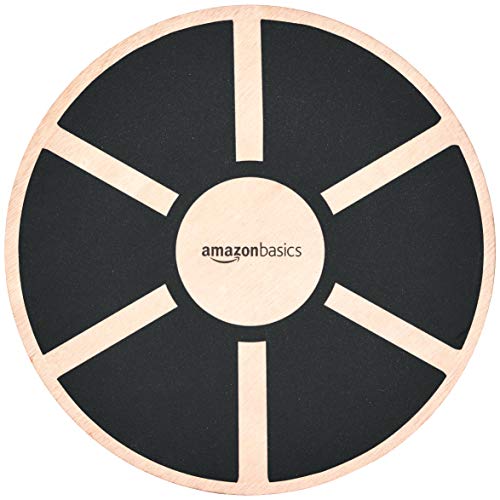
- Large platform for varied exercises
- Solid wood supports up to 265 pounds
- Useful for balance, core, and posture work
Best For: Home gyms and broad balance-training routines
Compact Cork Trainer
Foot and Ankle Strengthener Kit

- Targets arches, feet, and ankle muscles
- Includes guided exercise instructions
- Portable natural cork construction
Best For: Portable foot relief and beginner ankle stability work
Adjustable Mobility Platform
Single-Leg Ankle Balance Board

- Adjustable panels, pegs, and balance bars
- Supports dorsiflexion and calf stretching
- Non-slip birch wood construction
Best For: Progressive ankle mobility and single-leg stability training
Guided Progression Board
Ankle Mobility and Balance Trainer
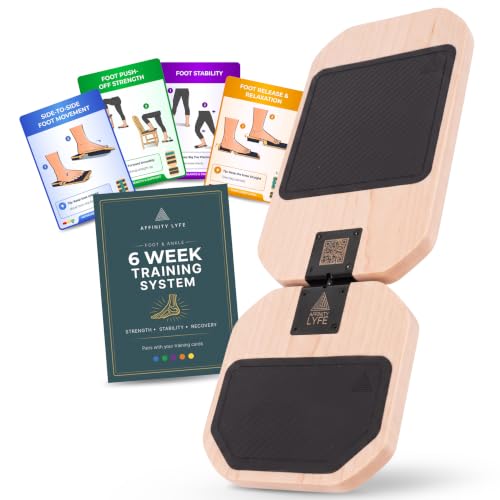
- Includes 25 cards and a six-week plan
- Interchangeable bars increase difficulty
- Solid maple, non-slip construction
Best For: Structured single-leg ankle mobility and stability practice
Best Stretch-and-Strength Option
Ankle Balance Board & Calf Stretcher

- Combines ankle balance training with calf and Achilles stretching
- Supports mobility, stability, and lower-leg strengthening
- Useful for home, gym, office, or clinic workouts
Best For: All-around stretching and ankle-strength routines
Best Guided Rehab System

- Includes guided 10-day programs through the Sidekick app
- Provides 900-plus peg configurations for progression
- Targets ankle stability, dorsiflexion mobility, and foot strength
Best For: Structured rehab and progressive mobility training
Best Single-Leg Training Pick

- Isolates one foot for focused ankle control and stability
- Offers two levels with a quick-release adjustment system
- Includes a carry bag, scraper tool, and training guidance
Best For: Portable single-leg rehab and strengthening
Best Compact Pick – StrongTek Single-Leg Mobility Board
If you want a focused balance board for ankle mobility, the StrongTek Ankle Mobility Board is designed for one-foot practice rather than broad two-foot balancing. Its controlled rocking motion targets foot and ankle strength, coordination, and movement awareness, while the compact folding design makes it easy to store or carry.
Best For: Beginners and experienced users who want portable, single-leg ankle balance training at home, work, or the gym.
Pros:
- Single-leg design creates a focused challenge for ankle stabilizers and coordination.
- Textured foot pads and a floor-gripping base support controlled movement.
- Folds compactly and includes a drawstring carry bag and exercise guide.
Cons:
- The narrow, single-leg format may feel challenging for beginners without chair support.
- It is intended for one-foot practice, so it is less suitable for two-foot balance exercises.
With its lightweight wood construction, 300-pound recommended capacity, and beginner-to-advanced guidance, this is a practical choice when portability and targeted ankle work matter most.
Best Versatile Design – 3-in-1 Slant and Balance Board
For shoppers seeking a balance board for ankle mobility plus calf stretching, this 3-in-1 wooden trainer offers multiple ways to train. Use the adjustable slant-board angles for calf mobility, then switch to 180-degree directional balance or 360-degree rotation for coordination and stability work.
Best For: Users who want one board for calf stretching, balance training, physical therapy-style mobility work, and general conditioning.
Pros:
- Combines six slant angles with 180-degree and 360-degree balance modes.
- Magnetic side panels allow quick switching between balance configurations.
- Includes a training poster, instructions, and a non-slip EVA base with PVC surface.
Cons:
- Its larger 17-by-11.8-inch footprint is less compact than a single-leg board.
- The supplied details list a 300-pound maximum recommendation despite the product description mentioning higher construction capacity.
This is the most adaptable option in the group, especially if ankle mobility sessions need to include calf stretching and progressively more challenging balance patterns.
Best Rehab-Focused Option – Two-Level Ankle Wobble Board
This ankle balance board for ankle mobility is built around targeted single-leg practice and adjustable difficulty. Its semicircular setup provides gentler wobbling for beginners, while the triangular setup increases instability for more advanced balance, conditioning, or rehabilitation sessions.
Best For: Adults and seniors seeking progressive at-home ankle training, physical therapy-style exercises, or balance maintenance.
Pros:
- Two interchangeable rod configurations provide beginner and advanced difficulty levels.
- Single-leg training emphasizes stabilizing muscles and movement control.
- Compact design includes a carry bag and illustrated quick-start guide.
Cons:
- The small 7.87-by-5.51-inch platform may provide limited foot room.
- Users recovering from injury may need professional guidance before increasing instability.
With a 400-pound maximum recommendation, non-slip grip pads, and two progression options, this board is a strong fit for users who want to adjust challenge rather than commit to one fixed wobble level.
Best General-Purpose Pick – Amazon Basics Wood Wobble Board
The Amazon Basics Wood Wobble Balance Trainer is a broad, general-purpose choice for shoppers who want a balance board for ankle mobility alongside core, posture, coordination, and exercise work. Its square wood platform supports standing exercises as well as push-ups, planks, and targeted strengthening routines.
Best For: Home gyms, rehab centers, and athletes who want one sturdy board for general balance and core exercises.
Pros:
- Large 15.75-inch square platform accommodates varied exercises.
- Solid wood construction supports up to 265 pounds.
- Slip-resistant surface and one-year limited warranty add practical appeal.
Cons:
- It does not offer adjustable difficulty or a dedicated single-leg design.
- The instructions warn against use on wet or smooth surfaces.
- It is larger and heavier than the compact ankle-focused alternatives.
This board makes sense when ankle mobility is only one part of a broader workout plan. Its roomy platform is convenient for full-body exercises, though users seeking highly targeted ankle rehabilitation may prefer a single-leg model.
Compact Cork Trainer – Foot and Ankle Strengthener Kit
If you want a balance board for ankle mobility but prefer a compact foot-focused option, the Sportneer Cork Balance Board kit combines arch training, foot massage, and balance work. Its natural cork construction is portable enough for home, office, or physical therapy use.
Best For: Adults seeking portable foot relief, arch activation, ankle strengthening, and balance practice.
Pros:
- Supports foot pain relief, arch strengthening, and ankle muscle activation.
- Includes step-by-step instructions for guided exercises.
- Compact, sweat-absorbent natural cork is floor-safe and easy to carry.
- Supports balance, coordination, and physical therapy routines.
Cons:
- Its small foot-exercise format may not provide the same platform feel as a traditional balance board.
- It is designed for foot and ankle work rather than full-body balance training.
This is a practical choice when portability and foot comfort matter most. The 400-pound maximum weight recommendation and guided format add versatility, while the compact design makes it easy to use consistently.
Adjustable Mobility Platform – Single-Leg Ankle Balance Board
This adjustable balance board for ankle mobility is built for controlled dorsiflexion, calf flexibility, foot balance, and single-leg stability. Its movable panels, positioning pegs, and removable bars let you modify the setup as your training needs change.
Best For: Athletes, active adults, beginners, and seniors who want adjustable ankle, foot, calf, and balance training.
Pros:
- Offers multiple setup options for mobility, strength, arch activation, and balance exercises.
- Supports single-leg training and controlled ankle movement.
- Birch plywood construction includes a textured non-slip surface.
- Compact and self-powered for home, office, gym, or outdoor use.
Cons:
- The adjustable components require setup changes between training configurations.
- Its 300-pound maximum weight recommendation is lower than some larger training platforms.
Choose this model if adjustability is more important than a fixed, simple design. It provides a broader progression path than a basic rocker while remaining portable and manually operated.
Guided Progression Board – Ankle Mobility and Balance Trainer
For shoppers who want a balance board for ankle mobility with a structured routine, this solid maple board includes 25 exercise cards, a six-week plan, and QR training videos. Interchangeable bars let you begin with more stability and increase the challenge over time.
Best For: Users who want targeted single-leg ankle training with clear exercise guidance and progressive difficulty.
Pros:
- Interchangeable round and triangle bars provide multiple training levels.
- Single-leg design helps focus work on one foot and ankle at a time.
- Includes 25 exercise cards, a six-week plan, and QR training videos.
- Solid maple construction and a non-slip barefoot grip support consistent use.
Cons:
- Its structured features may be more than needed for users seeking a basic balance board.
- The product is intended for one-foot-at-a-time training rather than broad two-foot balancing.
This is the strongest fit for buyers who value progression and instruction. The exercise materials reduce guesswork, while the adjustable bars allow the board to remain useful as balance and ankle control improve.
Best Stretch-and-Strength Option – Ankle Balance Board & Calf Stretcher
If you want a balance board for ankle mobility that also supports calf and Achilles stretching, this EVA slant board combines an angled surface with balance training. Its broad design suits warmups, cooldowns, and lower-leg exercises at home, in a gym, or in a clinic.
Best For: Users seeking one tool for ankle mobility, calf stretching, balance work, and general lower-leg strengthening.
Pros:
- Supports ankle, calf, Achilles, foot, and lower-leg stretching.
- Unstable surface can help develop balance, joint stability, and motor skills.
- Works for calf raises, squats, lunges, push-ups, glute bridges, and other exercises.
- Lightweight EVA construction with a listed 1,000-pound maximum weight recommendation.
Cons:
- Its fixed dimensions and design may offer less adjustment than peg-based boards.
- The notes do not specify a separate digital training program or included carry bag.
This is a versatile pick when stretching is as important as balance practice. Choose it for a straightforward, multipurpose platform rather than a highly configurable rehab system.
Best Guided Rehab System – AxisBoard Balance Board
For shoppers who want a balance board for ankle mobility with structured instruction, the AxisBoard pairs a split-board design with adjustable, stackable pegs. Its Sidekick app provides guided 10-day programs, making it easier to follow a planned progression instead of choosing exercises at random.
Best For: Athletes, rehab users, and at-home trainees who want adjustable foot and ankle exercises with app-based guidance.
Pros:
- Offers 900-plus configurations through stackable, adjustable pegs.
- Includes lifetime access to Sidekick app programs and exercise videos.
- Designed to target foot and ankle stabilizers, dorsiflexion mobility, and lower-leg strength.
- Has an anti-slip surface, lifetime warranty, and portability for home or clinic use.
Cons:
- The app-centered approach may be more than needed for simple stretching.
- The supplied notes identify it for adults, so it may not suit every user or training context.
The AxisBoard stands out for progression and instruction. It is the strongest choice here if adjustable resistance-style setups and a guided routine matter more than a basic, low-tech design.
Best Single-Leg Training Pick – Bamboo Ankle Axis Board
This single-leg balance board is a focused option for anyone comparing a balance board for ankle mobility and rehabilitation. Its bamboo platform, two training levels, and quick-release system let you adjust the challenge while keeping one foot isolated during each exercise.
Best For: Users who want focused single-leg ankle strengthening, balance practice, and portable rehab equipment.
Pros:
- Single-leg format supports targeted control and stability work.
- Quick-release system switches between two training levels without stuck Velcro.
- Includes a scraper tool, quick-start guide, carry bag, and access to a digital training guide.
- Solid bamboo construction has a smooth, splinter-free design with a high-grip surface.
Cons:
- With only two stated training levels, it offers less configuration than the AxisBoard.
- The compact single-leg format may be less suitable for full-body balance exercises.
This board is a practical middle ground for focused ankle work: more adjustable than a fixed slant board, but simpler than a large app-driven system. The carry bag also makes it convenient for therapy sessions or travel.
How We Picked the Best Balance Board for Ankle Mobility
We compared the selected boards by looking at the features that matter most for ankle-focused training: angle adjustability, platform stability, surface traction, construction, weight capacity, and ease of progression. We also considered whether each design supports one-foot balance, calf stretching, strengthening, or guided rehabilitation.
A useful Balance Board for Ankle Mobility should make controlled movement easier—not force you into an aggressive stretch. Boards with adjustable angles or multiple modes are generally more versatile, while simple slant boards can be easier to use consistently. Exercise cards, programs, and quick-release systems may also help beginners follow a structured routine.
Quick Comparison
| Best For | Look For |
|---|---|
| Basic calf stretching | Fixed or adjustable slant angle with a grippy surface |
| Single-leg stability | A compact ankle board with secure foot placement |
| Progressive training | Multiple difficulty levels or adjustable resistance and angles |
| Rehabilitation routines | Controlled motion, clear instructions, and stable construction |
| Full-body balance work | A wider wobble platform with a suitable weight rating |
Key Buying Factors for a Balance Board for Ankle Mobility
Angle and Movement Range
Choose a modest angle if you are new to mobility work or returning from an injury. Adjustable boards let you begin gently and increase the challenge as your range and control improve. Boards that pivot or wobble add balance demands but may be less suitable for early-stage rehabilitation.
Traction and Stability
Look for a non-slip top, a stable base, and enough room to position your foot securely. A board should stay planted on a firm, level surface. Use a wall, countertop, or sturdy support when practicing single-leg movements.
Construction and Capacity
Wood and bamboo platforms can feel solid and durable, while molded materials may be lighter and easier to clean. Check the stated weight capacity, especially if the board will be used for dynamic balance exercises or by multiple people.
Guidance and Progression
Exercise cards and guided plans are helpful if you want a repeatable routine. For pain, post-injury training, plantar fasciitis, or Achilles concerns, guidance is useful—but it does not replace advice from a qualified clinician.
Who Should Buy Which Balance Board for Ankle Mobility?
Choose a simple slant board if your priority is calf stretching, ankle dorsiflexion, or an uncomplicated daily mobility routine. Pick an adjustable single-leg board if you want to progress from supported balance to more demanding stability exercises. A wider wobble board is better for users who want ankle work alongside core and whole-body balance training.
For rehabilitation, prioritize controlled range of motion, secure traction, and easy progression over maximum instability. Users seeking a more structured experience may prefer a board with exercise programs or a guided plan. Whichever model you choose, start with short, controlled sessions and stop if you feel sharp pain, numbness, or worsening symptoms.