The best lightweight heart rate monitors make it easier to track workout intensity without adding bulk or distracting you during training. This lineup includes chest straps and a fitness tracker, with options for runners, cyclists, gym users, and multi-sport athletes.
Before buying, check how each monitor measures heart rate, which devices and apps it supports, and whether its fit, battery life, and water resistance match your routine.
Best 10 Lightweight Heart Rate Monitors Picks for 2026
Most Accurate Pick
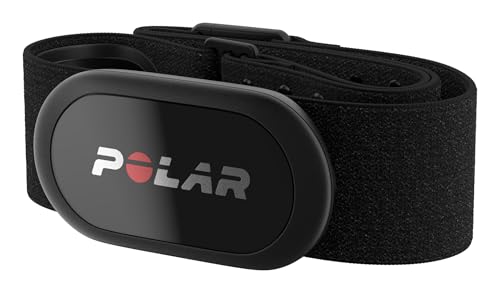
- Highly accurate heart-rate sensor
- Bluetooth, ANT+, and 5 kHz connectivity
- Waterproof with up to 400-hour battery life
Best For: Athletes who want precision and broad connectivity
Best for Garmin Users

- Real-time heart rate and HRV data
- Machine-washable adjustable strap
- Up to one year of replaceable-battery life
Best For: Garmin users wanting a durable everyday monitor
Best Value Sensor
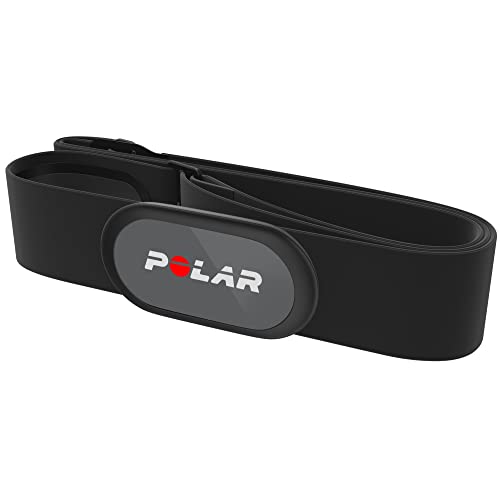
- High-accuracy heart-rate tracking
- Works with equipment and smartphone apps
- Up to 400 hours from a CR2025 battery
Best For: Everyday exercisers seeking a straightforward sensor
Best for Data-Driven Training

- Records workouts without a watch
- Adds running and swim-tracking features
- Machine-washable strap with rechargeable battery
Best For: Garmin athletes who want advanced training data
Best for Comfortable Sports Training

- Soft, breathable armband design
- Bluetooth connects up to three devices
- 38 hours of operating battery life
Best For: Bluetooth-based workout tracking with a comfortable arm fit
Best for Broad Device Compatibility
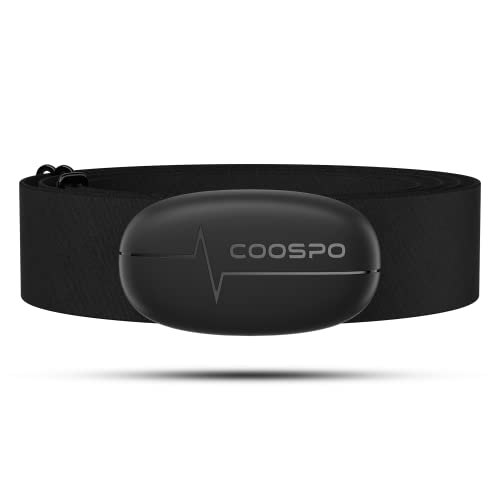
- Bluetooth and ANT+ connectivity
- Works with apps, watches, bikes, and gym equipment
- Up to 300 hours with a replaceable battery
Best For: Multi-device training and cycling setups
Best for All-Day Wellness Tracking

- 24/7 heart-rate and wellness monitoring
- 25 sport modes with sleep tracking
- Up to 10–14 days of regular-use battery life
Best For: Everyday activity, sleep, and wellness tracking
Best All-Around Connectivity
POWR LABS Bluetooth ANT+ Chest Strap
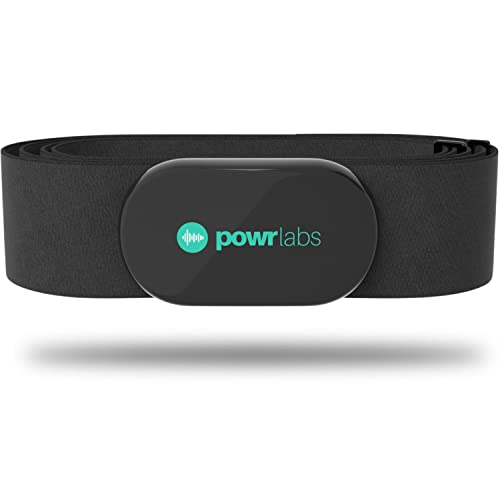
- ANT+ and Bluetooth support
- 400-hour replaceable-battery life
- Soft, adjustable, sweatproof strap
Best For: Multi-device training and frequent workouts
Best for Easy Status Checks
GEOID HS500 Heart Rate Monitor

- LED confirms readiness and connection
- 800-hour replaceable battery
- ANT+ and Bluetooth compatibility
Best For: Users who want visible pairing feedback
Best Battery Life

- 1,000-hour battery life
- Simultaneous ANT+ and Bluetooth transmission
- IP67 protection and one-year warranty
Best For: Long-term cycling and indoor training
Most Accurate Pick – Polar H10
For shoppers comparing lightweight heart rate monitors, the Polar H10 stands out for its widely recognized measurement precision, broad connectivity, and waterproof design. Its chest strap supports Bluetooth, ANT+, and 5 kHz connections, with internal memory for recording workouts.
Best For: Athletes who prioritize accuracy, flexible device compatibility, and dependable workout recording.
Pros:
- Designed for highly accurate heart-rate measurement.
- Supports Bluetooth, ANT+, and 5 kHz connections, including simultaneous Bluetooth connections.
- Waterproof and equipped with internal memory for multiple hours.
- Battery lasts up to 400 hours.
Cons:
- Uses a chest strap rather than a wrist-worn format.
- The listed M-XXL size may not suit every user without checking fit.
The Polar H10 is a strong choice when precision and connectivity matter most. Its 60-gram listed weight, waterproof construction, and long battery life make it a practical training sensor for compatible equipment and apps.
Best for Garmin Users – Garmin HRM 200
The Garmin HRM 200 is a lightweight heart rate monitor for users who want real-time heart rate and heart rate variability data across compatible Garmin devices, fitness equipment, and apps. Its adjustable, machine-washable strap is available in two sizes, while the replaceable battery can last up to a year.
Best For: Garmin smartwatch and cycling-computer owners seeking a simple, durable chest-strap sensor.
Pros:
- Transmits real-time heart rate and HRV data.
- Compatible with Garmin devices, fitness equipment, apps, and smartphones.
- Machine-washable strap simplifies cleaning.
- Offers up to one year of user-replaceable battery life.
Cons:
- The listed M-XL strap size may require careful fit checking.
- Its 3 ATM water rating is lower than a fully waterproof specification.
With a listed weight of 2.2 ounces, the HRM 200 keeps the design light while emphasizing everyday durability and low-maintenance ownership. It is especially convenient for users already invested in Garmin’s ecosystem.
Best Value Sensor – Polar H9
Polar H9 Heart Rate Sensor – ANT + / Bluetooth - Waterproof HR Monitor with Soft Chest Strap, M-XXL
Check Price On AmazonThe Polar H9 offers a practical entry point for shoppers seeking lightweight heart rate monitors with reliable tracking and broad compatibility. It works with HRM-compatible equipment and connects with popular smartphone apps, while its CR2025 battery is rated for up to 400 hours.
Best For: Everyday exercisers who want an affordable, accurate chest-strap monitor for phones and compatible equipment.
Pros:
- Built around Polar’s high-accuracy heart-rate sensors.
- Works with HRM-compatible equipment and popular smartphone apps.
- Available in XS-S and M-XXL sizing ranges.
- Includes a CR2025 battery rated for up to 400 hours.
Cons:
- Does not list the H10’s expanded simultaneous Bluetooth connectivity.
- Its chest-strap format may not appeal to users who prefer wrist-worn tracking.
The H9 focuses on the essentials: accurate heart-rate data, phone connectivity, and a comfortable soft strap. At a listed 60 grams, it is a sensible choice for everyday training without adding unnecessary complexity.
Best for Data-Driven Training – Garmin HRM 600
The Garmin HRM 600 is a lightweight heart rate monitor built for athletes who want more than basic pulse data. It records workouts when a watch cannot be worn, supports running dynamics with a compatible smartwatch, stores swim heart-rate data, and syncs activity information to Garmin Connect.
Best For: Data-focused runners, swimmers, and team-sport athletes using compatible Garmin devices.
Pros:
- Provides real-time heart rate and HRV data.
- Captures running dynamics such as stride length and ground contact time balance with a compatible smartwatch.
- Records workouts without a watch and syncs data to Garmin Connect.
- Supports swim heart-rate storage and has a machine-washable strap.
Cons:
- Its rechargeable battery lasts up to two months, shorter than some replaceable-battery options.
- Several advanced features require compatible Garmin hardware.
- The listed strap size is M-XL, so fit should be checked before purchase.
At a listed 2.2 ounces, the HRM 600 remains light while delivering a notably broad set of training metrics. It makes the most sense for Garmin users who will take advantage of its workout recording, swim support, and running-data features.
Best for Comfortable Sports Training – COROS Heart Rate Monitor
For shoppers comparing lightweight heart rate monitors for workouts, the COROS Heart Rate Monitor offers a soft armband design instead of a traditional chest strap. It connects by Bluetooth to up to three devices and automatically powers on when worn.
Best For: Sports and activity tracking when comfort and quick, distraction-free setup matter.
Pros:
- Soft, breathable armband lays flat and adjusts from 9.4 to 16.9 inches in the large size.
- Wear detection automatically powers the monitor on and off.
- Connects to up to three devices simultaneously through Bluetooth.
- Provides up to 38 hours of operation and 80 days of standby per charge.
Cons:
- Bluetooth-only; it is not compatible with ANT+ devices.
- Designed for sports and activities rather than daily heart-rate tracking.
- A Type-C power adapter is not included.
This is a practical choice for athletes who prefer an arm-worn monitor and use Bluetooth-compatible equipment. Confirm device compatibility before buying, especially if your setup depends on ANT+.
Best for Broad Device Compatibility – COOSPO H6 Chest Strap
The COOSPO H6 is one of the more versatile lightweight heart rate monitors for connected training. Its chest strap supports both Bluetooth and ANT+ transmission, making it suitable for sports watches, bike computers, fitness apps, and compatible gym equipment.
Best For: Cyclists, gym users, and athletes who need to connect one heart-rate sensor across multiple platforms.
Pros:
- Supports both Bluetooth and ANT+ for flexible connections.
- Works with many fitness apps, sports watches, bike computers, and gym machines.
- Provides real-time heart-rate data with claimed accuracy of ±1 BPM.
- Replaceable CR2032 battery offers up to 300 hours of use.
Cons:
- The electrode areas should be moistened before wearing for stable transmission.
- IP67 protection supports rain and sweat but not swimming or soaking.
- As a chest strap, it may feel less comfortable than an armband for some users.
Choose the H6 if compatibility is more important than avoiding a chest strap. Its dual-mode connectivity and long replaceable-battery life make it especially useful for mixed indoor and outdoor training setups.
Best for All-Day Wellness Tracking – Zeacool Fitness Tracker
For shoppers seeking lightweight heart rate monitors that also cover everyday wellness, the Zeacool Fitness Tracker combines 24/7 heart-rate monitoring with sleep, activity, and blood-oxygen tracking. It uses a 1.1-inch AMOLED touchscreen and works with iPhone and Android smartphones.
Best For: Daily activity, sleep, and wellness tracking in a smartwatch-style wearable.
Pros:
- Tracks heart rate continuously along with blood oxygen, blood pressure, temperature, and sleep data.
- Offers 25 sport modes plus step, distance, and calorie tracking.
- 5 ATM water resistance is designed for swimming, bathing, rain, and everyday water exposure.
- Battery lasts up to 10–14 days in regular use.
Cons:
- It is a broad wellness tracker rather than a dedicated workout heart-rate sensor.
- Health metrics are intended for personal tracking and may not replace professional medical equipment.
- Features and data management require pairing with a smartphone and the Keep Health app.
The Zeacool is the better fit for users who want heart-rate monitoring alongside general health and smartwatch functions. Its long battery life and 5 ATM rating make it convenient for continuous everyday wear.
Best All-Around Connectivity – POWR LABS Bluetooth ANT+ Chest Strap
For athletes comparing lightweight heart rate monitors, the POWR LABS chest strap stands out for broad device compatibility and long battery life. Its dual ANT+ and Bluetooth connectivity works with Garmin, Wahoo, Polar, Peloton, smartphones, and more than 400 fitness apps. Wear it before pairing to help ensure a successful connection.
Best For: Cyclists, indoor riders, and multi-device users who want a comfortable strap with minimal charging.
Pros:
- Dual ANT+ and Bluetooth connectivity supports a wide range of watches, bike computers, and apps.
- Soft, seamless fabric adjusts from 24 to 61 inches and is designed to reduce chafing.
- Up to 400 hours of battery life with a replaceable battery included.
- IPX67 sweatproof and water-resistant construction.
Cons:
- Must be worn before pairing.
- Chest-strap design may not suit users who prefer wrist-based monitoring.
This is a practical choice when compatibility and low-maintenance operation matter most. Its long battery life and broad app support make it especially convenient for frequent training.
Best for Easy Status Checks – GEOID HS500 Heart Rate Monitor
The GEOID HS500 is one of the lightweight heart rate monitors to consider if you want a quick visual connection check during workouts. Its front LED confirms readiness and connection, while ANT+ and Bluetooth support cover phones, watches, bike computers, treadmills, and popular training apps.
Best For: Runners, cyclists, and fitness users who value a visible connection indicator and long battery life.
Pros:
- Flashing LED helps confirm that the sensor is ready and connected.
- ANT+ and Bluetooth compatibility supports many fitness devices and apps.
- 800-hour replaceable CR2032 battery provides extended use.
- IP67 waterproof design and movement-focused algorithms support active workouts.
Cons:
- Swimming is not recommended.
- Bluetooth pairing should be completed through the fitness app rather than the phone’s system settings.
The HS500 balances useful connection feedback with a thin, energy-efficient sensor. Its one-year warranty and 24/7 online customer service add practical support for everyday training.
Best Battery Life – Magene H64 Heart Rate Monitor
The Magene H64 is a strong option among lightweight heart rate monitors for users who want extended battery life and simultaneous data transmission. It supports ANT+ and Bluetooth, allowing compatible devices and apps to record the same workout, and it connects with bike computers, sports watches, Peloton, and several fitness machines.
Best For: Cyclists and indoor-training users who need stable dual-protocol connectivity and infrequent battery changes.
Pros:
- Up to 1,000 hours of battery life with a replaceable battery.
- ANT+ and Bluetooth can transmit workout data at the same time.
- Optimized hardware and algorithms are designed to improve detection during exercise.
- IP67 dustproof and waterproof construction, with a one-year warranty.
Cons:
- For smartphone use, pairing must be done inside the app rather than phone Bluetooth settings.
- The electrode area should be wet and placed close to the skin for detection.
- The insulating sheet must be removed before first use.
With the longest stated battery life of these three options, the H64 suits athletes who want to spend less time maintaining their monitor. Correct setup is important, but the dual-connection design is useful for recording across multiple platforms.
How We Picked These Lightweight Heart Rate Monitors
We selected these Lightweight Heart Rate Monitors based on the features that matter most during everyday training: measurement consistency, wearing comfort, wireless compatibility, battery performance, water resistance, and ease of setup. The list includes established models from Polar, Garmin, COROS, and several value-focused alternatives, so shoppers can compare premium and budget-friendly options.
Chest straps generally provide more responsive readings during intervals and strength workouts because they sit close to the heart. Wrist-worn trackers are easier to put on and can add health and activity features, but their readings may be less consistent during rapid changes in intensity or movements that affect wrist contact.
Quick Comparison
- Best for broad device compatibility: Look for both ANT+ and Bluetooth support.
- Best for serious training: Choose a dependable chest strap with reliable sensor contact and long battery life.
- Best for app-based workouts: Confirm that the monitor works with your phone, bike, treadmill, or training platform.
- Best for convenience: A tracker with auto-wear detection and all-day health features may be easier to use consistently.
- Best for wet conditions: Check the stated waterproof or water-resistance rating rather than assuming every sensor is suitable for swimming.
Key Buying Factors for Lightweight Heart Rate Monitors
Fit and Comfort
A chest strap should sit securely below the chest without slipping, pinching, or restricting breathing. Adjustable straps and a soft, washable textile section can make a noticeable difference during long sessions. If you dislike wearing a strap, a wrist tracker may be the more practical choice even if it sacrifices some workout responsiveness.
Connectivity
ANT+ is useful for bike computers, gym equipment, and sports watches, while Bluetooth is typically necessary for phones and many fitness apps. Dual-protocol models offer the most flexibility. Also check whether the sensor supports multiple simultaneous connections if you train with more than one device.
Battery and Maintenance
Consider both battery type and estimated runtime. Replaceable coin-cell batteries can be convenient for long-term ownership, while rechargeable models reduce battery purchases. After workouts, rinse or wipe the strap as recommended and allow it to dry fully to help preserve sensor accuracy and reduce odor.
Water Resistance and Features
Water resistance protects against sweat and rain, but ratings vary. Additional features such as automatic wear detection, heart-rate broadcasting, app support, and onboard activity metrics can be valuable, provided they match how you train.
Who Should Buy Which Lightweight Heart Rate Monitors?
Choose a Polar or Garmin chest strap if you want a proven training accessory with strong compatibility and dependable workout data. Consider COROS if you already use the COROS ecosystem. Choose a value-oriented strap from COOSPO, POWR LABS, GEOID, or Magene when dual connectivity and basic heart-rate broadcasting matter more than premium ecosystem features. Pick the Zeacool tracker if you prefer a wrist-worn device with broader daily activity and sleep monitoring instead of a dedicated chest sensor.
For most athletes, the best choice is the model that stays comfortable, connects reliably to the devices you already own, and fits your preferred training routine.