Hard training can leave your calves, feet, and thighs feeling heavy long after a run. The right leg massager can make post-run recovery more convenient with sequential compression, heat, or both.
We compared these 10 options by coverage, controls, comfort, recovery-focused features, and practical value so you can find a setup that fits your training routine.
Best 10 Leg Massagers for Runners Picks for 2026
Professional Recovery
QUINEAR Sequential Compression Boots

- Full-leg coverage across four air chambers
- 8 intensities, 3 modes, and 3 timers
- Includes a carry bag for portability
Best For: Runners wanting highly adjustable, full-leg compression
Heated Comfort
CINCOM Leg Massager with Air Compression

- Air compression paired with two heat levels
- Three modes and three intensity settings
- Adjustable wraps with extension pieces
Best For: Runners wanting warm, lower-leg recovery sessions
Advanced Heat Recovery
Full-Leg Compression Boots with Heated Knee

- 6 modes and 12 compression intensities
- Six heating zones with four temperature levels
- LCD controller with timer and memory function
Best For: Runners seeking highly customizable compression and heat
Simple Calf Relief
FIT KING Sequential Air Compression Massager

- Two modes with 10 massage techniques
- Three intensity levels and adjustable fabric
- Works on calves, feet, or arms
Best For: Runners wanting simple, versatile calf compression
Best Value Wrap
CINCOM Adjustable Leg Compression Massager
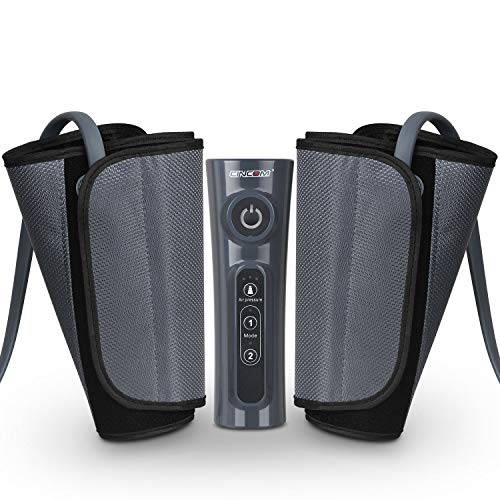
- Two modes and three intensity levels
- Adjustable calf fit up to 21 inches
- Usable on calves, thighs, or arms
Best For: Simple post-run compression and everyday leg comfort
Best for Serious Recovery
MUSUGY Sequential Compression Boots

- Five sequential air chambers
- Nine pressure levels and six modes
- Includes 15-, 20-, and 25-minute timers
Best For: Runners wanting highly adjustable full-leg recovery
Best with Heat
FIT KING Full-Leg Compression Massager

- Full-foot and leg boot coverage
- Heat plus three modes and levels
- Zippers and pressure sensors simplify fitting
Best For: Runners seeking warming, full-coverage post-run relaxation
Heat Therapy Pick
Heated Leg Compression Massager
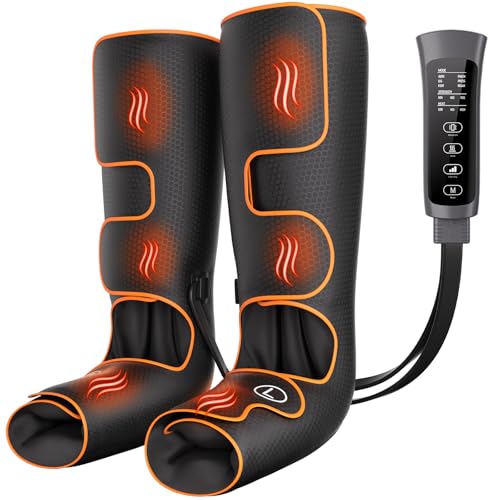
- Adds adjustable heat to compression
- Six modes and three intensities
- Washable lining and memory function
Best For: Runners wanting customizable heated foot-and-calf relief
Professional Recovery – QUINEAR Sequential Compression Boots
For runners seeking leg massagers for runners, the QUINEAR Leg Recovery Compression System offers full-leg sequential air compression without heat. Its four chambers cover the foot, lower calf, upper calf, and thigh, making it suited to structured post-workout recovery sessions.
Best For: Runners and athletes who want adjustable, full-leg compression after training.
Pros:
- Four sequential air chambers provide foot-to-thigh coverage.
- Eight intensity levels from 50–120 mmHg and three massage modes offer detailed customization.
- Adjustable 20-, 25-, and 30-minute timers support consistent sessions.
- Includes a compact design and carry bag for gym or travel use.
Cons:
- Does not include heat settings.
- The corded design requires access to a power outlet.
- Medium sizing may not suit every leg circumference.
With broad coverage, pressure sensing, and professional-grade positioning, this is a strong choice for runners who prioritize compression control over heat therapy.
Heated Comfort – CINCOM Leg Massager with Air Compression
Among leg massagers for runners, the CINCOM model stands out for combining sequential air compression with two heat levels. It wraps the feet, ankles, and calves, making it a practical option for runners who want warmth as part of their post-run relaxation routine.
Best For: Runners who prefer lower-leg compression paired with customizable heat.
Pros:
- Combines four-airbag compression with two heating levels.
- Three massage modes and three intensity levels allow session adjustments.
- Adjustable wraps accommodate calf sizes up to 28.5 inches, with extension pieces included.
- Removable inner lining helps with cleaning.
Cons:
- Coverage focuses on the feet, ankles, and calves rather than the full thigh.
- It is a corded home-use device, not a battery-powered option.
- Heat should be used carefully, especially by people with sensitive skin or health conditions.
The CINCOM is a comfort-oriented pick for runners who want compression and heat in one home device, though athletes seeking thigh coverage may prefer full-leg boots.
Advanced Heat Recovery – Full-Leg Compression Boots with Heated Knee
These leg massagers for runners combine sequential compression with extensive heat and control options. Four air chambers target the feet, calves, and thighs, while the knee area receives heat without compression for a flexible post-workout recovery setup.
Best For: Runners who want full-leg compression, heated coverage, and many customization options.
Pros:
- Six modes and 12 intensity levels provide extensive session control.
- Four air chambers use pressure sensors to adjust compression to leg size and shape.
- Six heating zones cover the knees, calves, and soles, with four temperature choices.
- Includes 10-, 20-, and 30-minute timers, a backlit LCD controller, and memory function.
Cons:
- The knee area uses heat only and does not provide compression.
- Exact boot sizing and circumference limits require checking the sizing guide.
- Heat may not be suitable for every user or recovery preference.
With the broadest control range in this group, this model is well suited to runners who want to fine-tune both compression and warmth while resting at home or traveling with the included bag.
Simple Calf Relief – FIT KING Sequential Air Compression Massager
For runners comparing leg massagers for runners on a home-use budget, the FIT KING Calf Massager keeps the controls straightforward. Its adjustable fabric wraps can be used on calves, feet, or arms, making it a versatile option for everyday compression and relaxation.
Best For: Runners who want a compact, uncomplicated massager for calves and other smaller areas.
Pros:
- Two modes provide 10 massage techniques for sequential or whole compression.
- Three intensity levels make it easy to adjust pressure.
- Adjustable fabric can fit calves, feet, or arms.
- Lightweight 1.32 kg design is practical for home or office use.
Cons:
- It does not offer heat therapy.
- Coverage is less extensive than full-leg boot systems.
- Only two modes and three intensities provide fewer controls than some alternatives.
The FIT KING is a sensible everyday choice for runners focused on calf comfort and versatility rather than full-leg coverage or advanced recovery programming.
Best Value Wrap – CINCOM Adjustable Leg Compression Massager
For runners looking for practical leg massagers for runners, the CINCOM is a straightforward wrap-style option for post-run fatigue and temporary relief from minor muscle aches. Its 2+2 airbags, two modes, and three intensity levels provide adjustable compression for calves, thighs, or arms.
Best For: Runners who want a compact, corded compression wrap with adjustable sizing and simple handheld controls.
Pros:
- Air compression simulates kneading and stroking across the legs.
- Two massage modes and three intensity levels allow basic customization.
- Adjustable Velcro wraps accommodate calves up to 21 inches.
- Can also be used on thighs or arms.
Cons:
- It is corded and requires a 12V/1A adapter.
- The wrap design may provide less full-leg coverage than boot-style systems.
- It is not water resistant.
The CINCOM makes sense when ease of use, adjustable fit, and everyday recovery comfort matter more than extensive programming. It is a practical entry-level choice for relaxing tired legs at home.
Best for Serious Recovery – MUSUGY Sequential Compression Boots
The MUSUGY is one of the more configurable leg massagers for runners, using five sequential air chambers that move from the foot upward through the calves, knees, and thighs. Its broad range of pressure levels, programs, and timers is suited to structured post-training routines.
Best For: Runners and athletes who want full-leg sequential compression with detailed intensity, zone, and session controls.
Pros:
- Five chambers provide distal-to-proximal sequential compression.
- Nine pressure levels, six modes, and three timer settings offer extensive control.
- Pressure sensors help balance air output and reduce uneven compression.
- Reinforced nylon construction and a 12-month warranty support regular use.
Cons:
- The listed fit requires an inseam of at least 36 inches.
- Thigh circumference is limited to 31 inches and calf circumference to 22 inches.
- The number of settings may be more than some users need for simple recovery.
With full-leg coverage and focused foot, calf, and thigh programs, the MUSUGY is a strong fit for runners who want to fine-tune recovery sessions. Check the measurements carefully before ordering.
Best with Heat – FIT KING Full-Leg Compression Massager
For runners who prefer a boot-style design, the FIT KING combines full-foot and leg compression with heat. Its 4+4 airbags, three modes and levels, pressure sensors, and zippered boots make it a feature-rich option among leg massagers for runners focused on relaxation after training.
Best For: Runners who want full coverage, warming functionality, and easier boot application without tying Velcro straps.
Pros:
- Boots cover the feet and legs with full compression.
- Heating function adds a warming option for post-run relaxation.
- Pressure sensors help adjust the preset massage intensity for different users.
- LCD handheld controller displays modes, intensity, and heat settings.
Cons:
- It is a corded electric unit and is not water resistant.
- The boot-shaped design may take more storage space than a simple wrap.
- Only three modes and three levels are listed.
The FIT KING is appealing if foot coverage and heat are priorities. Its zippers and pressure-sensor design may also be more convenient than manual Velcro adjustment, though the larger boot format is less compact.
Full-Leg Recovery Pick – SHINE WELL Compression Massager
Runners looking for leg massagers for runners may appreciate this SHINE WELL model for its coverage from the feet through the thighs. Its rhythmic air compression, adjustable wraps, and multiple settings make it suitable for post-run fatigue and everyday leg comfort.
Best For: Runners who want adjustable, full-leg compression with thigh coverage.
Pros:
- Massages the feet, calves, and thighs with six larger airbags.
- Offers three modes and three intensities for nine setting combinations.
- Includes two extenders, fitting calves up to 28.5 inches and thighs up to 40 inches.
- Has a quiet, portable design and 20-minute automatic shutoff.
Cons:
- The basic edition does not include heat.
- It requires corded power rather than a rechargeable battery.
- Its larger full-leg design may be more coverage than some runners need.
Choose this model if you want one device to address tired feet, calves, and thighs after training. The broad size range and adjustable pressure make it a flexible option for shared household use.
Compact Calf-and-Foot Pick – FIT KING Leg Compression Massager
For runners comparing leg massagers for runners, the FIT KING focuses on the feet and calves rather than the entire leg. Its larger air chambers, adjustable wraps, and portable storage bag make it a practical choice for post-run relaxation at home or in the office.
Best For: Runners who primarily need foot and calf compression without thigh coverage.
Pros:
- Covers the full foot and calf with larger air bags and chambers.
- Provides two modes and three intensity levels.
- Includes two size extensions and fits calves up to 28.5 inches.
- Comes with a portable storage bag and a two-year warranty.
Cons:
- It does not include heat or thigh massage.
- The wraps require measuring for the best fit.
- It uses a corded DC adapter.
This is a straightforward option for runners who want targeted compression below the knee. Its simpler coverage can be an advantage when thigh massage is unnecessary, while the extensions help accommodate different calf sizes.
Heat Therapy Pick – Heated Leg Compression Massager
Runners who want both warmth and compression may find this heated model appealing among leg massagers for runners. It combines sequential air pressure around the feet and calves with adjustable heat, multiple massage modes, and a washable inner lining.
Best For: Runners who prefer customizable foot-and-calf compression with optional heat.
Pros:
- Combines three-chamber air compression with three heat settings.
- Offers six modes and three pressure intensities.
- Adjusts for calf circumferences from 11.8 to 27.6 inches and foot lengths from 7.9 to 11.8 inches.
- Includes a 20-minute automatic shutoff, memory function, and washable inner lining.
Cons:
- It covers the feet and calves rather than the thighs.
- Its maximum listed calf circumference is smaller than some full-leg alternatives.
- It requires corded power.
This model stands out for runners who like to alternate between compression and warmth, with heat that can be switched off when unwanted. Its broad control options are useful for tailoring recovery sessions, although runners needing thigh coverage should consider a full-leg design instead.
How We Picked the Best Leg Massagers for Runners
We focused on features that matter after running: useful leg coverage, adjustable compression, intuitive controls, comfortable fit, and options for timed sessions. The list includes full-leg and calf-focused designs, along with models that add heat for a more soothing recovery routine.
Because runners have different needs, we also considered portability, intensity ranges, mode selection, and whether a massager is suited to occasional relaxation or frequent post-workout use. Product names and specifications can vary by seller, so verify the current controls, sizing, included accessories, and warranty before ordering.
Quick Comparison
| Feature | What to look for | Why it matters |
|---|---|---|
| Coverage | Calf-only, foot-and-calf, or full-leg sleeves | Match the device to the areas that feel fatigued most often. |
| Compression | Multiple modes and intensity levels | Allows gentler sessions after easy runs and stronger pressure when appropriate. |
| Heat | Optional heated foot, calf, or knee sections | Adds warmth, but should be used carefully and avoided when heat is unsuitable. |
| Controls | Independent timer and simple remote or controller | Makes recovery sessions easier to customize. |
| Fit | Adjustable wraps or sleeves with adequate sizing | A secure, comfortable fit is essential for even compression. |
Key Buying Factors for Leg Massagers for Runners
Compression Pattern and Intensity
Sequential air compression is generally more versatile than a single-pressure design because it can work through different sections of the leg. Look for several intensity levels and modes, especially if more than one person will use the device. Start low and increase gradually rather than assuming the highest setting is best.
Coverage and Fit
Full-leg boots may suit runners who want coverage from the feet upward, while calf massagers are usually easier to store and quicker to put on. Check the maximum leg circumference and sleeve dimensions carefully. A poor fit can create uneven pressure or make the device uncomfortable.
Heat and Session Controls
Heat can make a recovery routine feel more relaxing, but it is not essential for compression. Choose a model with independent heat control if possible, plus automatic timers that prevent overly long sessions. Avoid using heat on numb areas or when a healthcare professional has advised against it.
Portability and Maintenance
Runners who travel should prioritize lighter sleeves, a compact controller, and a storage bag. For regular use, inspect seams, hoses, closures, and washable liners. FSA or HSA eligibility may be listed for some products, but confirm current eligibility with your plan administrator before purchasing.
Who Should Buy Which Leg Massagers for Runners?
- Choose full-leg compression boots if you want coverage for your feet, calves, knees, and thighs after long runs or demanding training blocks.
- Choose a calf-focused massager if your main issue is tight calves and you want a more compact, often lower-cost option.
- Choose heat if warmth improves your comfort and you can use it safely; select a model with separate heat controls for greater flexibility.
- Choose more intensity levels if you are experienced with compression or want to share the device with users who prefer different pressure.
- Choose simpler controls if convenience matters most and you want to begin a session without navigating many settings.
These Leg Massagers for Runners are recovery aids, not substitutes for medical diagnosis or treatment. Stop using one if you experience pain, numbness, skin changes, dizziness, or unusual swelling. If you have circulation problems, a clotting disorder, recent surgery, or unexplained leg swelling, ask a qualified healthcare professional before using compression.