Rebounders can add controlled instability and gentle movement to balance-focused workouts, but the right model should feel secure rather than unpredictable. Frame size, suspension type, handle design, and floor stability all affect how confidently you can train.
We selected 10 adult rebounders with different strengths, from compact foldable designs to bungee models built for quieter, lower-impact sessions. Use the guide below to match your balance goals, available space, and preferred level of support.
Best 10 Rebounders for Balance Training Picks for 2026
Adjustable Support Pick
BCAN SP2 Foldable Mini Rebounder

- Three-position padded handlebar
- 330- or 440-pound capacity options
- Folds for more compact storage
Best For: Adults seeking supported balance practice and low-impact home cardio
Ball-Drill Stability Pick
Adjustable Medicine Ball Rebounder

- Nine adjustable training angles
- Full anti-slip base
- Built-in storage for three medicine balls
Best For: Coordination, reaction, sports training, and rehab drills
Spacious Folding Pick
EAST MOUNT 48-Inch Fitness Trampoline

- Roomy 48-inch workout surface
- One-step folding storage design
- Three-position adjustable handle
Best For: Home balance training with extra movement space
Quiet Bungee Pick

- Smooth bungee suspension
- Includes 700+ guided workout videos for 30 days
- Seven-year frame warranty
Best For: Quiet indoor cardio and balance-focused training
Most Stable Adjustable Pick
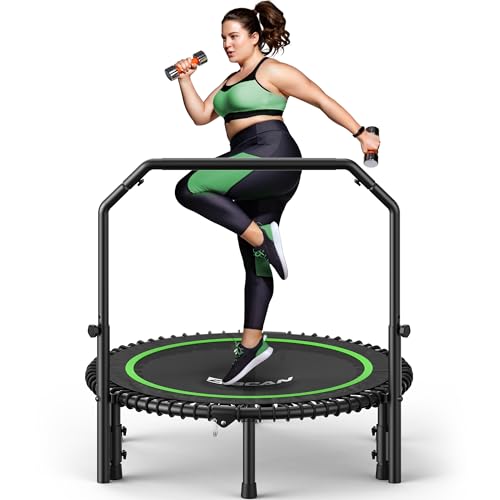
- Reinforced 32mm alloy legs
- Three-height adjustable handlebar
- Quiet 8mm bungee bounce
Best For: Users prioritizing stability and handlebar support
Best Foldable Balance Option
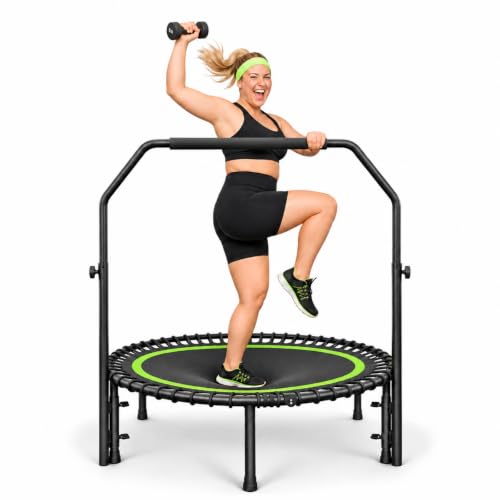
- Four-level foam handlebar
- Folds for compact storage
- Quiet, shock-absorbing bungees
Best For: Users needing balance support and easy storage
Best Customizable Stability

- Six-level adjustable bungee tension
- Five-level supportive handlebar
- 500-pound one-piece steel frame
Best For: Users wanting customizable resistance and stability
Best Stability-Focused Pick
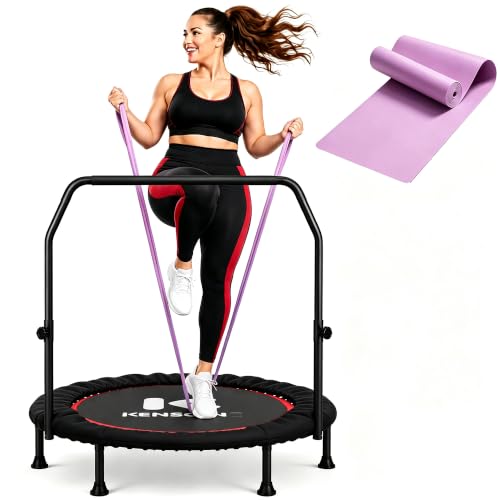
- Adjustable U-bar or handle-free setup
- Six legs and suction cups for stability
- Includes resistance band for full-body workouts
Best For: Beginners and handle-assisted balance training
Best Large-Surface Pick
BCAN BT3 51" Octagonal Rebounder
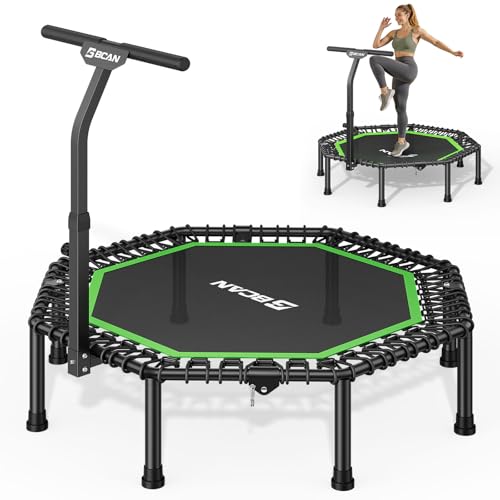
- Spacious 51-inch jumping surface
- Three-level adjustable stability handle
- Foldable frame with quieter bungees
Best For: Adults wanting roomier, handle-supported workouts
Best Simple Folding Pick
KENSONE Adjustable-Handle Rebounder

- Foam-covered adjustable handlebar
- Steel springs and rubber-tipped legs
- Folds for compact storage
Best For: Traditional spring rebounder workouts with balance support
Adjustable Support Pick – BCAN SP2 Foldable Mini Rebounder
For shoppers comparing rebounders for balance training, the BCAN SP2 combines an adjustable handlebar with a low-impact bounce and two capacity options. Its full-width padded bar can provide extra control during basic bouncing, balance work, and everyday indoor cardio.
Best For: Adults who want adjustable hand support, a compact folding frame, and a choice of 40- or 48-inch sizes.
Pros:
- Handlebar offers three height settings from 2’6″ to 3’5″.
- 40-inch model supports up to 330 pounds; 48-inch model supports up to 440 pounds.
- Arrives 80% pre-assembled and folds after the handlebar and legs are removed.
- Tested through 3,000+ continuous bounce cycles and to applicable ASTM safety standards.
Cons:
- The frame is not fully foldable until the legs and handlebar are removed.
- The listed 40-inch model has a smaller jumping area than the 48-inch option.
The SP2 is a practical choice when balance training calls for a handhold and storage flexibility. Choose the larger version if you want more room or higher stated capacity.
Ball-Drill Stability Pick – Adjustable Medicine Ball Rebounder
This medicine ball rebounder takes a different approach to rebounders for balance training, using throw-and-catch drills to work coordination, reaction speed, and body control. Its anti-slip mat and adjustable angle make it suitable for progressive training rather than bouncing.
Best For: Adults working on hand-eye coordination, sports conditioning, or physical therapy exercises with medicine balls.
Pros:
- Full-coverage anti-slip mat is designed to reduce sliding and shifting.
- Nine angle settings range from 32.5° to 57° for varied training targets.
- Heavy-duty rust-resistant steel frame supports frequent use.
- Three rear storage slots keep medicine balls organized.
Cons:
- Medicine ball is not included.
- At 43.9 pounds, it is less convenient to move than a lightweight mini trampoline.
- No warranty is listed in the supplied details.
If your balance work centers on catching, throwing, and controlled reactions, this is the most specialized option in the group. It is not a conventional bouncing rebounder, but its angle and stability features support targeted drills.
Spacious Folding Pick – EAST MOUNT 48-Inch Fitness Trampoline
For rebounders for balance training that provide more room to move, the EAST MOUNT offers a 48-inch surface, a wide octagonal frame, and an adjustable handle. The one-step folding design is especially useful when the rebounder must be stored after each workout.
Best For: Home users who want a larger workout area for balance exercises, low-impact cardio, and everyday movement.
Pros:
- 48-inch surface provides more room for natural movement.
- Three-position adjustable handle supports balance and control.
- One-step folding design creates a compact upright form for storage.
- Elastic rebound system is designed for smooth, quieter movement.
Cons:
- The supplied details list a 330-pound maximum weight recommendation, despite a 550-pound item highlight.
- At 21.3 pounds, it is heavier than the BCAN SP2 listed in this roundup.
The EAST MOUNT stands out for users who prioritize jumping space and easy storage. Confirm the applicable weight limit before purchase because the supplied specifications are inconsistent.
Quiet Bungee Pick – bellicon Mini Trampoline
The bellicon uses bungee suspension instead of hard steel springs, making it a compelling option among rebounders for balance training when smooth, quiet movement matters. The 44-inch frame is intended for indoor cardio, balance work, and daily training.
Best For: Adults seeking a back- and joint-conscious rebounder with guided workouts and a quiet bungee bounce.
Pros:
- Patented bungee ring suspension is designed to provide a smooth, silent bounce.
- Supplied details cite benefits including endurance and balance training.
- Includes 30 days of bellicon+ access with more than 700 guided workout videos.
- Warranty coverage includes seven years for the frame and three years for the mat.
Cons:
- Bungee cords have a shorter listed one-year warranty.
- Screw-on legs must be attached during setup.
- The supplied details list a 320-pound maximum weight recommendation, below the title’s 330-pound figure.
The bellicon is a strong fit if quiet operation and bungee suspension are higher priorities than folding storage. Review the exact capacity for the selected configuration before ordering.
Most Stable Adjustable Pick – BCAN BT2 40-Inch Rebounder
For shoppers comparing rebounders for balance training, the BCAN BT2 emphasizes a steadier setup with thickened alloy legs, reinforced threading, and an upgraded adjustable handlebar. Its quiet bungee system and low-impact bounce also suit indoor exercise.
Best For: Users who want a stable rebounder with handlebar support and a higher stated weight capacity.
Pros:
- 32mm alloy legs and 10-turn reinforced threads are designed to reduce wobbling.
- Reinforced handlebar adjusts to three heights from 2’7″ to 3’2″.
- 8mm bungees provide a quieter, smoother, low-impact bounce.
- 450-pound maximum weight recommendation.
Cons:
- The 40-inch model weighs 24.2 pounds and may be less convenient to move frequently.
- The handlebar has three height settings rather than the widest adjustment range in this group.
The BT2 is a sensible choice when balance support and frame stability are priorities. Its reinforced construction and adjustable bar make it particularly practical for controlled indoor routines.
Best Foldable Balance Option – 40-Inch Mini Rebounder
This 40-inch mini rebounder is a practical option for rebounders for balance training when storage matters. Its four-level foam handlebar offers a secure grip, while the bungee system supports quiet, low-impact indoor movement.
Best For: Seniors, users with balance concerns, and anyone needing a foldable rebounder for smaller storage spaces.
Pros:
- Handlebar adjusts through four levels from 30 to 40 inches above the mat.
- Folds to 15 x 30 inches for under-bed or closet storage.
- 8mm bungees provide shock absorption with less noise than metal springs.
- Arrives 60% pre-assembled and includes hardware and tools.
Cons:
- The supplied details list both a 440-pound load claim and a 360-pound maximum weight recommendation, so buyers should verify the applicable limit.
- The seven perimeter straps must be unfastened before exercising to prevent damage.
Choose this model if you need balance assistance without giving up convenient storage. The folding design is its clearest advantage, although the strap-use instructions require careful attention.
Best Customizable Stability – BCAN BT4 Soft Land Pro
The BCAN BT4 stands out among rebounders for balance training with its one-piece steel frame, adjustable handlebar, and selectable bungee tension. These features let users choose a softer or more resistant bounce while maintaining a supported grip.
Best For: Households or individuals wanting adjustable resistance, a high-capacity frame, and a softer landing.
Pros:
- Six-level tension customization uses two bungee sets: 8mm and 9mm.
- Five-level handlebar adjusts from 28 to 36 inches from the mat.
- Heavy-duty 16-gauge steel frame supports up to 500 pounds and uses wide anti-slip foot caps.
- Pre-assembled bungees, phone holder, and non-slip socks are included.
Cons:
- The non-folding one-piece frame is less convenient for compact storage.
- Changing between tension setups may be more involved than using a fixed-resistance rebounder.
The BT4 is the most configurable choice here, especially for users who want to progress from gentle movement to stronger cardio. Its non-folding frame favors stability over portability.
Best Stability-Focused Pick – KENSONE 40" Mini Rebounder
For shoppers comparing rebounders for balance training, this KENSONE model combines a compact 40-inch frame with an adjustable U-bar option. Its suction-cup feet, six legs, and 32 high-tension springs are designed to provide a stable platform for controlled indoor workouts.
Best For: Beginners, seniors, and users who want handle-assisted balance practice with added full-body resistance-band workouts.
Pros:
- Adjustable U-bar offers dual-side support, while the handle-free option allows more advanced movement.
- Six legs with suction cups help reduce slipping and protect wood or tile floors.
- Includes a 78-inch resistance band with up to 28 pounds of tension.
- Supports up to 350 pounds according to the product description and is backed by a one-year guarantee.
Cons:
- The 40-inch surface is more compact than the 51-inch BCAN alternative.
- The resistance band is an added feature that may not be needed for users focused only on balance work.
Choose this KENSONE if stability aids and versatile home training matter more than having the largest jumping surface. Its detachable components also make it practical for compact storage.
Best Large-Surface Pick – BCAN BT3 51" Octagonal Rebounder
This BCAN rebounder is a strong option among rebounders for balance training when you want a larger 51-inch jumping area. Its three-level adjustable handle, foldable octagonal frame, and bungee-based jumping system support controlled practice while keeping storage manageable.
Best For: Adults who prefer a larger workout surface, adjustable handle height, and a quieter bungee rebounder.
Pros:
- The handle adjusts through three levels from 2 feet 6 inches to 3 feet 5 inches.
- Thickened 8 mm bungees are described as smoother and quieter, with noise reduction of up to 90%.
- Foldable design stores at approximately 15 by 30 inches after folding.
- Rated for up to 450 pounds and supplied with special assembly tools.
Cons:
- The larger 51-inch frame requires more open workout space than compact 40-inch models.
- Assembly is still required, even though part of the bungee system is pre-assembled.
The BCAN stands out for users who value a spacious surface and adjustable support. It is particularly practical when quieter operation and fold-away storage are priorities.
Best Simple Folding Pick – KENSONE Adjustable-Handle Rebounder
For straightforward rebounders for balance training, this KENSONE offers a steel-spring jumping surface, foam-covered adjustable handlebar, and rubber-sleeved legs. The round 40-inch version is designed for indoor or outdoor exercise and folds after the handle, legs, and cover are detached.
Best For: Users seeking a traditional spring rebounder with adjustable handle support, quiet storage, and general cardio or jumping exercise.
Pros:
- Adjustable foam handlebar helps users maintain balance while jumping.
- Heavy-duty steel frame, 32 springs, and rubber-tipped legs support a stable setup.
- Folds for storage in a car, under a bed or sofa, or in a closet.
- Available in configurations rated for either 330 or 450 pounds, according to the title.
Cons:
- Handle, legs, and cover must be detached before folding.
- The supplied details do not specify a resistance band or other upper-body accessory.
- Assembly takes about 10 minutes rather than arriving fully ready to use.
This model is a sensible choice if you want basic balance assistance and easy storage without extra training accessories. Select the appropriate size and capacity configuration for your needs.
How We Picked These Rebounders for Balance Training
We evaluated the selected models around the features that matter most during balance work: overall frame stability, usable jumping surface, suspension design, handle adjustability, stated weight capacity, portability, and likely noise level. Bungee systems can provide a quieter, more progressive feel, while spring-based rebounders may offer a firmer response at a lower price. Folding frames and removable or adjustable handles are also useful when storage space is limited.
Product specifications can vary by size and configuration, so verify the exact diameter, capacity, dimensions, and included accessories before ordering. Weight capacity is a manufacturer rating, not a guarantee that a model will feel equally stable for every user or exercise.
Quick Comparison
| Best For | Features to Prioritize | Models to Consider |
|---|---|---|
| Supported balance practice | Adjustable handle, stable base, grippy feet | BCAN SP2, BCAN BT2, KENSONE Handle models |
| Quiet, low-impact workouts | Bungee suspension, controlled recoil | bellicon, BCAN BT4, BCAN BT2 |
| Small-space storage | Foldable frame or compact diameter | EAST MOUNT, BCAN SP2, 40-inch KENSONE |
| More room for movement | Larger jumping surface and broad frame | BCAN BT3, 48-inch models |
Key Buying Factors for Rebounders for Balance Training
Stability and Handle Support
A handlebar is helpful for beginners, rehabilitation-style drills, and exercises that involve shifting weight. Look for adjustable height, a rigid connection to the frame, and feet that resist sliding. A handle should assist balance, not replace controlled posture or supervision.
Suspension and Bounce Control
Bungee cords generally produce a quieter, softer response and may be more comfortable for low-impact training. Springs can feel more direct and responsive, but they may create more noise and require closer attention to padding and maintenance. For balance work, predictable rebound is usually more useful than maximum bounce.
Size, Surface, and Capacity
A larger mat gives you more room to reposition your feet, while a compact rebounder is easier to store. Choose a stated capacity comfortably above the user’s body weight, particularly if workouts include dynamic movement. Check the assembled footprint and ceiling clearance before buying.
Floor Protection and Maintenance
Use the rebounder on a level, non-slip surface and inspect legs, cords, springs, frame joints, and mat attachment points regularly. A protective mat can help reduce floor movement and vibration. Follow the manufacturer’s assembly, cleaning, and replacement-part guidance.
Who Should Buy Which Rebounders for Balance Training?
Beginners and users who want extra support: Choose an adjustable-handle model such as the BCAN SP2, BCAN BT2, or a KENSONE handle-equipped rebounder. These are practical starting points for basic weight shifting and controlled stepping.
Quiet-workout shoppers: Prioritize bungee construction, with options such as the bellicon or BCAN BT4. They are well suited to apartments or shared spaces when used on a stable floor.
Frequent movers and small-space users: A foldable model such as the EAST MOUNT or BCAN SP2 makes setup and storage simpler. Confirm the folded dimensions, since “foldable” does not always mean compact.
Users wanting more movement room: Consider a 48-inch model or the larger octagonal BCAN BT3. The additional surface can make stance changes feel less cramped, though it requires more floor space.
If you have a medical condition, recent injury, dizziness, or significant balance limitations, consult a qualified professional before using a rebounder and begin with low-intensity, supported movements.